Six Nations prediction: England to ‘come up short’ as Steve Borthwick’s ‘hunters’ battle France for glory
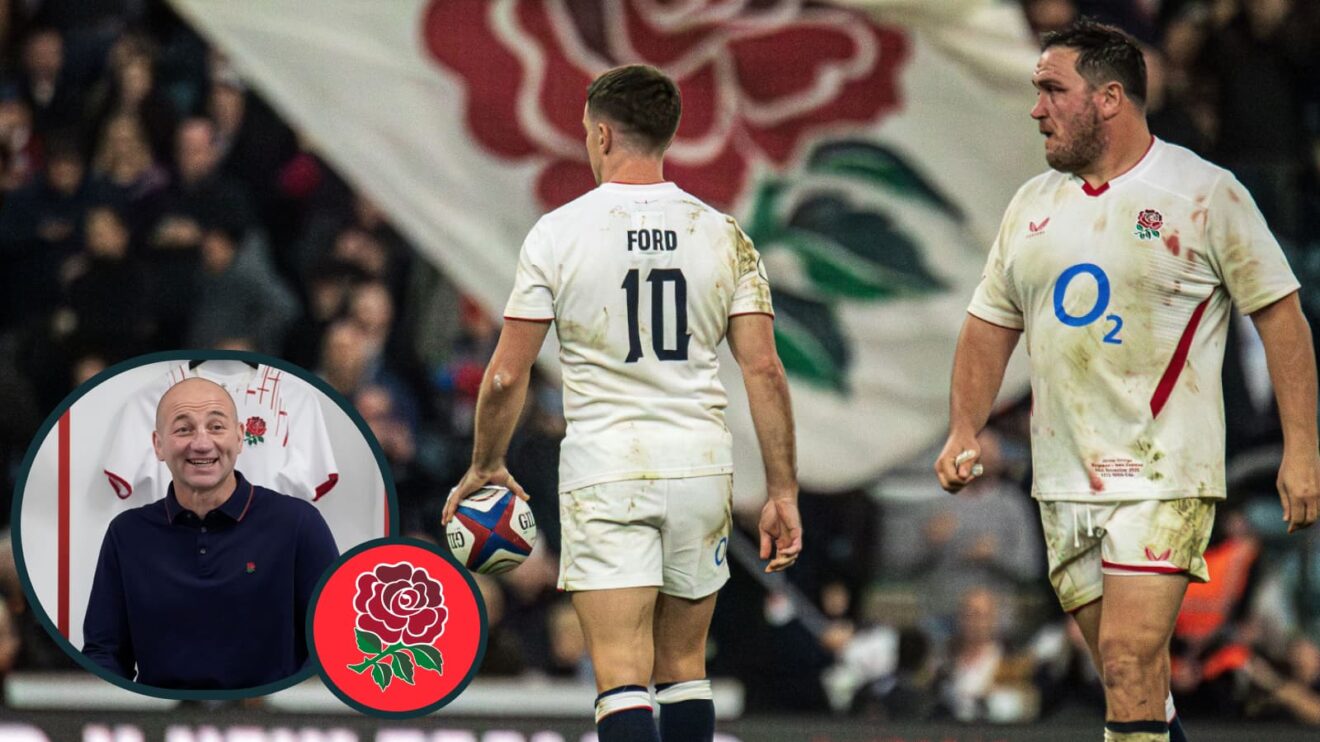
England head coach Steve Borthwick, fly-half George Ford and hooker Jamie George.
Next up in our set of previews ahead of the 2026 Six Nations we examine the prospects of last year’s runners-up, Steve Borthwick’s England.
Maro Itoje leads England into the Six Nations with optimism high that the Red Rose is about to end a trophy drought which dates back to the dark days of the pandemic.
Since they last won a Grand Slam in 2016, England have reached one World Cup final and come within a minute of a second. In the same period they have finished fifth as often as first in Europe’s showpiece.
Only once since their last title in 2020, and most recent Triple Crown, have they finished in the top two. That was last year, since when they have roamed unbeaten, counting New Zealand and France among their scalps.
A settled team, relatively few injuries and a good run of fixtures augurs well for the coming campaign. Little wonder Borthwick has openly challenged his side to arrive in Paris for the final game with a Grand Slam chance.
Last year
England started 2025 with defeat in Ireland then did not lose again, reeling off 11 consecutive wins. The turnaround was remarkable given Dublin was their sixth loss in seven and came courtesy of an all-too familiar drop-off after half-time.
Seeing his side ship 27 unanswered points, including four tries between minutes 35 and 72, was confirmation for Borthwick that change was necessary.
He had already acted to alter the mood music, replacing Jamie George with Maro Itoje as captain on the eve of the tournament. But more was needed. Borthwick had long felt England’s conditioning needed an upgrade. Their collapse at the Aviva endorsed the view.
England had not lost five in a row since 2018. The introduction of enhanced player contracts in late 2024 was supposed to give the head coach greater input into his stars’ conditioning programmes.
It did not look that way in Dublin and the largely unexplained triple loss, between autumn and Six Nations, of coaches Felix Jones (defence), Tom Tombleson (fitness) and Aled Waters (strength and conditioning) hinted at a deeper malaise.
Unperturbed, Borthwick hired S&C coach Dan Tobin from Gloucester and began the process of shifting from a forward power game to a faster-paced, more dynamic approach.
That placed a greater onus on fitness and, in the short term, meant England needed a bit of luck, particularly against France who had annihilated them on their previous visit to Twickenham. They got it, Les Bleus shredding England only to time and again drop the ball.
Borthwick had taken the significant step of swapping one Smith for another at fly-half: Fin taking over from Marcus, who moved to full-back. It paid off. England stayed in the fight and their new playmaker set up and converted a late try for a 26-25 win.
The distance from narrow loss to narrow win looks small on the scoreboard but the impact was enormous in terms of belief.
A fortnight later there was again only one point in it. But again England won, beating Scotland for the first time in five meetings. It was workmanlike, nothing more, but the confidence it spawned spread like wildfire. In their final two games, against Italy and Wales, England scored 17 tries.
Suddenly, nobody could live with Team Borthwick. They swept unbeaten through the summer tour of Argentina and USA minus 15 British and Irish Lions before claiming their first four-win autumn maximum in nine years.
This year
The bookmakers like England’s chances and so they should. They open at home to Wales, against whom they rattled up 68 points in Cardiff last year, and have five weeks to ready themselves for France away. They couldn’t have asked for a better schedule.
On current form they should expect to reach Paris unbeaten and on track for a Grand Slam. Scotland away in Round Two appears their stiffest task, given they have won only two of the last eight meetings since 2017.
The caveat is that, in this tournament, England have long been a better team on paper than grass. Since Martin Johnson lifted the World Cup in 2003 the sport’s richest and best resourced union has landed one Grand Slam, a decade ago.
Only Scotland and Italy have managed fewer. They have a deeper pool than any to choose from but too often that has merely served to muddle their thinking.
When asked about his piano-playing ability comedian Eric Morecambe famously said, “I’m playing all the right notes, just not necessarily in the right order”. So it has been with England selection at times.
Not in the last year, however. Borthwick has worked out how to get the best from the talent at his disposal and Phil Morrow, who joined the programme as performance director last summer, has ensured players are fit for purpose.
England now boast a 23-man output which, as things stand, only South Africa can match. The data-driven Borthwick has identified that kicking short to regather is the way forward, in every sense. And that the third quarter, when games tend to loosen up as benches are cleared, is the time to make hay.
They have bench strength to compare with the Springboks and, as my colleague James While identified, in Guy Pepper, Henry Pollock and Alex Mitchell players to “embrace” that period of “chaos” and raise England’s output to decisive effect.
Of course you are only as good as your next game. With Scottish rugby buoyed by Glasgow’s pace-setting Champions Cup form, Ireland always loving a trip to Twickenham and an Italy side on home soil re-energised by their November win over Australia, there is no room for complacency.
Key players
If 2025 was notable for one thing other than England’s 11-win streak it was the increased strength in depth that underpinned it. Nowhere was that more clearly seen than at fly-half where George Ford did not get a look in until the Lions removed both Smiths – since when he has made the 10 shirt his own.
Ford’s quick-wittedness in heavy traffic, his tactical nous, game management and constant drive to improve, has made him the darling of the England coaching booth. To see his influence in training you would swear he is actually a player-coach.
“And he’s getting better and better,” says Alex Sanderson, his director of rugby at Sale Sharks.
Want more from Planet Rugby? Add us as a preferred source on Google to your favourites list for world-class coverage you can trust.
If Ford brings accuracy and clarity to England’s gameplan, Bristol prop Ellis Genge brings power and attitude. Nobody sets the tone more effectively or viscerally than the Bristol loosehead, a Lion with the heart of a Bear.
If England are to improve on last year’s runners-up finish, they will need Alex Mitchell at his best in the No.9 jersey. In the November window he initiated more breaks from broken field than any scrum-half. His speed of delivery both post-turnover and away from rucks was peerless. Keep that up and England will take a lot of stopping.
Players to watch
We may yet see Noah Caluori, Saracens’ teen try sensation, step out of the chorus line. Billy Sela, Bath’s 20-year old prop, might get a chance to impress in the way he did when Johann van Graan gave him a Champions Cup start at Castres ahead of World Cup winner Thomas du Toit.
For now, it seems England’s players to watch will be the youngsters who so illuminated the tail end of 2025. Henry Pollock‘s rise has been so meteoric that no game escapes without him leaving a mark on it.
Much the same is true of Guy Pepper, the Bath flanker, who announced himself with player of the match displays in last season’s Prem semi-final and final before making an immediate and lasting impression on England during their tour of the Americas.
Then came the autumn and his impersonation of Richard Hill, his World Cup-winning mentor, aka the Silent Assassin. He linked England’s play beautifully and controlled the flow of ball, adding speed in possession, slamming on the brakes in defence.
Behind the scrum Tommy Freeman and Immanuel Feyi-Waboso will concentrate minds. Freeman made history in last year’s tournament by becoming the first England player to score a try in all five games. His influence has since only grown.
Ex-England stars omit ‘garbage’ Johnny Sexton and ‘overrated’ Wales legend in Six Nations Dream XV
Feyi-Waboso missed that campaign through injury but this season has been a revelation in Exeter’s resurgence, while proving himself invaluable to England as a key weapon in their burgeoning aerial game.
Prospects
When you have not won so much as a Triple Crown since 2020 it is important to keep expectations in check. In theory England should put that right by Round Three, when Ireland follow Wales and Scotland in taking on the nation the Celts so love to beat.
Given Andy Farrell’s side travel to Twickenham, it is reasonable to expect England to go to Italy unbeaten and, from there, to Stade de France with everything on the line.
As previously mentioned, England have enjoyed this sort of billing many times in the past only to come up short. A Grand Slam decider with them 15 games unbeaten and France roared on by a full house in Paris is the stuff of dreams for tournament bosses.
Scotland may have something to say about that in so far as France go to Murrayfield in Round Four for a match which, given what Glasgow did to Toulouse in December, has banana skin written all over it.
If the form book holds up, however, it will be England or France, the hunters versus the hunted. In that eventuality, France narrowly get the nod. Second.
Fixtures
Saturday, February 7 v Wales (Allianz Stadium, Twickenham)
Saturday, February 14 v Scotland (Scottish Gas Murrayfield, Edinburgh)
Saturday, February 21 v Ireland (Allianz Stadium, Twickenham)
Saturday, March 7 v Italy (Stadio Olimpico, Rome)
Saturday, March 14 v France (Stade de France, Paris)
READ MORE: Six Nations prediction: Italy to ‘replicate highest-ever finish’ despite challenging fixture list