Nations Championship: The staggering pay disparity in international rugby as ‘floor drops away’ south of the equator


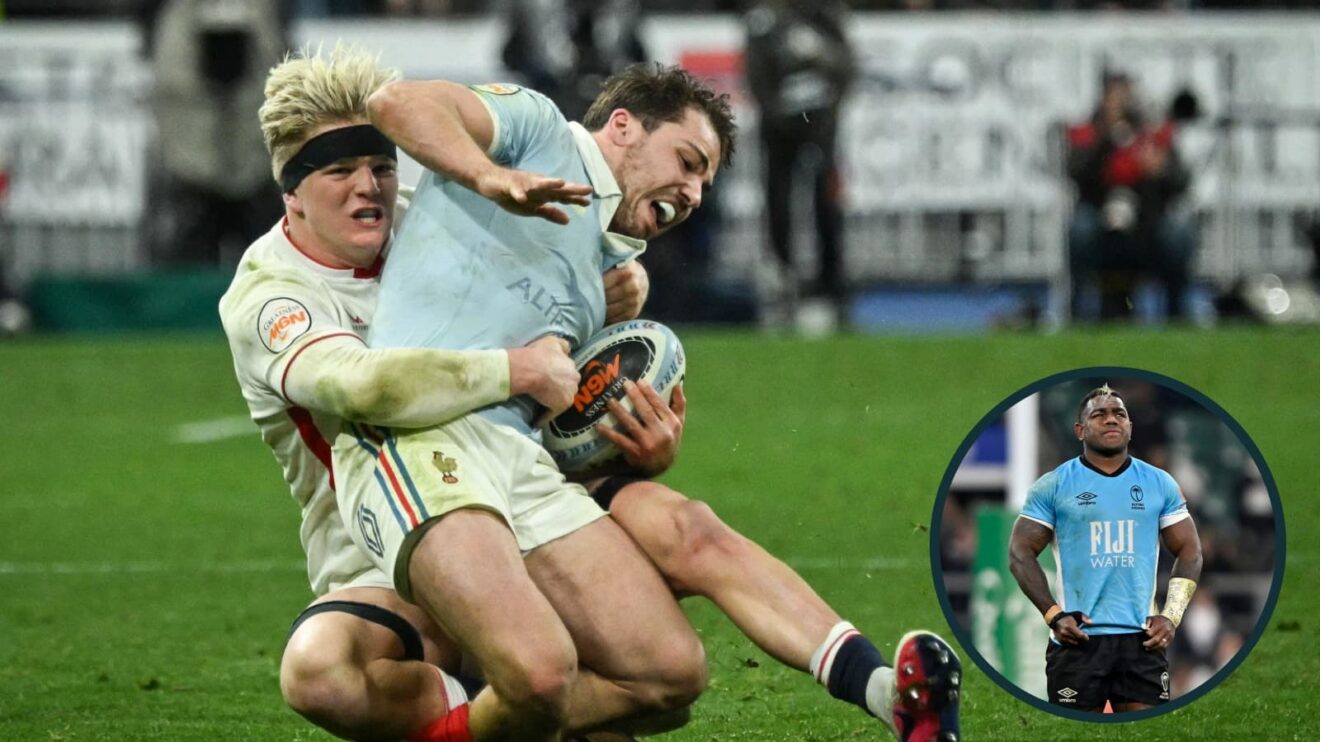
France and England lead the way in terms of Six Nations match fees and daily allowance.
Rugby has its global league at last. 12 nations, home and away across the hemispheres, a final to settle it. The Nations Championship took the best part of a decade to negotiate and it was sold throughout as the great unifying act, proof that the game had finally stopped running north and south as separate businesses.
The pay figures suggest otherwise.
When France play Fiji this season, the French players will bank upwards of €30,000 each for the Test. The Fijians will collect around £320, or FJD 800 as it is reported at home. Same pitch, same competition points, same broadcast fee, but rather different wage packet. A ratio of roughly a hundred to one, for the same 80 minutes of work, in a tournament whose entire premise is that these 12 teams now belong to one shared enterprise.
What the north pays
The published figures, and it says everything that we rely on player association disclosures and diligent reporting rather than the unions themselves, run as follows.
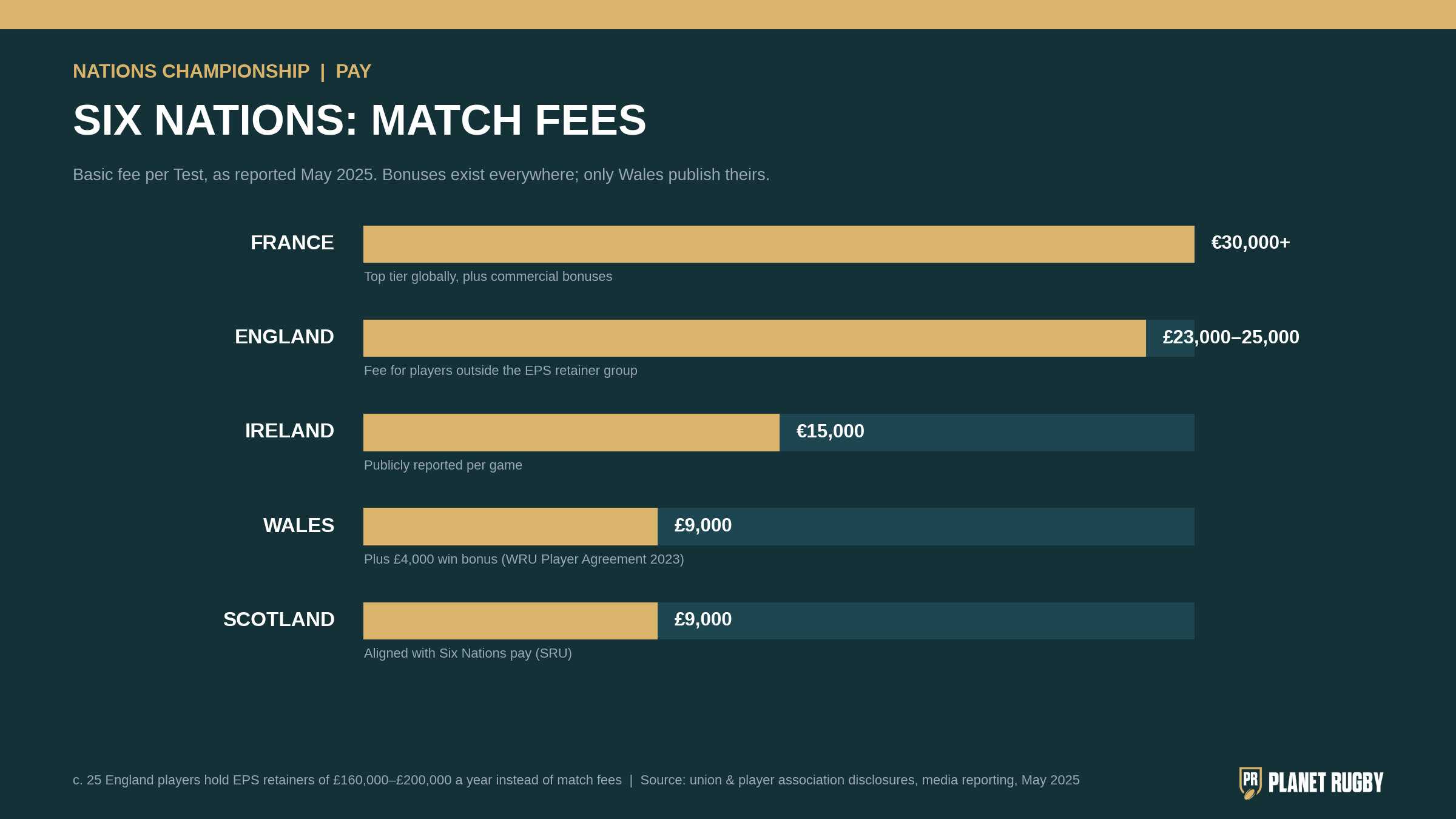
France lead the market, as they lead most financial conversations in rugby these days. €30,000 and upwards per Test, daily camp allowances of around €500, and commercial bonuses the FFR describes only as significant. England run a two-tier system: roughly 25 senior players hold Enhanced Elite Player Squad contracts worth £160,000 to £200,000 a year in retainers, whilst anyone capped from outside that group draws £23,000 to £25,000 per match. Ireland pay €15,000 a game. Wales and Scotland both sit at £9,000, and Wales, uniquely, publish their bonus structure in full: £4,000 a win, £10,000 if all seven matches are won, and a Grand Slam bonus on top.
Credit where due to the WRU on that last point. Whatever else Welsh rugby has got wrong in recent years, and the list is long, they are the only union in either hemisphere prepared to tell their supporters what winning is actually worth. Everywhere else the entry reads the same: bonuses exist, figures not disclosed. 11 unions out of 12 have decided that the people funding these payments through tickets and subscriptions have no business knowing the numbers.
Remember too that every one of these players draws a club or provincial salary underneath the Test fee. In France those club salaries are the fattest in the sport by a distance.
What the south pays
Cross the equator and the floor drops away.
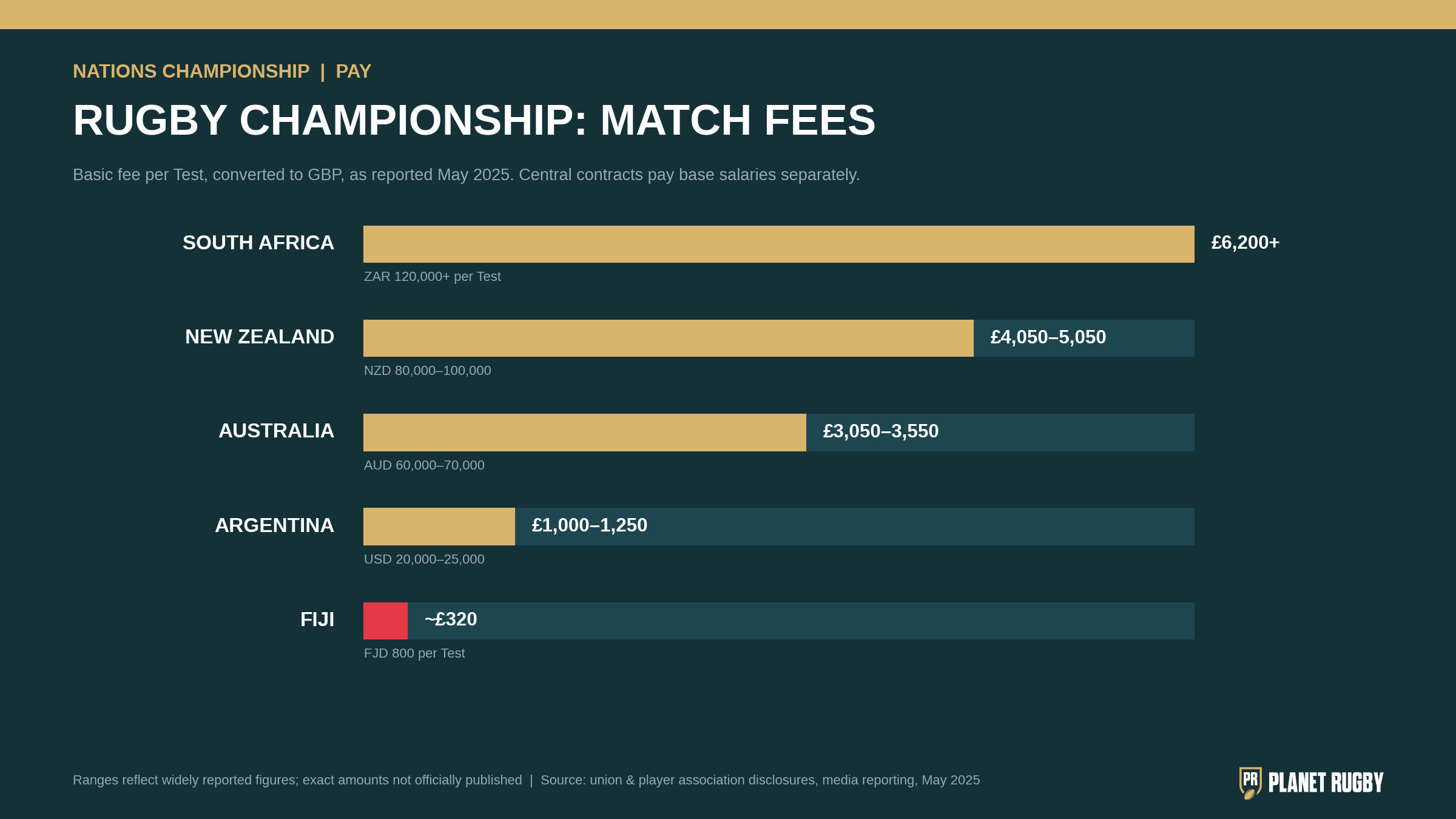
The Springboks, double world champions and the biggest brand in the southern game, pay a basic match fee of about £6,200, reported in South Africa as ZAR 120,000 or more per Test. That is the top figure in the Rugby Championship and it is roughly a quarter of what a fringe England player collects for the same afternoon. The All Blacks sit somewhere between £4,050 and £5,050 per Test. The Wallabies are at £3,050 to £3,550. Los Pumas, who have beaten every major nation on earth over the past cycle, earn £1,000 to £1,250 a match.
Then Fiji, at £320.
There is a caveat, however; players in all five southern nations hold central contracts with base salaries paid quite separately from match fees, so a frontline Springbok or All Black is emphatically not living on five grand a Test. New Zealand’s endless retention battles with Japan and the Top 14 are fought on those contract values, and the match fee is a top-up. The raw comparison therefore flatters the north and balance is needed in assessing it.
Want more from Planet Rugby? Add us as a preferred source on Google to your favourites list for world-class coverage you can trust.
It does not flatter it enough to close the gap, and it does nothing whatsoever for Fiji, where the central contract pool is thin and the match fee is closer to the whole story.
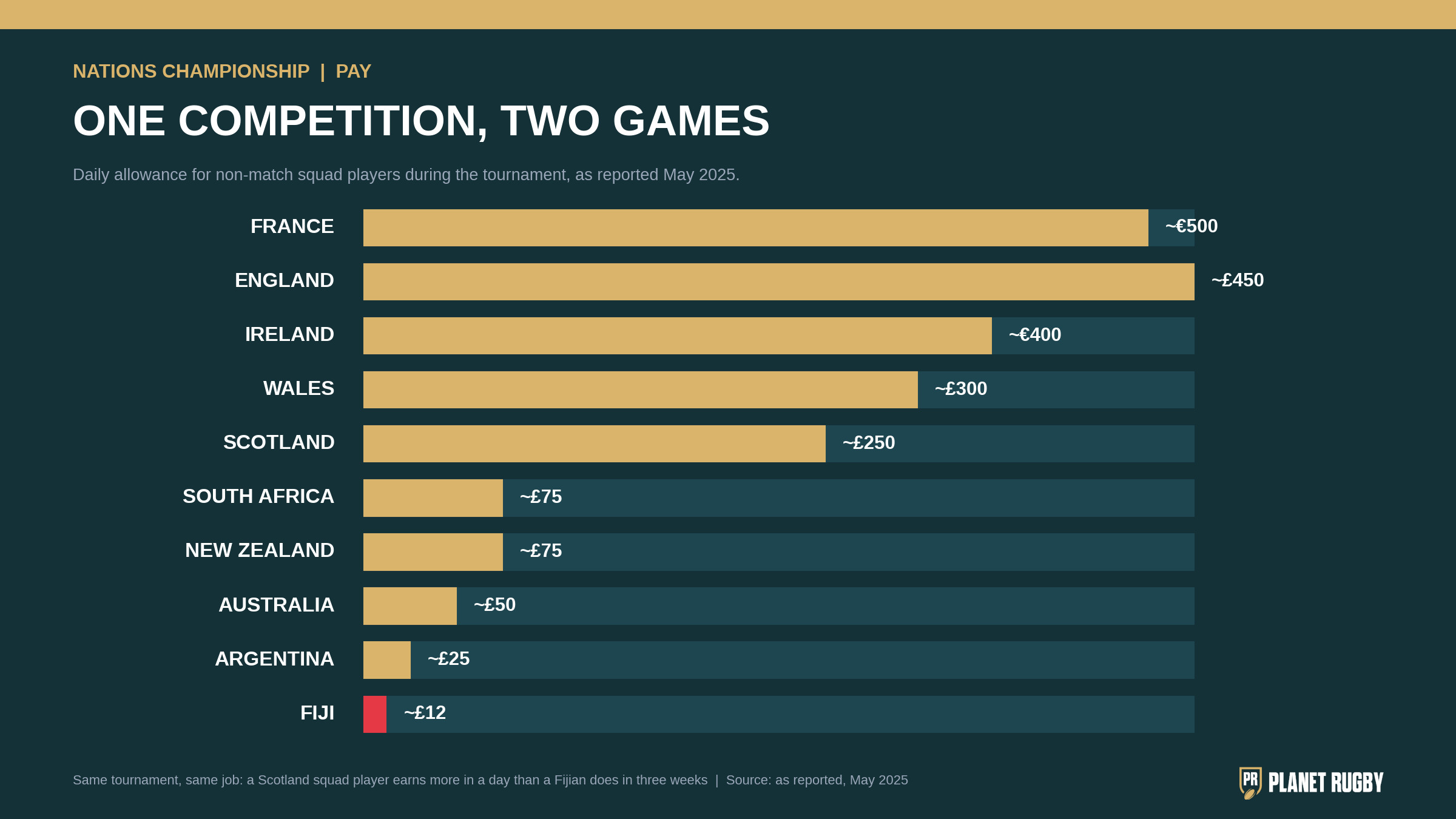
The honest measure is the daily allowance, because it applies to squad players in both hemispheres doing an identical job: holding bags, running opposition plays, never making the 23. A French squad player gets around €500 a day. An Englishman £450, an Irishman €400, a Welshman £300, a Scot £250. A Springbok or All Black squad player gets about £75. An Argentine £25. A Fijian £12. 12 pounds. A Scotland squad player, the most modestly paid man in the northern game, earns more in one day than a Fijian earns in three weeks of the same tournament.
Why it matters now
None of this was a scandal when the hemispheres genuinely were separate economies. The FFR’s television money was the FFR’s business, and Fijian rugby’s poverty was a World Rugby welfare problem to be managed with grants and meaningless PR platitudes.
The Nations Championship changes the terms of that argument. This is now a single competition with shared branding, a shared calendar and, we are assured, a revenue model that recognises all 12 participants. Fiji supply a good portion of its watchability – just ask anyone who was at Twickenham in 2023, or who watched that World Cup quarter-final against England, whether or not the Flying Fijians are a makeweight in this tournament or one of its main attractions. They bring the product, yet they are paid something akin to an accountant’s rounding error for it.
The disparity is such that word is Fiji’s analysts have stopped cutting opposition clips and started publishing Henry Pollock’s bank statement instead, on the basis that nothing gets a Pacific Island forward off the line faster than seeing what a 21-year-old with two caps banks for a week in camp making Insta clips.
The standard defence is that unions can only pay what their markets generate, and that is true as far as it goes. Nobody sensible expects the FRU to match the FFR. But the entire justification for building the Nations Championship, the argument made in every press release and every leaked term sheet, was that a shared vehicle would redistribute some of the game’s commercial gravity toward the nations that need it. That claim is now testable.
The test is not attendance figures or broadcast reach. The test is whether FJD 800 moves, and by how much, and how quickly.
The disclosure problem
There is a second issue sitting underneath the disparity, which is that we should not have had to assemble these figures from scraps in the first place.
Every number above comes from union statements, player association releases and reputable reporting as of May last year, because no governing body in rugby publishes its pay structures voluntarily.
The most common entry in the data is the word unknown. Football learned 20 years ago that wage transparency, uncomfortable as it is, strengthens the players’ hand in collective bargaining and builds a more honest relationship with supporters. Rugby still treats player pay as a state secret, an arrangement that suits the unions at the negotiating table and nobody else at all. The players’ associations on both sides of the equator deserve real credit for dragging even this much into the light.
The Nations Championship will be judged on plenty of things over its first cycle. Whether the crowds turn up in February. Whether a Fiji Test in Marseille feels like an occasion or an obligation. Whether the final earns its place in the calendar. All fair measures. But the administrators should understand that the pay gap is now on the public record, and the distance between €30,000 and £320 is not a footnote to the story of this competition. It is the story. Until that number changes, the global game remains what it has always been: a northern league with guests, and the guests are playing for petrol money.