Mike Brown reveals extraordinary lengths England went to face South Africa at the spiritual home of Springbok rugby


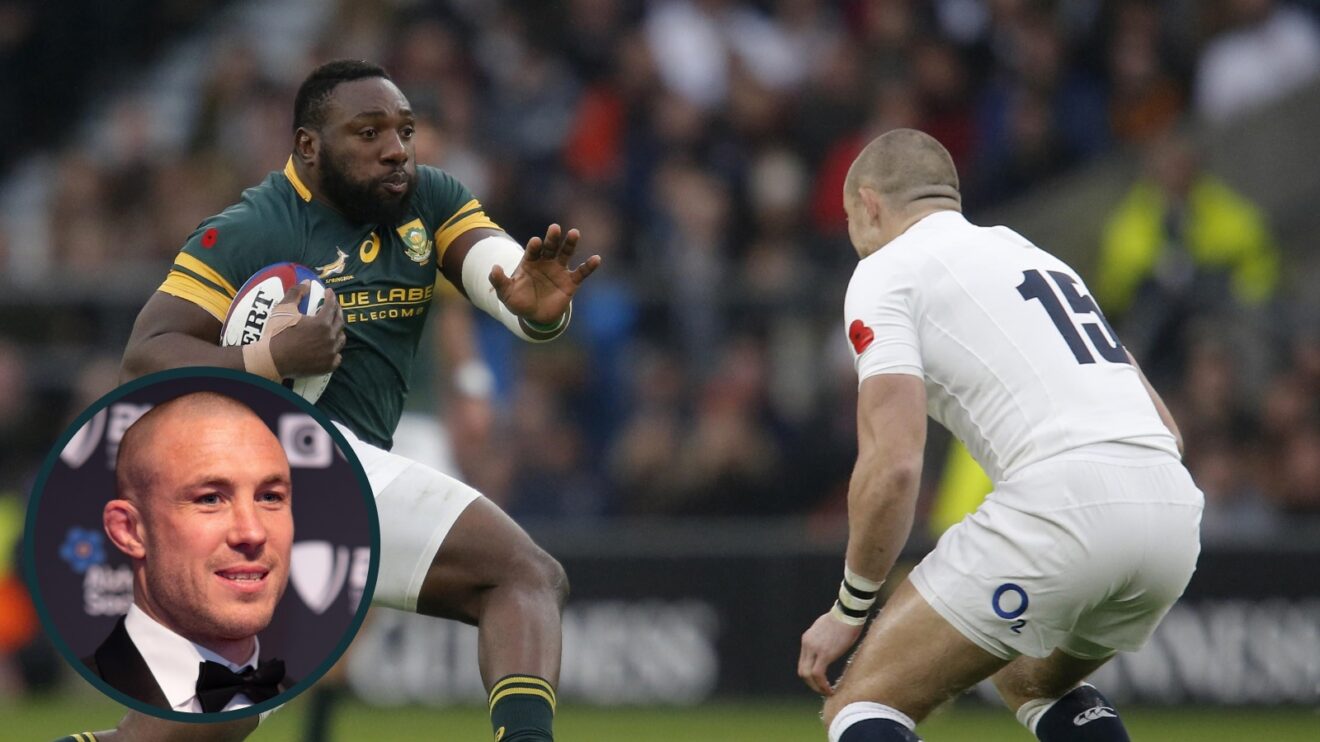
Mike Brown reveals extraordinary lengths England went to face South Africa at the spiritual home of Springbok rugby.
Mike Brown has revealed the extraordinary lengths to which England went to prepare to face South Africa at Ellis Park on their last visit to the spiritual home of Springbok rugby.
Brown, England’s most-capped fullback, was part of the team which stunned the Boks by racing into a 24-3 lead in Siya Kolisi’s historic first Test as captain in 2018.
They did so after then-head coach Eddie Jones braced them for the ordeal by getting his backroom staff and others to dress up as Springbok fans and hurl insults at them.
England quickly ran out of steam playing at altitude as Jones’ gamble on staying at sea level and flying up as late as possible backfired in the rarefied air of Johannesburg.
They ended up losing the game 42-39, giving new boss Rassie Erasmus his first win in charge and setting the Boks on a road which would lead to glory at the next two World Cups.
“Ellis Park is an incredible place to experience”
Eight years on, Brown has revisited the build-up to the tour and revealed the folly, as he saw it, of their acclimatisation strategy and the comedy of their preparation for the welcome awaiting them.
“Ellis Park is an incredible place to experience,” he tells Planet Rugby exclusively. “It’s passionate, it’s hostile. You can feel it when you’re warming up. You can see it from the bus on the journey in.
“It’s driving through town as well on the way to the game. You see all the big cars, these big Jeeps. The braais are going, the flags and comments are flying. Stuff that makes you go, ‘oh, sh**, this is serious’.
“That is what Eddie tried to prepare us for. Back at Pennyhill [England’s training base] he set up a simulation of what the outside of the stadium would be like, so we’d be kind of ready.
“He got all the staff to dress in South African shirts and stuff. All the sponsored Jeeps the staff had were there with all these flags draped over.
“He had green flares going off and people cooking on barbecues. He then made us walk from the hotel to the training pitch. That’s when we saw them.
“As we turned right up the hill to the performance centre they were all lined up on either side of the path in the Jeeps and stuff. We had to walk as a team through all that to our session as they shouted abuse at us.”
Brown says he could not take it seriously because there were guys he knew “trying to be serious South Africans”. He admits he is not one for that sort of role play, “though it was quite funny”.
Want more from Planet Rugby? Add us as a preferred source on Google to your favourites list for world-class coverage you can trust.
Less amusing was how he started feeling 20 minutes into the game as the affects of playing on the Highveld, 1,753 metres above sea level, started kicking in.
“You feel, like, daggers in your throat,” he says. “You know when you do fitness tests, you get this blood-metal sort of taste in your throat as you fatigue? It’s like that.
“Eddie was pushing the narrative of ‘the altitude is not going to affect us, we’ll be fine’, because we hadn’t gone there early to adapt, which most teams try and do.
“He was trying to talk us into believing it wouldn’t affect us. I can promise you now, it does. It saps your energy, takes your legs away. You can see that in our performance that day; how we started off, then faded.”
“Sporting villains in South African rugby culture”
This time around is different for a number of reasons. The incredible, raw emotion which surrounded Kolisi becoming the first black Test captain in Springbok history is not there.
England have a very different coach, one who prefers actions over words, and is unlikely to poke the Bok in any way ahead of kick-off.
They have also dispensed with a seaside build-up, preferring 10 days in Jo’Burg during which they have trained with hypoxic generators to replicate the demands of operating at altitude and get their bodies acclimatised to using oxygen more effectively.
For all that, the game day welcome is unlikely to be any less frosty if a comment piece in SA Rugby Magazine under the heading ‘Fighting Talk: England bring the noise, the Springboks bring the pain’ is any guide.
“English touring teams have long been treated as sporting villains in South African rugby culture,” writes Mark Keohane. “That hostility intensifies when England arrive with swagger. And England always arrive with swagger.”
The author contends that “no team wins as little and gets celebrated as much. No team gets as hyped as England and no team matches England for turning a second-place finish into a glorious lap of honour.”
All of which leads him to conclude that no other opponent is celebrated more loudly when beaten and that England’s mentality is “fragile”, whereas South Africa’s is “frighteningly strong”.
No doubt, then, where expectation lies ahead of kick-off. “And South Africa are much better now than when we went down there,” Brown adds.
World Cup Winner: ‘Most South Africans want to kick Henry Pollock’s head in’
“I don’t think it’s doom and gloom”
Where he sees a similarity, however, is in the opportunity it affords the side he represented with such pride on 72 occasions.
Eight years ago, England lost the three-Test series in eight days and, but for Danny Cipriani steering them to victory in the dead rubber, Jones would also likely have lost his job.
Like then, England are seeking redemption now after a fifth-placed Six Nations campaign which left Steve Borthwick fighting for his position.
Even if they do not open their Nations Championship account with a win, Brown feels there is much to be gained.
“They’ve had a blip, no doubt about it, but I don’t think it’s doom and gloom,” he says.
“This actually might be a blessing in disguise, because a team needs to go through a bit of trauma, a few tough times, and a lot of these guys hadn’t.
“If you look at those Northampton Saints players, it’s basically been one long upward trajectory.
“Courtney Lawes made the point recently, I think, that some of these England players hadn’t faced true adversity, gone through really tough times.
“That, as I experienced with England after the 2015 World Cup, can be so powerful in terms of motivating you to achieve great things.
“What we went through after that tournament was awful. We were ridiculed and abused. Maybe six months later, pretty much the same players won a Grand Slam and went on that massive unbeaten run.
“That shows you can turn it around quickly, and I think maybe this trip will give this England group some great learning. Probably knock some heads together that maybe thought it was playing sailing.
“It’s the manner of the performance England need to focus on, rather than winning or losing. If they use it right, it could be really beneficial.”