Springboks: The ‘credit’ Rassie Erasmus has for World Rugby and his apology for ‘maybe using my words wrongly at the press conference’


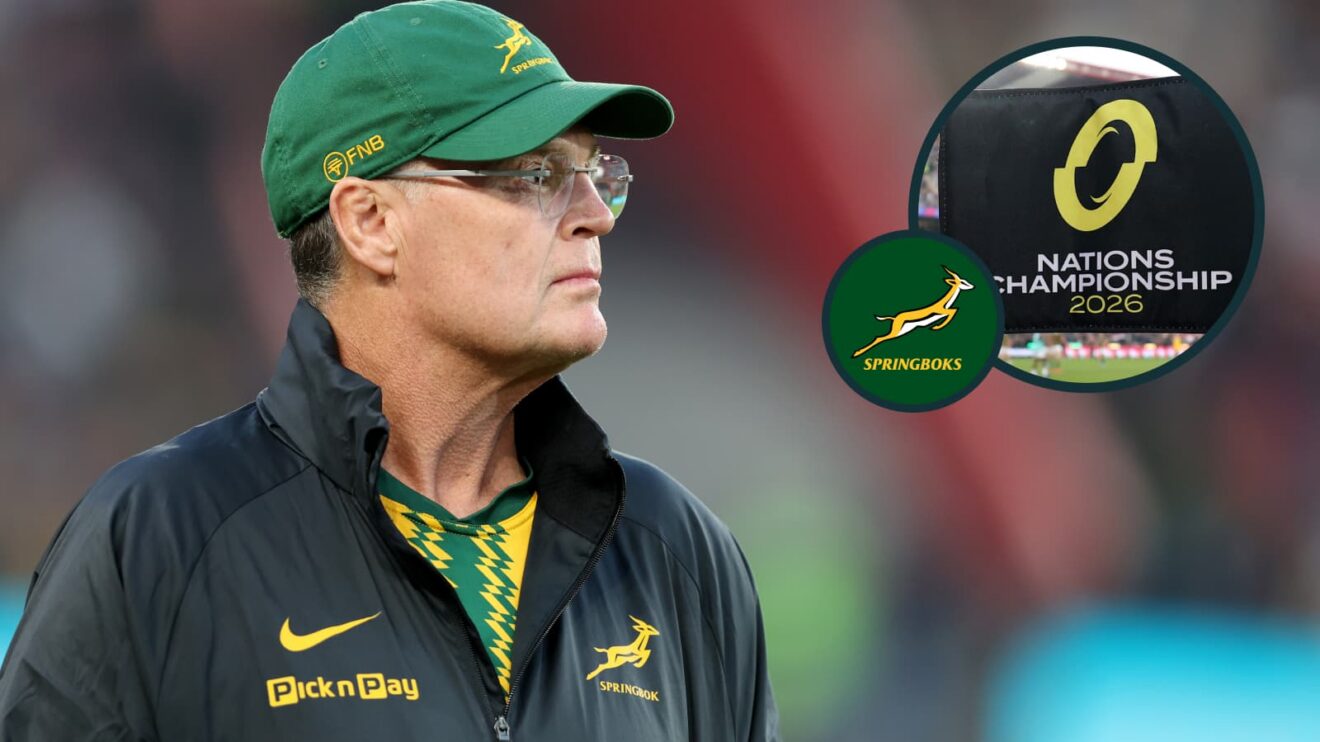
Rassie Erasmus enjoyed the level of rugby played across the six opening round Nations Championship matches
Springboks boss Rassie Erasmus has given World Rugby kudos for improving the way the game is played at Test level.
A new international era for the sport began with last Saturday’s opening round of the Nations Championship, and across the six matches, there were 54 tries and an overall points total of 381.
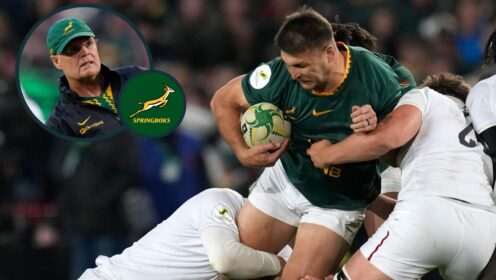
One industrious platform for several of those tries was the maul. There were seven directly scored from that facet of play, including one from South Africa’s Malcolm Marx versus England.
Several other tries came in the first or second phase after the maul, such as the move Cam Roigard finished by the posts on the stroke of half-time in New Zealand’s win over France.
“I thought all games were excellent…”
It was July 1 when World Rugby’s latest law amendments came into force, including a guideline that defending players who move past the ball must detach themselves rather than remain in the maul illegally.
South Africa opened their July schedule with a convincing 45-21 hammering of England in Johannesburg and ahead of their round two meeting with Scotland in Pretoria, Erasmus has sifted through the round one action and felt compelled to praise World Rugby – something every rugby fan would have thought unimaginable some years ago when he was the receiving end of bans from the game’s global governing body.
Speaking after naming a much-changed XV to host the Scots, Erasmus said: “An interesting thing, there was more maul tries scored in this opening round than altogether in the Six Nations if I have my stats correct.
“So, I want to give World Rugby credit there. I thought all games were excellent. Opening up this contest with the guy in the air with a contestable kick, it’s a nice competition there.
“What people thought was it was just going to be all mauling but because you can’t drag in a maul anymore, you have to put more numbers into a maul and the guys who stop the maul now have to get out and defend after that, so there is definitely more mauling but then after the mauling there is more tries because guys are tired of stopping mauls. You can’t just put four guys in and drag the maul to the side.
“Scrum feed, which World Rugby has introduced, is getting rewards where there is good contest there and loose forwards must stay bound to make sure the props don’t get scrummed back.
“So I think the product World Rugby is putting out with the law adjustments or interpretations that they put out there, that played a big role. It was beautiful rugby in most of the games.”
Following his team’s 24-point win over England at Ellis Park, Erasmus suggested at his post-game media briefing that the aerial battle had become rugby’s new set-piece. With the dust having settled on those comments, he was asked to revisit what he actually meant by what he said.
“A kick-off you kick, you don’t throw in. I’m not being sarcastic; I am really trying to say it is another source. Maybe I used my words wrongly at the press conference; I apologise for that. It’s more, it’s another source of possession,” he explained.
“A lineout, if the ball gets kicked out, it must be thrown down the middle and then although the other team kicked it out, both teams have got a chance to contest for that. At scrum, the ball gets thrown in. Same with the lineout, same with the kick-off, same with the goalline drop-out.
“I just feel with the way World Rugby has cleaned it up now that you can actually go up for a pure contest. If it’s a bad kick, it is your ball; if it’s a good kick, it’s a nice contest. I just think it is nice and contestable and then there is this competition for the ball in the air.
“If you don’t win the ball in the air, because one jumps higher or jumps earlier or whatever the case may be, then it’s scraps. Everybody calls it scraps now; that’s just the term all teams use now, and the scraps become a competition.
“From there it is who is the team that can set the quickest on attack and who can set the quickest on defence. Sometimes rugby is boring but the way the laws are now, this past weekend I thought all games were really contested in every single area.”
An 11th-hour talking point before kick-off versus England was the Springboks losing two 30-something veterans from their line-up.
It emerged that record caps holder Eben Etzebeth and long-serving captain Skya Kolisi had suffered respective head and hamstring injuries on the training ground, but Erasmus believes high intensity training remains a must if older players are to keep making his teams.
Sir Steve Hansen: Rassie Erasmus’ Springboks are misleading everyone about how they want to play
“I believe if a player can handle the intensity of a training session, the intensity is very hard, then the age of a guy should not be in the reckoning,” he said. “If he can handle the intensity and doesn’t get injured and he is ready and can perform on Saturday, then it means he is not too old.
“But if you start dropping the intensity of training sessions to accommodate older guys, which I was part of teams in the past, then you have got a great team on paper, but then those guys are not match fit and ready for Saturday.
“We try to keep the intensity of training sessions up there. If the older guys hang in there and they look after their bodies and they recover well and they can still play well on Saturdays, that means they are not too old.
“Now the same with younger guys, some guys break during the week… and the match is just too much. But we like to keep the intensity up and hopefully all the players, older, young and medium can handle it and then on Saturday it’s more or less the same, it’s not the same pressure-wise, but the intensity is the same.”
Erasmus also referenced a study that has given him confidence that guys who have been sidelined with serious injury can make up this lost time and extend their careers. “A guy did a study for us on guys who let’s say played six years and he was injured.
Want more from Planet Rugby? Add us as a preferred source on Google to your favourites list for world-class coverage you can trust.
“I asked him, is it like a car that stands in a garage. It’s a 1976 model, but five years he stood in a garage, how much of an impact did that have for prolonging his career? I mean, there is guys like RG Snyman, Lood de Jager, their age is maybe 31. I think Lood is older, but five or six years they missed of rugby.
“How much older does the body get and how much does the body get rested through those years? The results were interesting; it varies from position to position, backline, flanker, prop.
“Yes, definitely the wear and tear of players playing week in, week out, it is definitely tough going into a full-on Test season, but it goes in roundabouts. We now are fairly fresh because we have got lots of Japanese players in.
“We have got guys who came straight from URC, but then we have got guys who fell out of URC and didn’t reach the play-off rounds. Like Siya hasn’t played for a month and a half, so he is well rested and then he got injured…
“We can moan now and say we aren’t ready (for Test rugby in July) and we haven’t played together a lot but then at the end of the year we can say we have played right through, we are really in sync at the end of year tour and they [the northern countries] are only beginning as they haven’t played rugby after these three Test matches.
“It goes like that all the time. You can’t always get everybody into sync until there is the international season.”