Sharks v All Blacks: Five takeaways as Jordie Barrett masters the conditions in waterlogged win that will ‘bear no resemblance’ to Springboks challenge


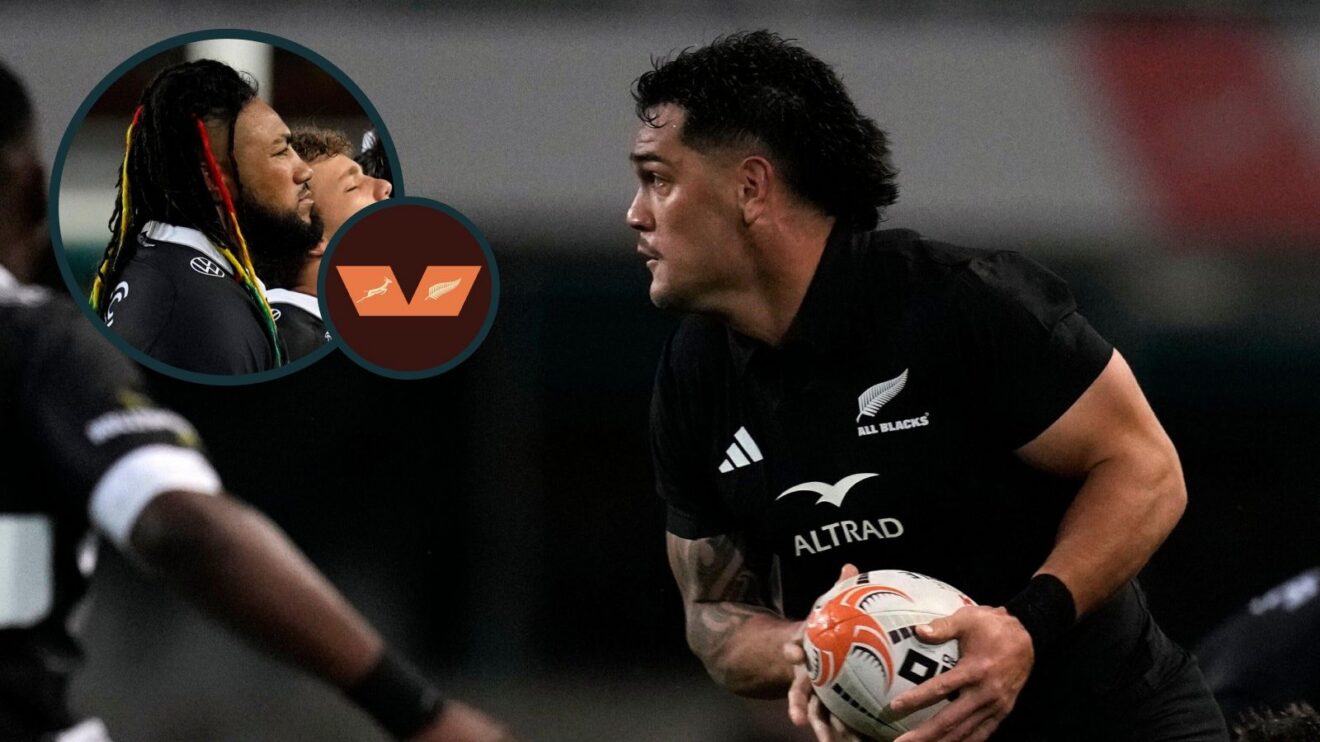
Our five key takeaways from the All Blacks' win over the Sharks
Following a 54-0 victory for New Zealand at Kings Park on Tuesday, here are our five takeaways from the second match of the Rugby’s Greatest Rivalry tour.
The top line
The Sharks were taken apart in Durban by a New Zealand side that read a waterlogged Kings Park the way a good sailor reads a squall, early and then acted on it, whilst everybody around them bailed. Eight tries, seven conversions, 54 points and not a single one conceded.
Yet for 40 minutes this was a contest that created problems for the All Blacks to solve. The Sharks had the majority of possession and the better of the territory in the first half and came away with nothing at all. New Zealand had less of the ball and scored twice. After the interval the possession split ran to roughly seven-three in the tourists’ favour and the game disappeared over the horizon, four tries arriving between the 45th minute and the 62nd.
That gap between the first half and the second is the whole night. JP Pietersen had said beforehand that his side, missing its Springboks and still in pre-season, would be at 70 or 80 per cent at best, and he was not being modest. This was a club team meeting something close to a Test one, and the club team lasted until its lungs gave out. Jordie Barrett, who took the official award, said afterwards that the side had to keep getting better as the tour goes on, which is the sort of thing winning captains say and also happens to be true. The Springboks will not hand over possession like this and they will not be obliged to kick the way Vusi Moyo was. Ellis Park is 11 days away and it will bear no resemblance to this.
Rugby played in a water feature
Somebody at SA Rugby sold this tour as Rugby’s Greatest Rivalry. Nobody mentioned the swimming. Rain had been falling on Durban for the best part of a day before kick-off and by the time the sides emerged the surface had stopped absorbing anything, so that every kick landed with a splash, every tackle threw up a bow wave, and players went to ground and kept travelling like children on a garden slide. Damian McKenzie lost a certain try because he aquaplaned across his own finish, arrived at the whitewash faster than he intended, and could not keep hold of the ball as he tried to plant it.
Then the evening produced something genuinely new. Later on, with another grounding under review, the television match official could not reach a decision because the spray coming off the pitch had made the footage unreadable. Not a blocked camera, not an obscured body. Water in the air. In an era where officials can count the hairs on a player’s forearm, Durban beat the technology with a puddle.
The hardy souls who paid Durban’s much-discussed ticket prices to sit in that deserve some credit, and so does the goal-kicking. Seven from eight in a downpour, off a tee sinking into standing water and with no purchase for the plant foot, was the cleanest technical performance of the evening.
Backing the skills
The obvious response to that surface is to shorten everything, carry into contact and wait for the other lot to drop it first. New Zealand spent 15 minutes trying exactly that, got nowhere, and then decided to play instead.
Ruben Love, who had led the haka, struck a 50:22 from 60 metres flat enough that it skidded across the water rather than sitting up. Quinn Tupaea put a kick over the top for the try McKenzie lost, offloaded to send Barrett over on the hour, then combined with Caleb Clarke from inside the New Zealand 22 to launch the move Kyle Preston finished. Barrett cross-kicked to the right edge for Fehi Fineanganofo’s first, and the same channel produced the winger’s second. Wallace Sititi carried three times in succession to drag his side upfield, then threw a 30-metre pass to put Clarke away.
The detail that gives the game away is Clarke under the high ball, declining to catch it and tapping it back instead, winning the scrap and playing from the mess. That is not instinct. That is a wet-weather drill executed by a man who has done it a hundred times on a Tuesday.
The numbers back it. Clarke topped the carries with 16 for 60 metres. Preston made 84 running metres, the most on the pitch, from scrum-half. Fineanganofo beat six defenders and made three clean breaks, both match highs, and helped himself to two tries on his second cap after scoring 17 in as many Super Rugby matches. Tupaea had 15 carries and beat five men, which will not have escaped Dave Rennie with Billy Proctor having had his tour curtailed.
Barrett managed 41 metres and two clean breaks and was comfortably the best player on the field regardless. The award went to the man who read the conditions quickest rather than the man who ran furthest through them.
What the Sharks had
Nick Hatton’s side had a first half and they had a captain. Three entries into the New Zealand 22 inside the opening quarter, one of them ending with Zekhethelo Siyaya held up over the line unable to work his knee to the ball, and nothing to show for any of it. Barrett admitted afterwards that his side had gifted those entries and that cleaning them up was the half-time instruction.
What followed after the interval was an exercise in defending. The Sharks made 105 tackles to New Zealand’s 79 and missed 21 to their opponents’ 12, which is what happens on 29 per cent of second-half possession. Emmanuel Tshituka got through a match-high 14 of them. Hatton made 11 and led the goal-line stand that held Asafo Aumua up over the line after Sititi had carried the tourists to within touching distance. Their lineout, incidentally, finished at 85 per cent against New Zealand’s 82, so one part of the operation worked exactly as intended.
Watch: Ma’a Nonu delivers incredible solo Haka in response to the All Blacks
The scrum did not, and it went wrong through Vincent Koch. A two-time World Cup winner shipping ground to Ethan de Groot has nothing to do with absent Springboks and everything to do with a club front row meeting a Test one carrying a Test conditioning base. The penalties followed.
Hatton diagnosed it himself, and did it well. New Zealand wanted tempo, quick ball made them lethal, and slowing it down was his side’s job. Eight penalties apiece and no cards on a night like that reads well for Matthew Carley, who has the first Test at Ellis Park on 22 August.
Nonu’s challenge
He answered the haka in a solo rendition, with Kapa o Pango, which is a different proposition altogether from replying with a haka of your own, and a thing only a man who had performed it in the black jersey across 103 Tests and two World Cups could reasonably attempt with any form of rugby or cultural credibility. Kings Park, drenched and half empty, went quiet for it and that says everything, whilst simultaneously saying nothing, out of sheer respect for a great.
Want more from Planet Rugby? Add us as a preferred source on Google to your favourites list for world-class coverage you can trust.
Ma’a Nonu came on at 60 minutes with his side 35-0 down, the oldest player ever to face the All Blacks at 44 years of age, and New Zealand scored either side of his arrival. His first carry was met by Love, the very man who had led the haka he answered, and the Sharks lost the ball at the breakdown that followed.
Late on, at 54-0, with the contest hours dead and his own side reduced to watching, he was still on at the officials about New Zealand running the referee’s side to open the space for another try. A legend for sure, but to the end, a total competitor, and that’s what’s always defined him.
READ MORE: Eight-try All Blacks make statement of intent with crushing victory over hapless Sharks