Rating every France player from the 2026 Six Nations: The three stars who ‘defined’ Les Bleus’ title defence and the championship


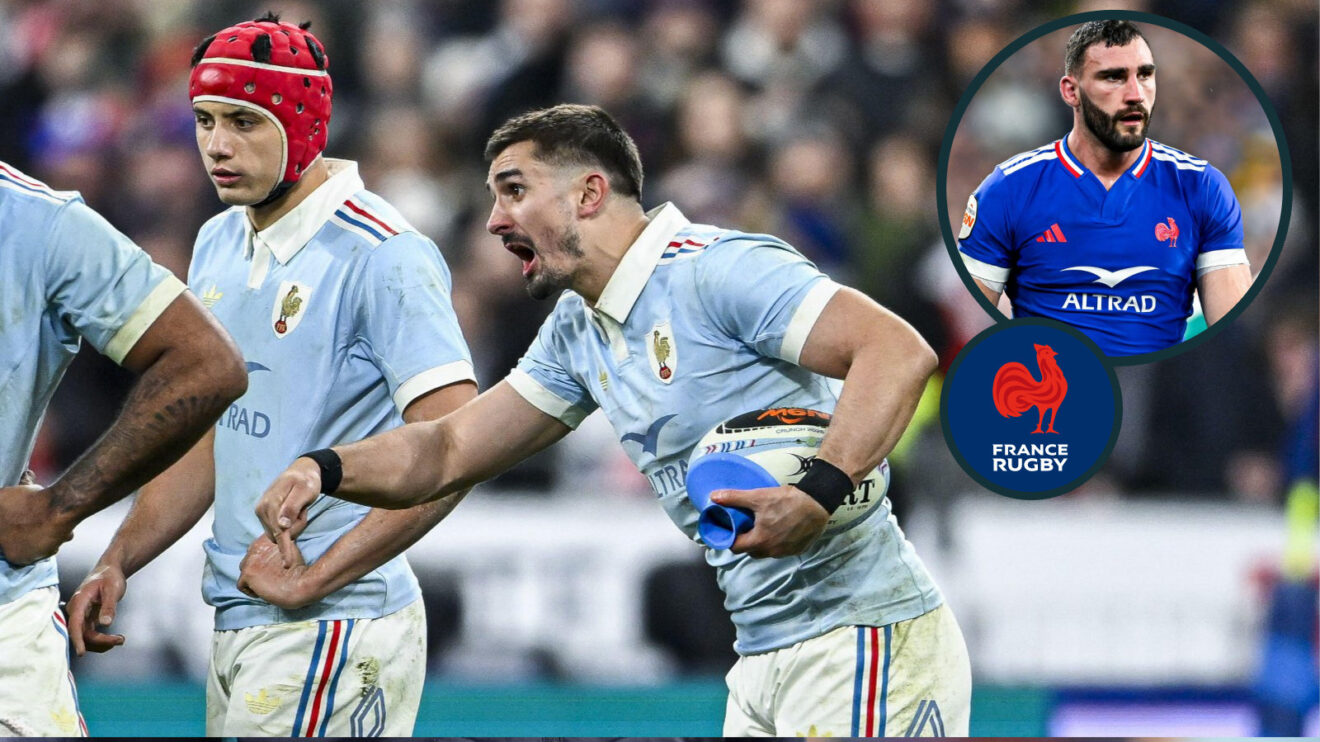
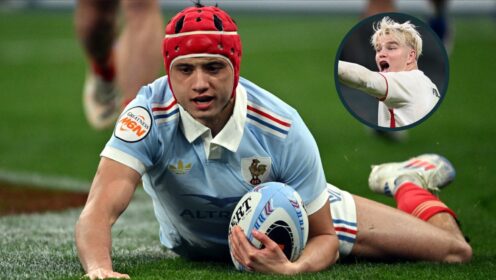
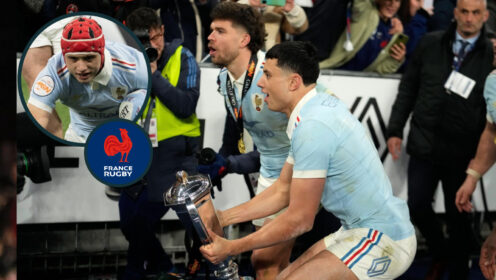
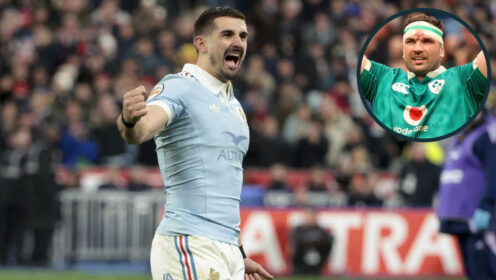
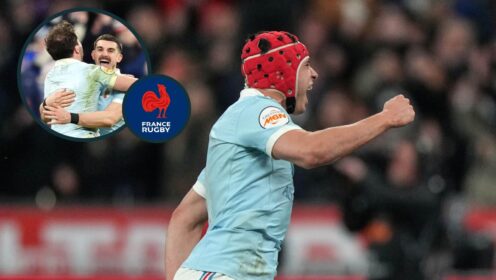
France's trio of star Louis Bielle-Biarrey, Thomas Ramos and Charles Ollivon (inset).
Following the conclusion of the 2026 Six Nations, we rate every player’s performance from across the Championship. Next up, it’s Fabien Galthie’s France.
Three players defined France’s 2026 Six Nations title defence and, in doing so, defined the championship itself. Thomas Ramos, Charles Ollivon and Louis Bielle-Biarrey were across five weeks of quite extraordinary rugby, three of the finest performers this competition has witnessed in a generation.
Ramos was the quiet architect of everything France built. 74 points, four consecutive tournaments as the championship’s leading points-scorer, and the nerve of a surgeon when it mattered most, slotting the title-winning penalty against England after the 80th minute as though the occasion were a Tuesday morning training exercise. His vision in transition, the outside-of-the-boot volleyed pass that set Bielle-Biarrey free in round one, the through ball against England that had no business being attempted let alone executed; Ramos operated throughout at a level that the match-winning penalty, brilliant as it was, only partially captures.
Ollivon was something else entirely. It is worth knowing, as context for what you witness every time this man touches the ball, that Ollivon was once ranked number two in amateur pelota in all of France and sat in the top 10 amateurs nationally at squash. The hand-eye coordination, the instinct for angles, the ability to catch, pass and offload under extreme physical duress, none of it is accidental. Like a great Bordeaux vintage, he is simply getting better with age, and across these five matches he was the most complete forward in the tournament, operating across the entire back five of the pack with an authority that left observers searching for superlatives.
And then, of course, there is Bielle-Biarrey. Nine tries. A new all-time Six Nations record in a single edition. The only player in the history of the competition to score in 10 consecutive matches. The second man ever to score four tries in a single Six Nations game. France’s all-time leading championship try-scorer. He is still only 22 years old. Remarkable, and without question, the Player of the Tournament.
Outside backs
Thomas Ramos: The tournament’s top points-scorer with 74, the first player to lead the Six Nations points charts in four consecutive editions, and the man who held his nerve when every nerve in France was shredded, slotting the title-winning penalty against England after the 80th minute. His through ball for Bielle-Biarrey would have made Kevin De Bruyne blush, and his ability to operate as an auxiliary 10 when Matthieu Jalibert withdrew against Italy revealed the full breadth of his footballing intelligence. A quite magnificent championship. 9/10
Théo Attissogbe: The big story before a ball had been kicked was the decision to drop Damian Penaud for the relatively unproven Attissogbe. He repaid every ounce of the faith Galthié placed in him, scoring four tries across the tournament and combining with Bielle-Biarrey and Ramos to form the most potent transition trio in world rugby. The audacity of that selection looks very different now. 8
Louis Bielle-Biarrey: Nine tries in this tournament alone, a new all-time Six Nations record in a single edition, and 18 in total in the championship, making him France’s leading Six Nations try-scorer of all time. He is the only player in the competition’s history to score in 10 consecutive matches. Against England he became only the second man in the Six Nations era to score four tries in a single game, equalling Chris Ashton. France made 80 offloads in this tournament, 38 more than any other side, and Bielle-Biarrey was simultaneously the primary beneficiary and the primary reason for that number. The best winger in the world is now a serious contender for the title of the best player on the planet. Peerless. 10
Gaël Dréan: A late call-up when Jalibert withdrew injured before the Italy game, Dréan found himself entering the back three at short notice with Ramos pushing into the 10 shirt. He did everything that could reasonably be expected of him in the circumstances and marked his debut with a try. 6
Centres
Yoram Moefana: He’s working his way back after a significant long-term injury and re-establishing himself in the French 13 shirt. He will not be satisfied with his performance at Murrayfield, where he finished the day with seven missed tackles in a game Scotland constantly probed through the midfield. He returned with considerably more purpose and authority against England in Paris. A mixed bag, and he will want considerably better from himself. 5
Nicolas Depoortere: Injury limited Depoortere’s opportunities, but in the matches he started he was superb. France’s centre stocks are strengthening almost week on week, and Depoortere sits at the very heart of that optimism. 7
Émilien Gailleton: Another whose tournament was defined more by the gaps between his appearances than the appearances themselves. When the opportunities came, he took them with the composure of a player who belongs at this level. France perhaps could have made more use of his considerable talent. 6
Fabien Brau-Boirie: Debuted in round two and started in round three, and the comparisons already being drawn with the great Yannick Jauzion are not without foundation. From the evidence of this Six Nations alone, this young man looks a superstar in the making. 7
Pierre-Louis Barassi: Hampered by injuries across the tournament, Barassi finally started in the final round against England and came alive after the interval with a string of strong carries. His pace, his physicality in contact, and his ability to operate across both midfield positions make him another of the remarkable options France now carry at 12 and 13. 6
Kalvin Gourgues: One appearance off the bench in round one. Not rated.
Noah Nene: One appearance off the bench in round two. Not rated.
Half-backs
Matthieu Jalibert: He withdrew injured in round three against Italy, and France felt his absence. In the four matches he started, however, Jalibert produced moments of genuine brilliance. He was outplayed in Edinburgh by Finn Russell on a day when Scotland were simply exceptional, and the yellow card he collected there summed up a difficult afternoon. In his other three outings he was at times completely mercurial, and the try he set up for Charles Ollivon against Ireland with a chip from his own half was the kind of moment that reminds you why Galthié built this team around him. With Romain Ntamack still absent, Jalibert has made the 10 shirt emphatically his own. 8
Antoine Dupont: Rumours of Dupont’s fade from grace are grossly exaggerated. Whilst he did not quite reach the stratospheric heights of two seasons ago, everything he produced across this campaign was of the highest order. He was the heartbeat of French rugby throughout: the initiator of breaks, the instigator of ideas, the fulcrum around which this team’s ambition rotated. His steal in contact on Sione Tuipulotu before Bielle-Biarrey’s try in Edinburgh was a reminder, on a difficult afternoon, of what separates him from every other scrum-half on the planet. Perhaps half a yard of pace has been surrendered to the knee reconstruction. He is still, without question, the best in the world. 8
Baptiste Serin: Matched Dupont blow for blow in terms of impact every time he came off the bench, adding real tempo and precision to whatever was asked of him. With the opportunities he had, he could not have done more. 7
Back-row
Eddie Jones: Antoine Dupont ‘not the force he was’ as he reflects on Six Nations finale
François Cros: Started all five matches and played every minute of the tournament. He will never be the player who grabs the back pages, and he is entirely comfortable with that arrangement. He is the oil in the French machine: securing fast ball, policing the ruck, and providing the platform from which the more celebrated names around him operate freely. His tackle and breakdown numbers across the five games were exceptional, and France simply do not function at the same level without him. 8
Oscar Jégou One moment of madness against Scotland saw him suspended for the final round against England, a costly absence that France felt acutely. Away from that single aberration, Jégou offered pace and a genuine point of difference in the French back-row throughout the tournament. France organise their flankers along left and right channels rather than the traditional open and blindside designation, but Jégou is the nearest thing to a classic British-style openside that French rugby has produced in years. One regrettable blemish on an otherwise outstanding season. 7
Anthony Jelonch: Injured for the final game against England, Jelonch’s diesel-powered work rate in the carry and the tackle was an integral part of the French forward engine all tournament. He does not attract the headlines that Ollivon or Jégou command, but everything he produced was rooted in power and precision. A player who makes France better simply by being on the field. 7.5
Temo Matiu: Made his debut in round five and put in a solid shift before being withdrawn at half-time. An encouraging introduction to Test rugby from the Bordeaux-Bègles back-row. 5
Lenni Nouchi: Some significant interventions at key moments across the campaign. France have in Nouchi a competent, hard-carrying option who will only grow in stature at this level. 6.5
Joshua Brennan: Limited opportunities, as one might expect of a developing player at this stage. The Irishman-turned-Frenchman is emphatically one for the future, a big unit who adds serious options across both the second row and the back-row. 6
Locks
Charles Ollivon: As noted above, peerless. Whether starting at four or five, shifting into the flank in the run of play, or driving ball from eight, Ollivon was the most complete forward in this championship. His try against Ireland on the opening Thursday, initiated by a chip from Jalibert, was typical of a player whose ball skills owe as much to his pelota and squash background as to anything the rugby coaching manuals contain. Unquestionably France’s finest forward across the five weeks. 9
Mickaël Guillard: Started rounds one and two and made a substantial impact in both. France’s rotation policy at lock inevitably tempered his starting opportunities as the campaign progressed, but his appearance off the bench against England in the final round was precisely what France needed at a critical moment, and he delivered. 8
Emmanuel Meafou: Part of France’s considered rotation at lock for much of the campaign, but when the big Australian-born second-row hit the line, it trembled. The ongoing calculation for Galthié is that every time Meafou plays, France lose a lineout forward, and that tactical trade-off remains a live conversation heading into 2027. 8
Thibaud Flament: After a self-imposed absence for personal reasons, Flament returned and made some genuinely telling contributions in the latter stages of the tournament. His reintegration was handled with care by the management and the reward was visible on the field. 7
Hugo Auradou: Used off the bench across the campaign with limited opportunities to truly impose himself. He looks one for the future at this level, and his development will be worth watching. 5
Want more from Planet Rugby? Add us as a preferred source on Google to your favourites list for world-class coverage you can trust.
Front-row
Jean-Baptiste Gros: The man from Toulon completed a remarkable 43 tackles at 100% completion, a statistic that speaks to his authority in the contact and breakdown area throughout the campaign. France’s scrummage failed to impose itself upon its opponents, and Galthié will be concerned about the collective power of his front-row moving forward. Gros emerges from the tournament in credit, even so. 5
Dorian Aldegheri: France carry a gaping weakness at tighthead prop and Aldegheri did little to dispel the notion across his starts. In Edinburgh, Pierre Schoeman got the better of him repeatedly and the pressure from Scotland’s loosehead mounted with each passing scrum. It is a real issue for this side, and one might reasonably argue that France are a world-class tighthead away from being a genuine top-three global force. 3
Rodrigue Neti: France lost little on the loosehead when Neti came off the bench, though he did not carry the same impact around the park as the man he generally replaced in Gros. A reliable presence without ever threatening to impose himself on a game. 5
Régis Montagne: Unfortunately for Montagne, injury in round two curtailed any real momentum in the tournament. He may well be the tighthead solution France so desperately need, and his Clermont form suggested as much, but he played far too little for any meaningful judgement to be rendered here. 5
Georges-Henri Colombe: One appearance off the bench brought no discernible impact. The evidence is simply too thin to assess. 4
Demba Bamba: Explosive around the pitch and capable of real moments in the loose, Bamba nonetheless did nothing to dispel the growing narrative around France’s vulnerability on the tighthead side. A yellow card against England in the final round encapsulates a tournament of promising instincts poorly channelled. 4
Julien Marchand: Marchand looks a touch below the outstanding form of his 2022 and 2023 peaks, and his 50th cap came in a tournament where he was rarely able to operate from the platform his talent deserves. He hit his lineout calls with authority and made crucial interventions in the loose, but his front row rarely provided him the foundation a hooker of his quality requires. 5
Peato Mauvaka: Working his way back to full fitness after a long ACL absence, the progression across the tournament was clear and encouraging. Across rounds one, three, four and five he raised the tempo every time he came on, bringing an intensity and physicality that consistently shifted the contest. There is a credible argument at this point that he is the better starting option over Marchand. 6
Maxime Lamothe: Once Mauvaka returned to fitness, Lamothe’s opportunities were inevitably curtailed. In round two against Wales he made a reasonable impact when called upon and showed enough to suggest he is a credible third-string option at this level. 5