Six Nations winners and losers from the ‘histrionics’ of Henry Pollock to the ‘unplayable’ Louis Bielle-Biarrey


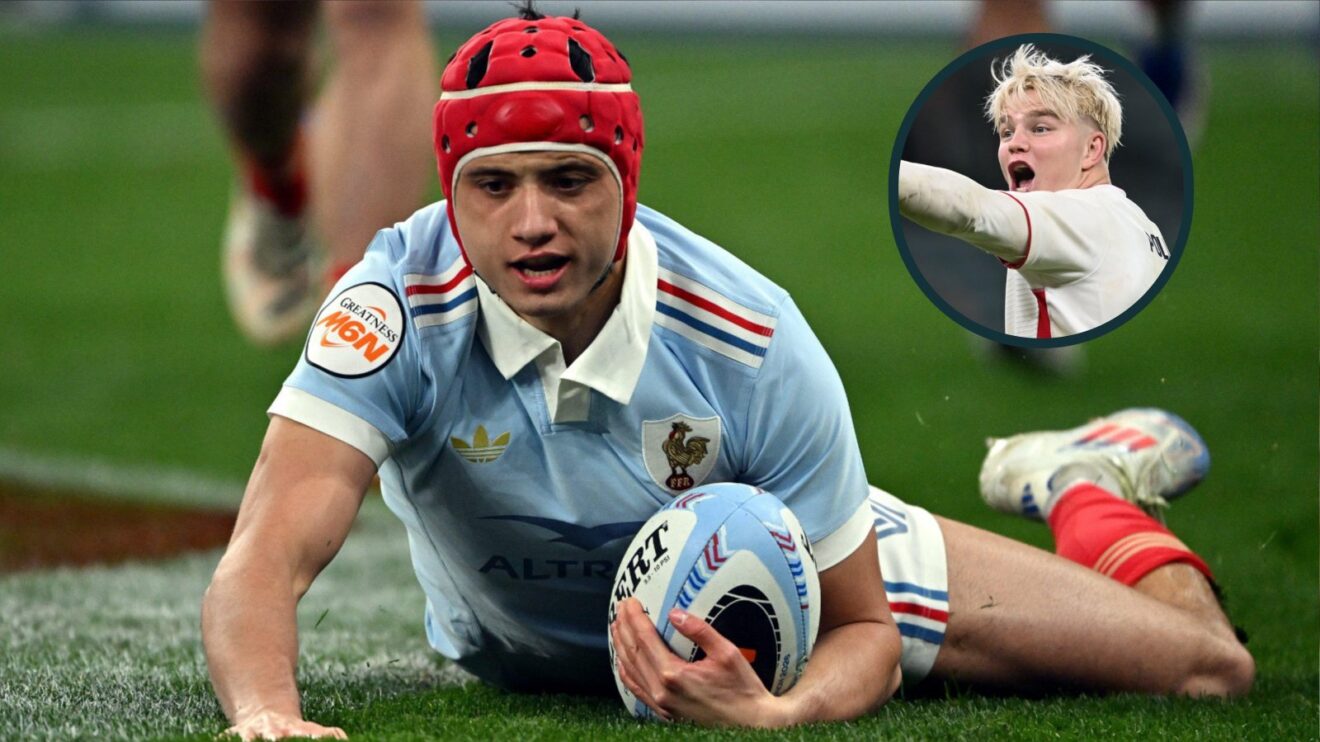
France winger Louis Bielle-Biarrey and England back-row Henry Pollock (inset).
Following the completion of the 2026 edition of the Six Nations, here is our take on the key winners and losers from another drama-filled and entertaining Championship.
Given France topped every metric in this most remarkable of all Six Nations Championships, Les Bleus could argue they are the only winners and everyone else belongs in the losing category.
But in a tournament like no other that is way too simplistic. This was six weeks of extraordinary theatre, in which every country took a turn playing the lead role.
Consider this. Wales beat Italy who beat Scotland who beat France who beat Ireland who beat England who beat Wales.
For every rags-to-riches tale (Wales) there was a riches-to-rags storyline (England). The team (France) that scored the most tries (30) was also the one that topped the list for number conceded (19).
Italy, 32 matches without a win over England, finished above them in the standings for the first time after making history by beating Steve Borthwick’s team in Rome.
In any other year that might have been game of the championship. But 2026 was the campaign in which Scotland put 50 points on France and England set a championship record by scoring 46 points (against France) and losing.
It was the year Ireland rampaged to a record win at Twickenham and Wales, without a Six Nations scalp in three years, snapped that 15-game losing streak on the final day. In short, it was a championship for the ages.
Winners
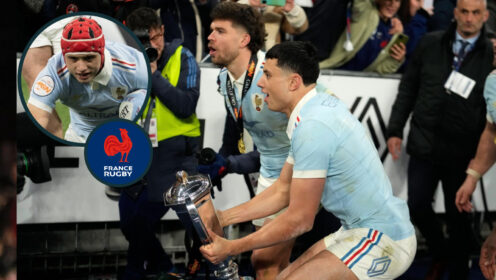
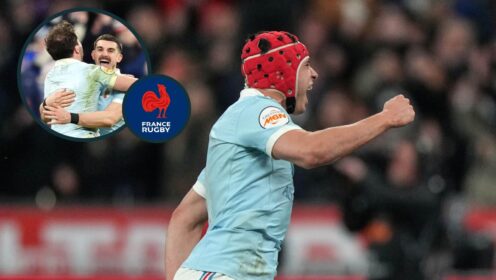
Louis Bielle-Biarrey
The mind flashed back to Newlands Stadium in Cape Town 31 years ago as Louis Bielle-Biarrey shredded England with four tries in Paris to bring the curtain down on an unforgettable competition.
The Bordeaux wing lacks the physical dimensions of Jonah Lomu, but what he did to England at Stade de France is without equal since the All Blacks legend ran round, through and over Will Carling’s side in the semi-finals of the 1995 World Cup.
Lomu was unplayable that day, so too Bielle-Biarrey as he made history by scoring one try or more in every round for the second successive year, to take his tally to 17 tries in 10 games.
The fourth try against England took him past the single-season record of eight he set in 2025. In two championships he has 25 try involvements. Unprecedented numbers.
Still only 22, the man in the distinctive red scrum cap already sits joint fifth on the championship’s all-time list with 18 tries, beside Rory Underwood, Cyril Lowe and Gareth Edwards.
It is only a matter of time before he overtakes Shane Williams (22 tries), George North (23) Ian Smith (24) and even Brian O’Driscoll (26) – in the fast lane, of course.
Ulster rugby
It is easy to pick out Stuart McCloskey for his ball-carrying brilliance and tough-as-teak defence. To hail the pace and finishing of Rob Baloucoune, making up for lost time with three tries and a Triple Crown in his debut season.
But for Louis Bielle-Biarrey, McCloskey could well have won Player of this Six Nations. Baloucoune was named the tournament’s Rising Player; some achievement for a 28-year old.
Yet we can’t stop there. For Ulster rugby contributed seven players to Ireland’s Triple Crown-winning squad. Four appeared in Ireland’s hammering of England, the country’s record win at Allianz Stadium; five started against Wales.
Why is this especially notable? Because as recently as November last year there was no Ulster representative in the Ireland 23 to face South Africa; the same story as against Wales in 2025 and Scotland in 2024.
As for Ulstermen in the British and Irish Lions squad last summer? Yep, there were none.
Take a bow Richie Murphy who, in his second season as head coach, has Ulster lying third in the United Rugby Championship, above Leinster, Munster and Connacht.
Under his stewardship not only have McCloskey and Baloucoune shone. Jacob Stockdale has rediscovered his best, Nick Timoney has made headlines and Tom O’Toole, Tom Stewart and Nathan Doak have all been capped.
Rhys Carre
Before the last Rugby World Cup a press release dropped from the Welsh Rugby Union announcing that Rhys Carre had been released from Wales’ World Cup training squad.
“Following ongoing discussions between the player and the Wales coaching team,” read the statement, “Carre has failed to meet individual performance targets”.
That June day in 2023 it would have been impossible to believe that three years later the very same prop forward would be the toast of northern hemisphere rugby, particularly the front row fraternity.
Carre scored three tries in this year’s Six Nations for a Wales team which went from hopeless to competitive to victorious in the space of six weeks. Before him, only five starting props had ever scored in three successive Test matches.
The pick of the trio was a 35-metre burst, complete with half-dummy, to get past a Ireland wing Baloucoune. The smile he wore from 20 metres out made ‘Carre the carry’ the talk of the tournament. Fit for purpose? You’d better believe it.
Thomas Ramos
With the last-minute penalty which broke English hearts Thomas Ramos not only won the tournament for France, he confirmed his status as the world’s best goal-kicker.
The Toulouse full-back broke through the 500-point career barrier on opening night against Ireland and six weeks later finished top scorer for a fourth consecutive Six Nations.
His 74-point haul enabled the French to retain their crown and gave him a fourth Golden boot to sit behind the ones won (with totals of 71, 63 and 84) in France’s previous three campaigns.
The image of him fronting up to Henry Pollock as the young English flanker screamed in his face, summed up that mad final game. Ramos kept his head while others around him lost theirs.
Michele Lamaro
He captained Italy to their first win over England and a joint best ever finish in the Six Nations table, but Michele Lamaro was not done there.
The Benetton flanker was one of the players of the tournament, a popular choice for the blindside spot in a ‘best of’ back row composition containing Scotland’s Rory Darge and either Aaron Wainwright or Caelin Doris.
To have got his side to the emotional pitch necessary to deliver the performance which made history against England at Stadio Olimpico is something of which to be proud.
Sir Clive Woodward slams Henry Pollock’s French ‘baiting’ as rising star ‘fast becoming a liability’
Indeed, when he walked into the post match press conference that night in Rome the Italian journalists gave him a round of applause.
Tommaso Menoncello had an outstanding campaign for the Azzurri, so too Louis Lynagh. But Lamaro ticked all the boxes, not only as a player and a leader, also as an ambassador for the game of rugby union.
In Dublin, in round two, Italy were upset to lose to Ireland after a Lynagh try was controversially disallowed. Lamaro’s reaction was not to spit the dummy but to end the after-match press conference with an unprompted tribute to Hollie Davidson, who that afternoon had become the first woman to referee a men’s Six Nations game.
“I just want to congratulate her,” he said. She has been doing so much for world rugby and our game and I think it’s an important thing to say.”
Losers
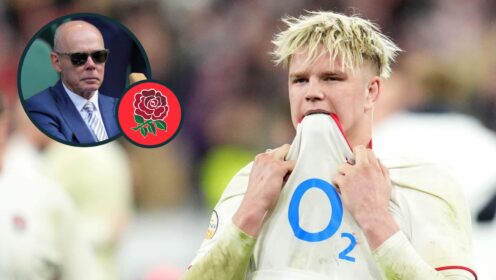
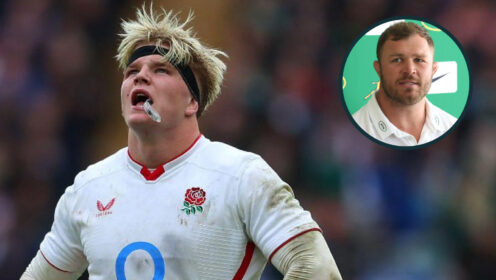
Henry Pollock
Insanely gifted yet as big a talent would appear to be his ability to get under people’s skin. Ended the Champions Cup final with opponents wanting to punch him, finished Six Nations finale with seemingly the entire sport having a pop.
Why is it always me, the 21-year old doubtless wonders. Partly it is the quality of his play which deservedly commands attention, brings him fame and with it a sizeable social media following. Equally, his histrionics on the field wind up opposition players and fans like you would not believe.
Exhibit A is what happened two minutes from time in Paris. England take the lead for the third time but, in a game of 12 tries, it brings no guarantees. Pollock’s response is to shush the crowd and cup his ears. It felt ill-advised at the time, completely dumb when France went back up the other end and won the game.
Rugby has never had much time for the cult of personality and, to be fair to the Northampton man, Steve Borthwick has encouraged him. “We talk about tall poppies,” the England boss told me last year. “Rugby is in a battle for attention and support with so many competing sports. What rugby needs is taller poppies.”
Tadhg Furlong
Tadhg Furlong is one of rugby’s great warriors, a man with a palmarès to die for: one Champions Cup, two Grand Slams, three Six Nations, four Triple Crowns, five URC titles.
Twice he has toured with the British and Irish Lions, three times he has made the World Rugby men’s dream team of the year. At the age of 33 there is only a World Cup missing from his to-do list.
All of which made what happened at the Aviva Stadium against Italy all the more shocking. Ireland’s scrum was outplayed by Italy and one moment became emblematic of that.
It was when Mirco Spagnolo scrummed Furlong off his feet and up into the air; ‘given his wings’, as prop forwards like to say but not experience.
This being 2026 it led to such mockery on social media that Spagnolo felt it necessary to blast the “disrespect” shown to a “legend of the sport”.
Furlong is exactly that. And he proved it by starting Ireland’s next three games, all of which they won to capture the Triple Crown and miss the title only by the narrowest margin.
Fabien Galthie
I know, France retained their Six Nations title and gave us the tournament leads for tries and try involvements (Bielle-Biarrey, 9 and 13), points (Ramos, 74) and offloads (Matthieu Jalibert, 14). But this is such an outstanding crop you would expect that.
What you would not expect is to suffer a record defeat to Scotland and concede almost 100 points in back-to-back games after going three and 0. If Ramos had not kicked that last-minute penalty against England the French would have blown the championship.
That would have amounted to failure with a capital F. As it is, one penalty goal does not bridge the gap between failure and brilliance. For every compliment at the way they took apart Ireland on opening night there was concern for a scrum unable to replace the sudden loss of Uini Atonio.
For every round of applause (and there were many) for their transition work and finishing there was worry about the way they defended – or did not against Scotland and England. Tell me another champion team that has claimed the prize after shipping 14 tries in the final two games. I’ll wait.
Now this was a tournament without precedent. Record number of tries (211), plot twists at every turn. To come out ahead of the Ireland team that buried England and the Scotland side that led them 47-14 after an hour, is an achievement of course worthy of celebration.
But if this France team wants to avenge its 2023 World Cup disappointment next year it will need greater consistency. In their hour of glory that is a work-on Galthie can’t ignore.
Want more from Planet Rugby? Add us as a preferred source on Google to your favourites list for world-class coverage you can trust.
Those with a World Cup obsession
Italy beat Scotland and there are calls to sack Gregor Townsend. England lose four in a row and Steve Borthwick’s position becomes ever more untenable. Why? Because the World Cup is 19 months away, that’s why.
The Webb Ellis Cup is rugby’s holy grail, I get it. What I don’t understand is those who view every match through that prism; who put the World Cup on a pedestal and view every other competition as either unworthy or a dress rehearsal.
This tournament emphatically proved the Six Nations really matters to people. It not only escorted us out of the dark days of winter, it entertained and thrilled and crackled with rivalry in a way the World Cup just doesn’t.
You can be nowhere near the best in the business and reach a World Cup semi-final. England proved that last time round. With respect to Argentina, Japan, Chile, Samoa and Fiji, there was not a fixture there they should not have expected to win.
The notion that supporters would sign up for four years of wilderness rugby between World Cups as long as you make a semi-final, I believe, is a fallacy.
England have not won a title since 2020 and a Grand Slam since 2016. Steve Borthwick was left with egg on his face for saying he hoped fans would “flood across the Channel” on the final day to watch the men in white “achieve what we want”.
England actually endured their worst ever campaign. But his motives were honourable. He was thinking as a fan. He was acknowledging that every game and tournament matters. The World Cup is not the be-all and end-all.
England
A team with aspirations of a Grand Slam ended up enduring their worst ever Six Nations campaign. There is no sugar coating this. The campaign was a disaster.
England will point to seven tries scored against France, the most the country has ever scored away against Les Bleus. They might also refer you to their 29-0 half-time lead against Wales. Only France won the former and the Welsh had four players sin-binned in the latter.
There were next to no redeeming factors, particularly in successive defeats to Scotland, Ireland and Italy. In those three games the grand total of points scored by England in the first quarter came to zero.
Borthwick is the face of the team so is copping the most flak. But few, if any, of the players escape criticism. At their best England can be very good, everyone knows that. What this tournament also proved is that they can be dead ordinary.