Loose Pass: Maro Itoje’s comments expose England’s ‘biggest problem’ as the glare on Steve Borthwick ‘is now brightest of all’


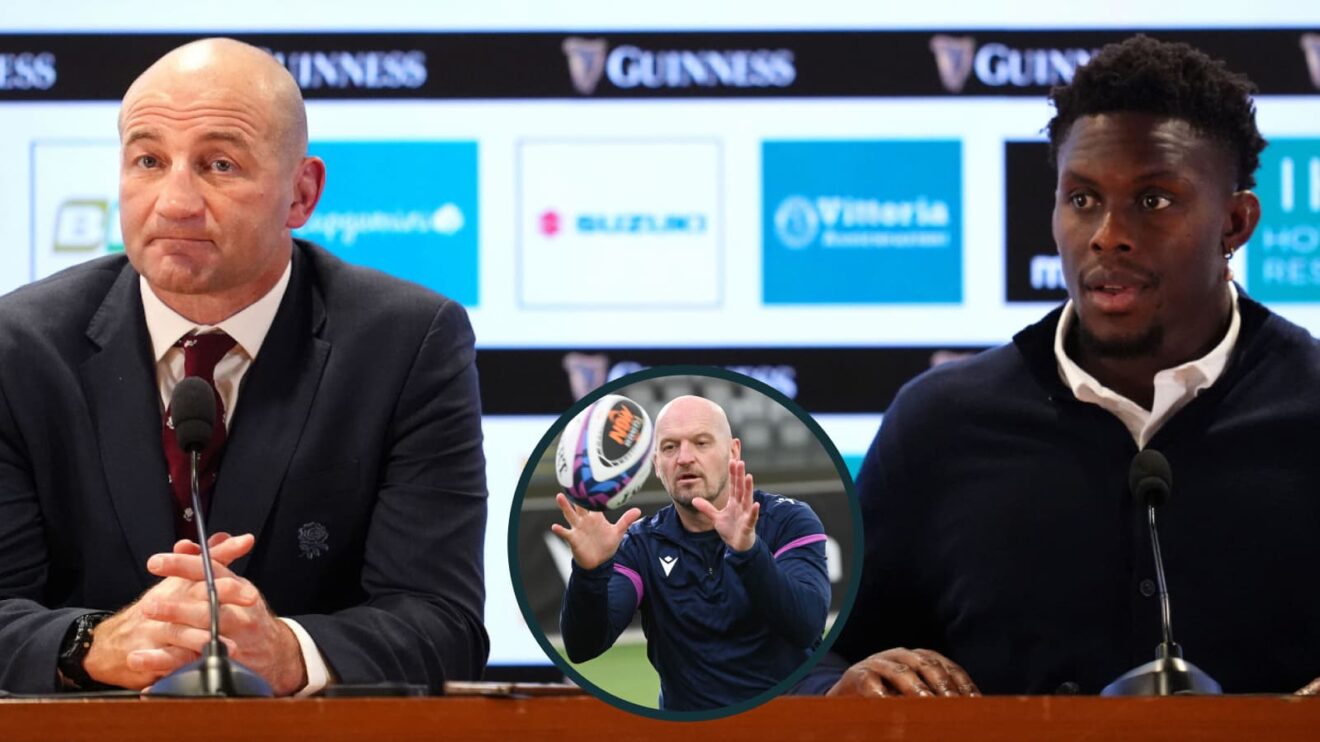
England head coach Steve Borthwick and captain Maro Itoje are in the spotlight.
This week we will mostly be concerning ourselves with England and bonus points…
England’s problems are more touchline than pitch
It’s inevitable that Steve Borthwick is the one under scrutiny after England‘s deep regression this Six Nations. But it will be important to ask the question: the blame for all of the aspects, or just some? Decisions? Philosophy? Management? Everything?
This one doesn’t feel like the players’ fault. “The coaches set us up, we have to take responsibility,” said Maro Itoje in the post-match in Rome. Considering he was pretty knackered, it’s unlikely there was any deliberate lurking meaning below the face value of the statement.
But what the coaches set up has become England’s biggest problem and if you frame Itoje’s words in that way, he is absolutely delivering that message. He did as he was told. He didn’t do it well enough. But the ability to adapt was shackled by that set-up.
There were seven minutes to go in Rome and England had a decent attacking position 10 metres into the Italy half. Probe a few phases? Run a couple of shapes with varied lines and try to tear a hole? Give some talented individuals a shot?
Of course not. Up went the ball from Ben Spencer. Through went the chasers. A contest in the air. Loose ball. Italy wanted it more and they got it. Another attacking platform blown. Death by non-adventure.
So what was Itoje talking about? How well have the coaches set it all up? Who polices and leads what the team does? What feedback is given from whom? How can an attack marshalled by Lee Blackett, whose Bath team were one of England’s finest purveyors of exploited gaps and space, be so mechanical?
When England were awarded the penalty on 53 minutes which should have put them unassailably ahead, Ellis Genge and Sam Underhill were visibly having a bit of an argument about something, the former very much the one seeming to voice his unhappiness with something. Three minutes later Underhill was lucky not to see red for some pretty lazy tackle technique. Coincidence or dissent among the ranks spilling over?
Itoje’s yellow card seven minutes later was unforgiveable. There was no more obvious transgression the entire game, no greater momentum-shifter. After that, England’s unity was gone. Was it Itoje being over-competitive? Or just frustration spilling over?
When players are not delivering to their full potential, or – and especially this bit – being over-coached, your problem is upstairs, but it manifests itself on the pitch as unfathomable errors and frustrated indiscipline. That’s been England all over these past four weeks.
Exclusive: Eddie Jones’ frank assessment of England, their ’emotion killer’ and Steve Borthwick
Nor does this team look anywhere close to fit. We wrote a fortnight ago about the loss of gas Marcus Smith suffered during a breakaway against Ireland, one you’d have put the house on him finishing. Tom Roebuck’s energy levels during the move for Italy’s killer try were close to zero, as were Elliot Daly’s for Italy’s first try. They were the most obvious examples, but there were plenty of others.
The picture painted is of a team with more to offer being strait-jacketed, over-drilled and worn out by its own targeted intensity, losing its temper when under pressure because of it. Even the leaders are either crotchety or downright cross. Players are painting by numbers without knowing even what the finished article looks like, becoming too tired to paint properly. And that is down to the coaches.
In a tournament in which almost every coach has been in the spotlight, the glare on Borthwick is now brightest of all.
An entry into the bonus point debate
It has been 10 years since bonus points were introduced into the Six Nations. You can haggle over whether it has made differences to the run of play in individual matches, but in terms of the final standings: only in 2021 have bonus points counted in the final reckoning, when France finished above both Ireland and Scotland where otherwise they’d have finished fourth.
Gregor Townsend can rightly be proud of the win this weekend past, but had Scotland stayed the full course and denied their opponents that fourth try, they would now be ahead of Fabien Galthie’s men and heading into the final weekend knowing that a bonus-point win would guarantee them the tournament victory.
Instead they now have to get that and then hope that England’s defence pitches up in Paris. Meanwhile, all France have to do is get that four-try win (and assume Scotland’s winning margin is less than 59 points better than theirs, which is perhaps a less forlorn hope).
Ireland have a word or two to say in all this too of course, but at two championship points behind, their equation is somewhat simpler. They win if they win and others lose.
Anyway, the point, as it were, is that the Six Nations – and indeed the Prem and URC – still implement the old four tries bonus point, whereas getting it by scoring three or more tries than the opponent has become de rigueur in the Top 14 and is now the rule in Super Rugby as well.
It fits better. When Thomas Ramos cantered over for France’s fourth try in minute 74, the game was clearly won and both teams had a bonus point and that was that. France perhaps had the distant ambition of getting an extra bonus for losing by fewer than seven, but otherwise, those final minutes were always likely to be little more than lukewarm champagne.
Want more from Planet Rugby? Add us as a preferred source on Google to your favourites list for world-class coverage you can trust.
Imagine now a final five in which France needed one more try to prevent Scotland getting a bonus, while Scotland’s defence could have guaranteed the championship table lead by keeping them out. Or, imagine a final three minutes after Oscar Jegou’s try in which Scotland needed another try to get their bonus point back. There’s a little more fizz in that champagne now.
Not just at Murrayfield either. In this tournament alone, Ben Earl’s late try would have denied Scotland the bonus at Murrayfield, likewise Underhill’s late score would have denied Ireland a bonus at Twickenham. George Turner’s late score would only have been a game-clincher, not a bonus clincher in Cardiff, while Ireland would have been a point shorter on Friday night as well. Or, in other words, there’d have been all to play for at all times in all those games.
Under that system, the championship points read France 15, Scotland 13, Ireland 12; the same rankings as now, yet France, whose defence and attack had been vastly superior to all before Saturday’s anomaly, would have seen those aspects better rewarded. Last year Ireland would have been nowhere near the championship reckoning.
It still doesn’t make a difference to historical standings, which does beg the question: why bother at all? But in an era where tries are in more plentiful supply than they used to be, the four-try bonus is starting to feel a little too cheap.