Opinion: The need for ‘Borthwick 3.0’ becomes clear as England boss needs to ‘rip up’ code and ‘start afresh’


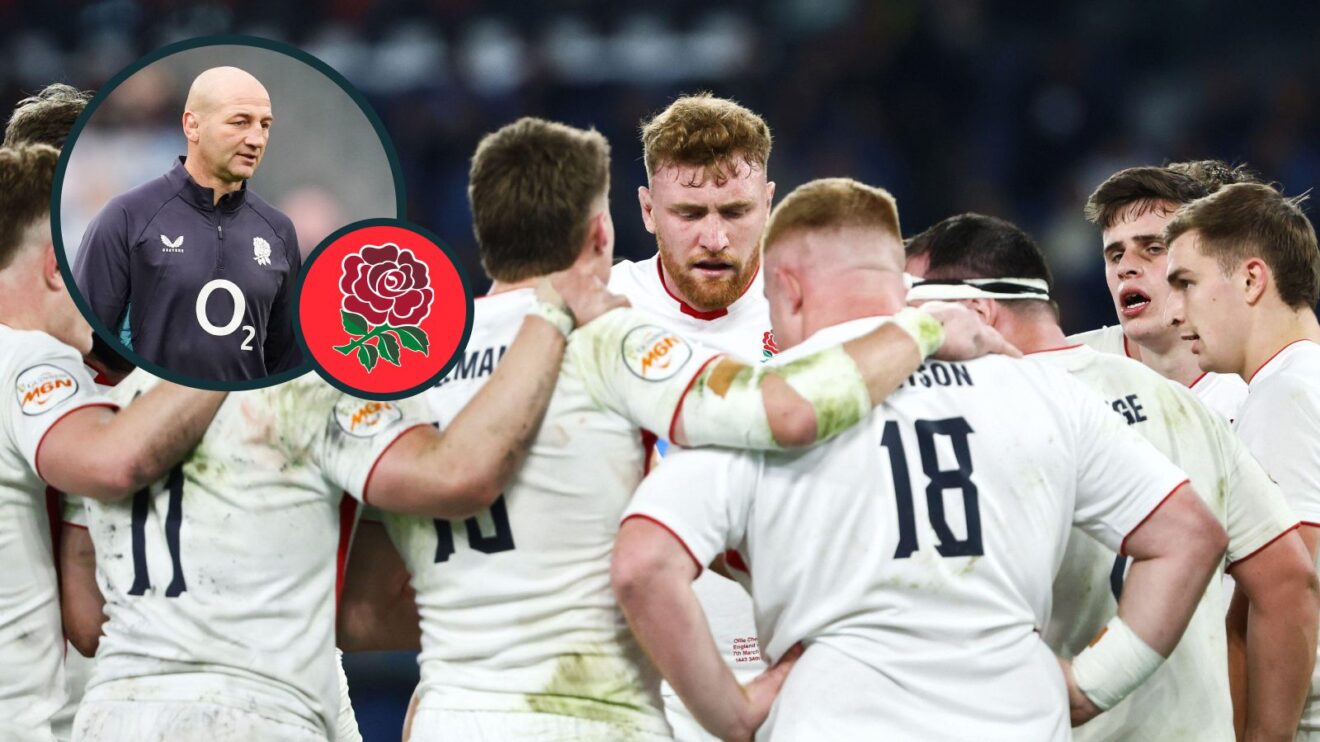
Steve Borthwick (left) faces the prospect of leading England through their worst-ever Six Nations campaign
‘This is the way the world ends. Not with a bang, but with a whimper’ – T.S Eliot. For England, and maybe even Steve Borthwick, that quote has never resonated so loudly.
Under the lights of the Stadio Olimpico, England whimpered.
Under the lights of the Stadio Olimpico, Italy roared.
The Azzurri channelled 33 years of hurt into one of their finest performances to down England 23-18 on home soil, and it’s hard to say it wasn’t deserved.
Italy were simply heroic at every turn. Centre duo Tomasso Menoncello and Juan Ignacio Brex were reminiscent of the Gladiators whose statues scatter the historic city. The Centurions in the forward pack garrison, led by Captain Michele Lamaro, put in a shift that Mars, the Roman God of War, would have been proud of. Louis Lynagh, who in another life would be wearing the white jersey today, had his every touch seemingly blessed by Venus.
That’s just a handful, too. You could single out every one of the Italian 23.
England, on the other hand, crumbled under the pressure from Gonzalo Quesada’s Roman army.
Further ill-discipline and defensive issues consistently allowed Italy into the game, with Maro Itoje and Sam Underhill seeing yellow in the process, while the attack also faltered.
This defeat, coming in the wake of humiliations against Scotland and Ireland, now leaves the Borthwick regime facing existential questions that seemed a thing of the past only a month ago.
So, does he stick or twist? Does he let his tenure go out with a whimper?
Reinvention
This Six Nations campaign is incredibly reminiscent of the 2018 Championship, where England finished fifth with just two wins from five. This one is on course for a worse record, but the vibes are the same.
In the years prior to that 2018 disaster, England were flying. Eddie Jones had steered his side to back-to-back Six Nations titles and had just come off a record 18-Test winning run. They were gunning for the title after beating Wales in the early rounds, and it went wrong.
Yes, England have not won the title since 2020, but this class of 2026 were coming in off the back of 11 consecutive wins ahead of the Championship and thumped Wales 48-7 in round one before quickly going off-track. Sound familiar?
When you also factor in that 2018 was also a year out from a World Cup, the parallels become even more obvious.
That 2018 humiliation led to mass changes, both personnel and tactical.
Of the starting XV that started their round five defeat to Ireland, only six would start in the World Cup final a year later. The introduction of Tom Curry and Underhill, dubbed the Kamikaze Kids at the time, moved England’s focus onto the breakdown battle up front to spectacular effect, while the playmaking axis of George Ford and Owen Farrell oversaw a dramatic shift in their attacking intent towards a slightly more kick-focused idea.
Want more from Planet Rugby? Add us as a preferred source on Google to your favourites list for world-class coverage you can trust.
On the basis of this Six Nations campaign, Borthwick might need to make similarly brave decisions.
There are serious question marks over a lot of positions right now, ones that weren’t there at the start of the Championship.
Full-back is a real issue right now, with Freddie Steward axed from the 23 entirely after an Ireland horror show and Elliot Daly is not the long-term solution. Marcus Smith was also caught out under the high ball in those latter stages.
It seems certain that George Furbank will take back the shirt when back to full fitness, but you cannot afford to just wait for one man to be back fit.
Centre has again emerged as a potential doubt, despite seeming very settled after the Wales win. Fraser Dingwall and Seb Atkinson have failed to replicate their previous Test performances this Six Nations, while Tommy Freeman is still bedding himself in at 13. Ollie Lawrence’s injury does not help things, either, while Henry Slade seems to have again been discarded by the England boss.
The number 10 jersey is always under an intense spotlight, but neither George Ford nor Fin Smith have eased that this Championship following poor performances.
Even in the back-row, there could be debate over selection moving forward. Borthwick has made it very clear he wants his back-row to be lightning quick around the park and to all offer a jackal threat, but they simply lack that battering ram to drive them through in the tight. Ben Earl is doing a fine job in the carry, mind, but a lot of the time, he’s alone in his efforts.
Chandler Cunningham-South did make his return to the Test stage in the Italy defeat, but played just five minutes from the bench, while Greg Fisilau, one of the best carriers in the PREM, has been axed from the training squad altogether.
But positional changes will not solve the issues facing England, as we already know. Borthwick has made a combined 15 changes within his starting XV between their defeats to Scotland, Ireland and Italy. None of them have done the trick.
It’s the tactics that need to change.
During that mammoth winning run, and even against Wales at the start of the Championship, England looked confident and assured and importantly had belief in their system. Now, they look confused, muddled and devoid of confidence.
Sitting in a Bermondsey pub watching the Italy loss, I overheard casual fans describe it in the best way possible. ‘They look like a team of individuals’, one punter said before shaking his head and swigging a Guinness.
I have to say, it’s a very valid point.
England’s attack across this losing run has just lacked any sort of consistency. The kicking game worked, but when it didn’t, England were left without a plan B. They lacked creativity, forcing through this kick-first strategy that simply didn’t fit the game at all, as if it was pre-programmed into them. They again failed to take chances, scoring just 1.6 points per 22 entries (stat courtesy of Russ Petty on X).
That isn’t Test level attack. That’s barely PREM Rugby level attack.
But the PREM might be the best place to look to reinvent the structure.
So much waffle gets spouted out that the English domestic league does not create Test players, but if you think that, that’s just naive. The shift in attacking play across the English game is coming at just the same time as the shift in the Test game, too.
Scotland, Ireland and Italy all beat England while playing fast, expansive rugby in a style we see week in week out in the PREM, and even though France kick more than anyone else in the Six Nations and have posted the most kicking metres in the process, if you said their attack was as rigid and stagnant as England’s then I’d likely have to escort you from the building.
England also have one of the men who led that shift in attack in the form of Lee Blackett, but have restricted the attack to this Borthwick-ball kicking game. It’s time to let Blackett let rip.
Bath’s system was all designed around playing into space and pulling the trigger when the chance presented itself. It, of course, helps when you have Finn Russell at the helm, but the system also brought the best out of him.
Strike plays from deep were common practise, throwing shape at the line to bamboozle the defence and then sending an explosive centre through the emerging gap or capitalise of the defence’s crabbing to hit the winger or the floating full-back through space in the wide channels.
As a result, Bath posted the most tries (96) in the league, points (651), and made the third-most metres (8,777) across the season. Crucially, too, they took an average of 2.71 points per 22 entry (based on 240 visits to the 22).
If that’s not the blueprint for England, then I don’t know what is.
Borthwick needs to rip up the current programming sheet and start afresh. Borthwick needs to let Blackett write some of the code.
It’s time to code the program Borthwick 3.0.
If he doesn’t reinvent the team quickly, then his tenure as England head coach will meet the same fate T.S Eliot described. It will not go out with a bang, but with a whimper.