Johnny Sexton: Ireland are learning from World Cup mistakes and are doing it ‘differently’ this time


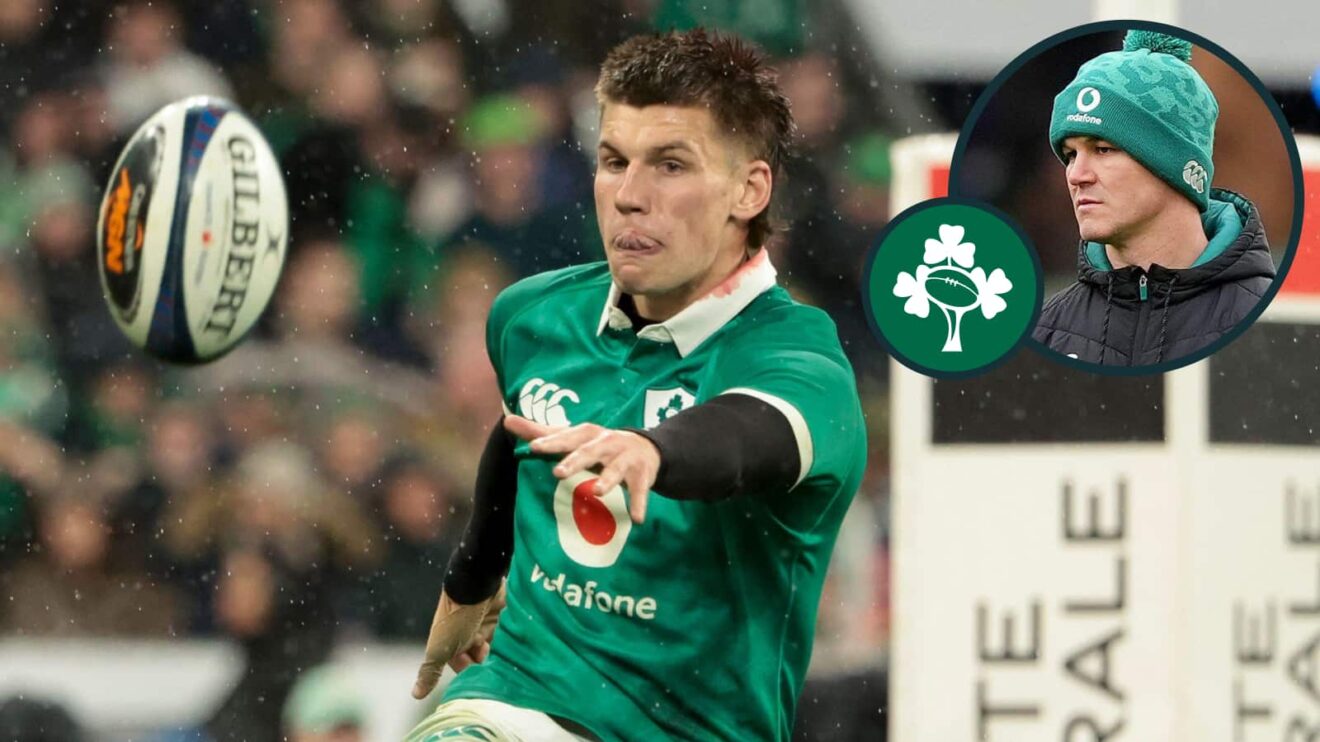
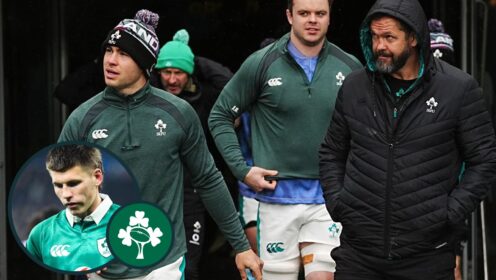
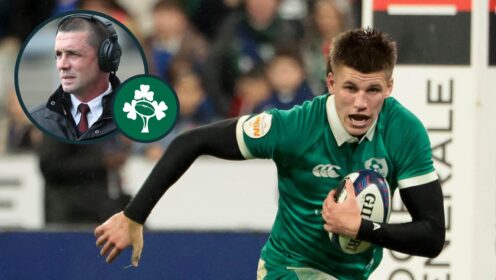
Ireland fly-half Sam Prendergast and an inset of assistant coach Johnny Sexton.
Ireland are learning from previous World Cup cycles and are approaching 2027 ‘differently’, according to Johnny Sexton.
The former fly-half is now working closely with Andy Farrell’s charges as an assistant coach following his decorated career with Leinster and the national team.
For the vast majority of his playing career, Sexton was the first-choice number 10 for Ireland after wrestling the jersey off Ronan O’Gara during the closing stages of the latter’s career.
However, Ireland were heavily reliant on the ex-Leinster playmaker during his career which proved costly when he was injured for the 2015 Rugby World Cup quarter-final defeat to Argentina.
Learning from previous World Cup cycles
Four years later, the Joe Schmidt-coached side failed to beat Japan in the pool stage match that Sexton missed before they were knocked out by New Zealand in the quarter-finals.
Sexton remained as the go-to selection in the number 10 jersey through to the 2023 Rugby World Cup with Ireland failing to really build depth below him, which meant when Jack Crowley took over the jumper in 2024 he was inexperienced in terms of Test caps.
It’s been a major criticism of Ireland over the years that they have relied too heavily on an individual in a particular position and have come up short when there have been injuries or those stars have been injured.
But speaking ahead of Ireland’s Six Nations clash against England, Sexton says that the coaching team have taken those critiques on board and are learning from previous World Cup cycles.
He revealed as much when asked about the ongoing debate on who the starting number 10 should be between Sam Prendergast and Crowley.
“It’s important that I suppose not only those two, but Ciaran Frawley and Harry Byrne as well, that they keep developing and they get game time,” the assistant coach told reporters.
“So it’s four guys and all the criticism for previous World Cup cycles is that we didn’t develop guys, we’ve relied too heavily on one guy in some positions.
“So we’re doing it a different way now, whether that’s right or wrong, everyone judges it by the outcome a lot of the time. In games to come, they will hit good form, and we will be in a good place.”
Building depth
He adds that it is important that Ireland build that positional depth going forward and do so by putting the players into pressure situations in different environments.
“All four of them are very good; they’ve all got their different strengths and as coaches, we are trying to make sure that we have lots of options going to a World Cup,” he said.
“We are trying to learn from previous cycles and make sure that we give them all opportunities, we need to get them all a certain number of caps.
“We need to make sure we see their form in different pressurised situations, different venues, different opposition, and I’m sure it’ll be like that for the foreseeable future.”
The debate around the starting fly-half dominated the discussions heading into the Six Nations and hasn’t died down since with Prendergast struggling in the opener against France and he hardly set the world alight against Italy.
He did have good moments against the Azzurri but was inaccurate off the tee while Crowley impressed off the bench against the Italians, steering the side to victory and nailing his kicks before he botched a kick to touch with time up on the clock. That spoiled an opportunity for Ireland to grab a bonus-point try.
The work-ons never stop
Asked what advice he would be passing onto the two stand-offs after their mixed performances, Sexton replied: “We wouldn’t say too much straight after the game, we let things die down and then review it together.
“They would give feedback to us as much as we would give feedback to them. Ultimately, we want to know why some things went well, why some things didn’t, and what we can do differently in our prep. What we as coaches need to do more of.
“Both did some really good things, some work-ons and some things that they need to improve and it’ll be like that for the rest of their careers. It’s always like that, even if I go back to my own experiences, you come off and you think you’ve had a great game and you get into a review and the coaches have a few other ideas in terms of how things have gone.
“They’ll learn from it and they keep developing as they have been.”
READ MORE: ‘Absolutely no need for change’ – Ex-referee urges top unions to ‘disoblige’ World Rugby boss