Book review: On the Record & On the Ball: How Elite Coaches Master the Media


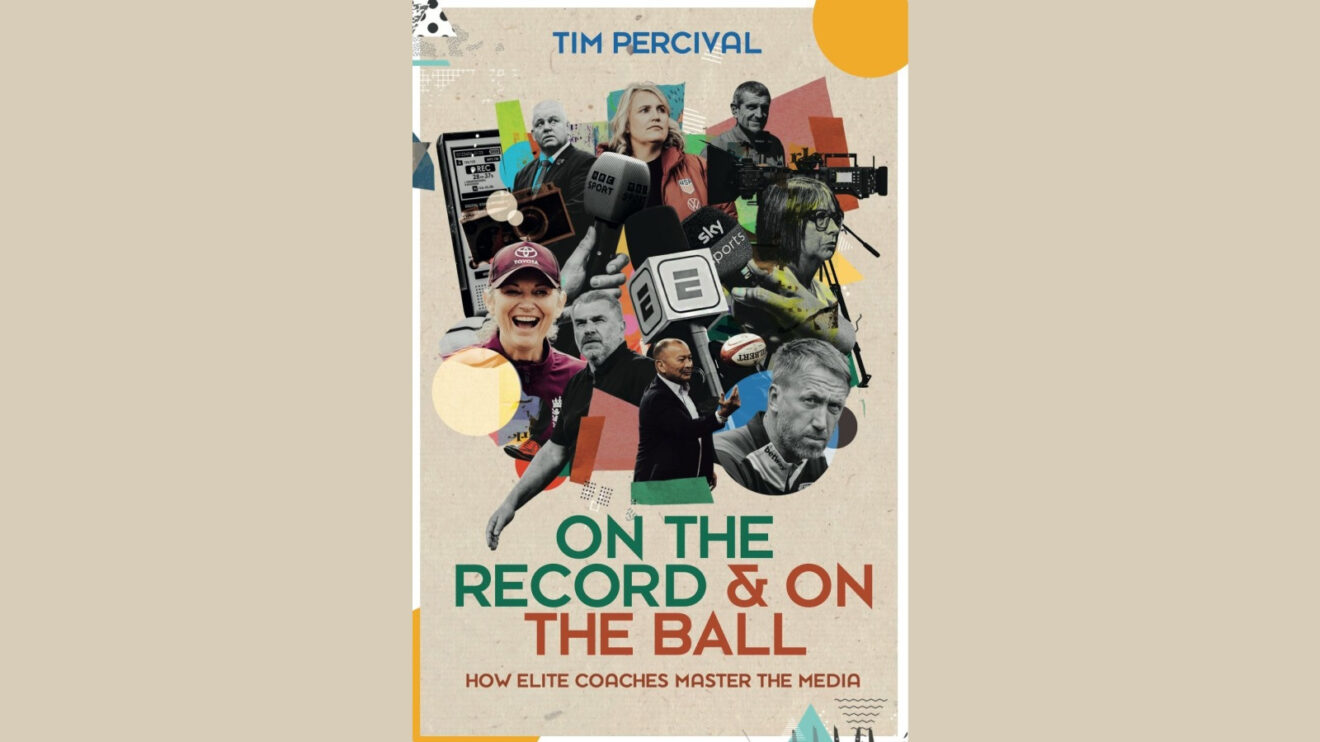
A book review of On the Record & On the Ball: How Elite Coaches Master the Media.
There is a particular kind of person who, after 20-odd years of being present at the most compelling moments in sport, decides that the rest of us deserve to hear about it. Tim Percival is exactly that person, and we mean it as the highest possible compliment.
Percival, Suffolk lad, England Rugby’s Communications Lead and Lions tourist, has written a debut book that is as assured and authoritative as the communications advice it dispenses. On the Record & On the Ball: How Elite Coaches Master the Media is published by Fairfield Books and runs to a lean, purposeful 210 pages. It does not waste your time, which seems fitting for a man whose entire professional life has been built around the principle that every word in front of a microphone either earns or costs you something.
The premise is elegant. Percival has spent two decades building a contacts book that most journalists would trade their souls for, and rather than let it gather dust, he has deployed it here with considerable intelligence. 27 coaches across 10 sports sit for interviews about the one dimension of elite sport that rarely receives serious analytical attention: the relationship between a coach and the media.
Compulsive reading
For Planet Rugby readers, two names will leap from the page immediately. Warren Gatland and Eddie Jones are as different as two coaches can be in their relationship with the press, and together they represent almost the full spectrum of how rugby’s elite have chosen to navigate a media environment that has grown more demanding, more immediate and less forgiving with every passing season. That Percival, who has worked at the highest levels of the game, has persuaded both men to speak candidly about their methods is no small achievement. What they reveal makes for compulsive reading.
The book wisely builds a broader architecture around its rugby voices. Roy Hodgson, Emma Hayes, Ange Postecoglou, Graham Potter, Charlotte Edwards and Zak Brown of McLaren are among a cast whose CVs represent a staggering breadth of achievement across 10 sports. The cross-sport structure is one of Percival’s finest decisions. Seeing how a Formula 1 chief executive approaches a crisis press conference, or how Hayes quietly transformed women’s football’s public narrative, sharpens rather than dilutes the rugby examples.
What distinguishes the book from the procession of leadership manuals that populate sports bookshelves like so much earnest wallpaper is the sheer specificity of what is revealed. Percival goes into the mechanics: interview strategies, crisis management protocols, how leaks work and who benefits from them, the delicate art of saying almost nothing while appearing to say everything. The chapter on handling criticism is, in my view, worth the cover price alone, drawing as it does on voices who have experienced the most ferocious media environments in world sport.
The lessons extend well beyond the touchline. Any business leader who dismisses this as a niche sporting text is making an expensive mistake. The crisis communication frameworks Percival unpicks, built in environments where the stakes are immediate and the scrutiny is absolute, are more battle-tested than anything produced in a boardroom consultant’s workshop. Elite sport is one of the finest laboratories for high-stakes communication that exists, and Percival has had the wisdom to distil its lessons into a form that anyone leading an organisation under public scrutiny can use.
Journalist’s instinct
The writing is accessible without being lightweight, authoritative without being pompous. Percival has a journalist’s instinct for when a passage needs to breathe and when it needs to move. For a debut, the confidence of the prose is quietly impressive.
Want more from Planet Rugby? Add us as a preferred source on Google to your favourites list for world-class coverage you can trust.
This is a smart, original and genuinely insightful book. Coaches, broadcasters, journalists, corporate leaders and anyone who has ever watched a post-match press conference and wondered what was really going on beneath the surface will find much here that illuminates, challenges and occasionally unsettles.
On the Record & On the Ball by Tim Percival is published by Fairfield Books, £20 hardback, £7.99 eBook.