England team: Winners & losers as Henry Pollock handed ‘biggest challenge’ and counting the ‘victims’ of Steve Borthwick’s mistake
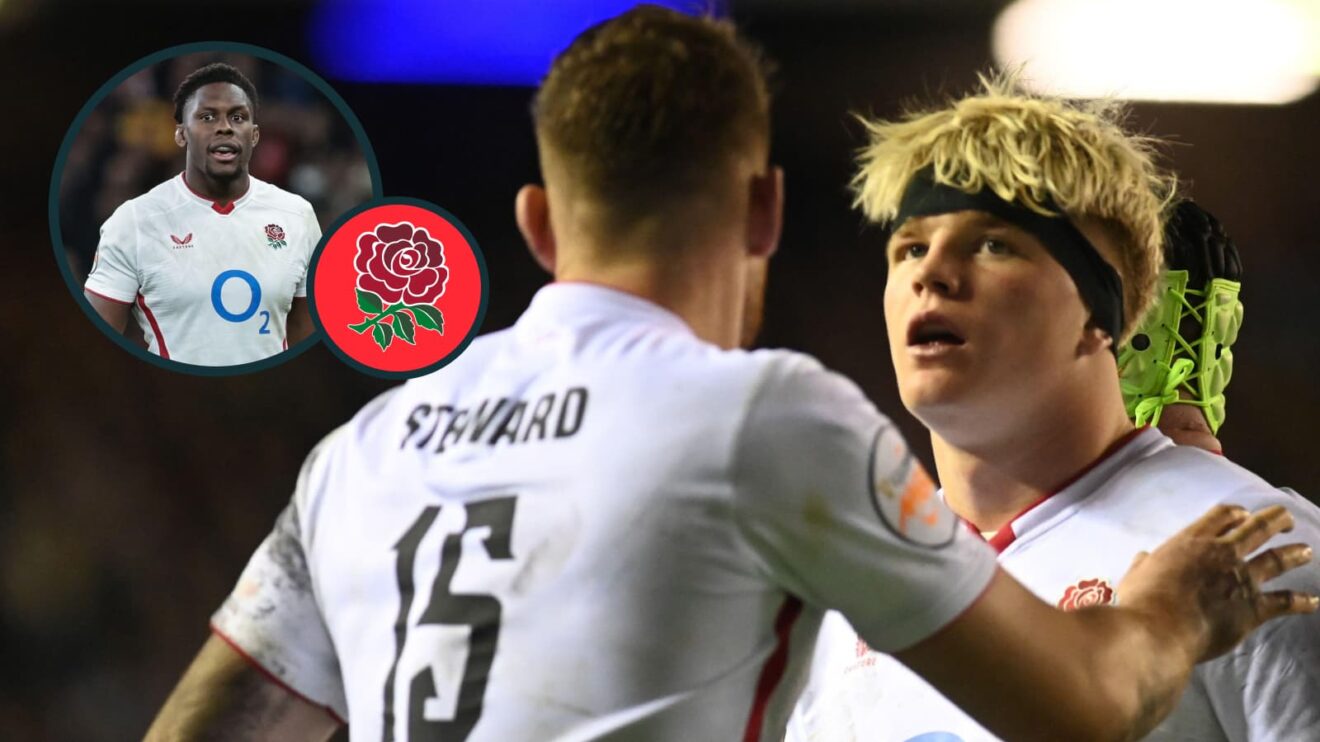
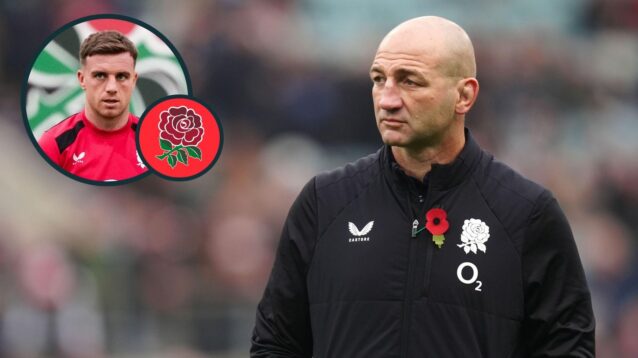
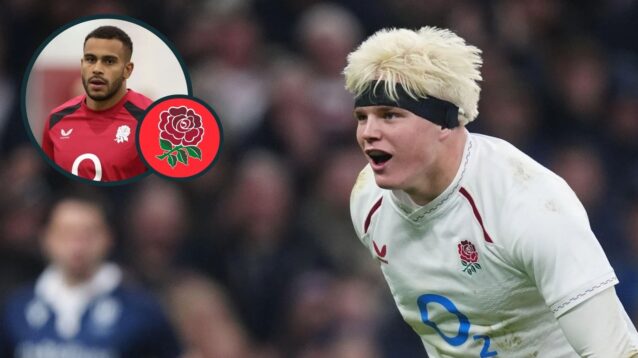
England's Henry Pollock and an inset of captain Maro Itoje.
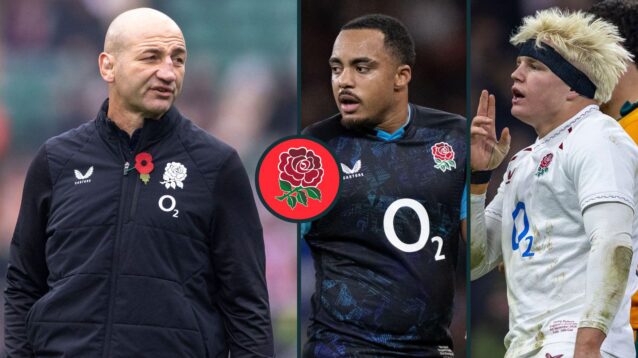
Following the announcement of Steve Borthwick’s England team to face Ireland in round three of the Six Nations, we pick out our winners and losers.
Borthwick has reacted to the defeat to Scotland by making multiple changes to his matchday 23, three of which coming in the starting XV.
Additionally, captain Maro Itoje will earn his 100th appearance for his country as England look to return to winning ways immediately.
Without further ado, here are our winners and losers from the team selected to face Ireland.
Winners
Henry Arundell
Unlike with football, a red card in rugby does not automatically result in a one-week suspension, as a player will face a disciplinary process to decide whether or not they should be further sanctioned. Luckily for Henry Arundell, he has been cleared by an independent disciplinary panel and selected in Borthwick’s starting XV for the third week in a row.
After a blistering hat-trick against Wales, Arundell duly held onto his starting role for the round two clash against Scotland. He crossed for his fourth try of the Championship but was shown two yellow cards in the match, ultimately costing England big time.
Borthwick has put his faith in a performance more akin to round one than two, rolling the dice again on the Bath winger, but this time investing in a more astute insurance policy with a more balanced selection, more on that later.
Arundell stocks took a dent last week, and he can ill-afford another mare.
Jack van Poortvliet and Marcus Smith
The two personnel changes on the bench sees Jack van Poortvliet and Marcus Smith replace Spencer and Fin Smith, respectively. The inclusion of Quins’ Smith provides more versatility in the number 23 jersey as Borthwick keeps the 6-2 ‘Pom Squad’ intact.
The duo have certainly benefited from the bench’s failure to launch last week, though they were left with a hell of a lot to do to secure a win.
Is the pair of selections a nod to a more sped-up approach on attack this week in the latter stages? We will wait and see.
Ollie Lawrence
A selection many hoped would occur last week but has only come to fruition a week later. Ollie Lawrence slots into the number 13 jersey to partner Fraser Dingwall in one of the three changes to the backline.
His inclusion comes at the expense of Tom Roebuck as Tommy Freeman shifts out a channel into the wing position. Lawrence adds much-needed grunt, physicality and directness to the backs. He may have required an extra week off to really hit full fitness, but England certainly could have done with his services last week.
Maro Itoje
Itoje’s legacy as one of the greatest England players of all-time only grows this weekend as he captains his country in his 100th appearance in white.
The experienced second-rower already hit the 100th Test cap mark last year with the British and Irish Lions but now joins Ben Youngs (127), Dan Cole (118), Jason Leonard (114), Owen Farrell (112), George Ford (107), Jamie George (107), Courtney Lawes (105) and Danny Care (101) in notching up the milestone for England.
Only the best of the best represent their country 100 times and Itoje is certainly in that echelon.
Henry Pollock
On the other end of the scale, England’s rising star forward earns his first Test start as Henry Pollock is named in the number eight jersey, whilst Ben Earl shifts to the openside flanker role and Tom Curry is named on the other side of the scrum.
Pollock has quickly become a consistent feature in Borthwick’s matchday 23 with his pace, power and alertness when the loose ball perfectly suiting the replacements role. However, he now faces the biggest challenge of his blossoming international career, replicating his game-breaking brilliance from the first whistle.
Borthwick has equipped him well to thrive, partnering him in the back row with Test match animals, Earl and Curry – two Lions who collectively boast 115 Test caps for England, the former edging one match shy of 50.
Pollock won’t have it all his own way against Ireland but perhaps his efforts for Northampton against Leinster has given Borthwick reason to believe he can dominate from the first whistle.
George Ford
George Ford’s charged-down drop goal that led to a Scotland try prompted calls for the fly-half to drop out of the matchday 23 but Borthwick has stuck by his man and rightly so.
Ford was instrumental in England’s 12-match winning streak and his showing in Murrayfield was far from the only reason that Scotland emerged victorious. Time and time again over the past 12 months, Ford has proven that he is the form fly-half in the country and has more than earned the opportunity to right the ship.
Steve Borthwick
Lesson learnt. For the most part, Borthwick has got the make-up of his team selections right, marrying the risk of the 6-2 split with versatility, speed, experience and game-breakers.
However, against Scotland he got the mix all wrong and paid the price of Arundell’s sending-off. A mark of a good coach is recognising their faults and mistakes, but then executing plans and making alterations to rectify the shortcomings.
He has done just that by retaining Freeman in the starting XV, though shifting him to the wing, bringing Lawrence in and including Marcus Smith on the bench. The Quins’ back offers an option at full-back and fly-half, possibly even on the wing, considering his footwork and speed. He also brings a different style of play to Ford in the fly-half position, adding another layer of positional versatility.
Sure, he has benched the starting flankers from last week, but keeps the cohesion in a manner that mitigates complacency more than just keeping the status quo as he did for rounds one and two.
Losers
Tom Roebuck
The victim of Lawrence’s return. Roebuck equipped himself well in the opening two rounds of the Championship, but drops out of the matchday 23 altogether for the third fixture.
It’s somewhat understandable as the Sale Sharks man was only included in the starting XV for the clash against Wales following the injury to Immanuel Feyi-Waboso, as it was initially deemed that the match was a week too soon for him.
Prior to the opening weekend of the Six Nations, Roebuck had not played a minute of rugby since last November and this selection call looks more cautionary than reactionary.
Want more from Planet Rugby? Add us as a preferred source on Google to your favourites list for world-class coverage you can trust.
Ben Spencer and Fin Smith
Positive changes come with individual negatives, as Ben Spencer and Fin Smith are sacrificed for Van Poortvliet and Marcus Smith, respectively.
Saints’ Smith struggled to adapt to the demands of operating at Test level 12 against Scotland, though the team’s tactics certainly didn’t make that transition easy for the 23-year-old. There is no doubting his quality, but it’s plainly evident that he is less useful among the replacements in a 6-2 split, as he would be best used in replacing Ford – if that even happens.
Meanwhile, Van Poortvliet gets a rare opportunity in place of Spencer. At 33, Spencer still has plenty to offer England going forward but depth is important at the highest level, and that’s not just depth in ability but experience too.
Tackle bag carriers
As we approach the midway point in the Six Nations, several players remain unused by Borthwick, notably experienced operators like Henry Slade, George Furbank and Elliot Daly.
Furbank was sidelined last week and overlooked this, while it remains baffling that Daly and Slade haven’t come into the mix as one of the two replacement backs.
Harlequins back-rowers Chandler Cunningham-South and Jack Kenningham have also been constrained to tackle bag carriers, a nod to just how deep England’s back-row depth runs.
One has to wonder what Cadan Murley has to do to get an opportunity, considering the fitness concerns and misfiring out wide while it looks increasingly unlikely that others like Arthur Clark, Theo Dan, Seb Atkinson, and Max Ojomoh will get a chance during this Championship.