Wallabies v Springboks prediction: Rassie Erasmus’ selections make for a ‘fair fight’ but Bomb Squad will be the difference


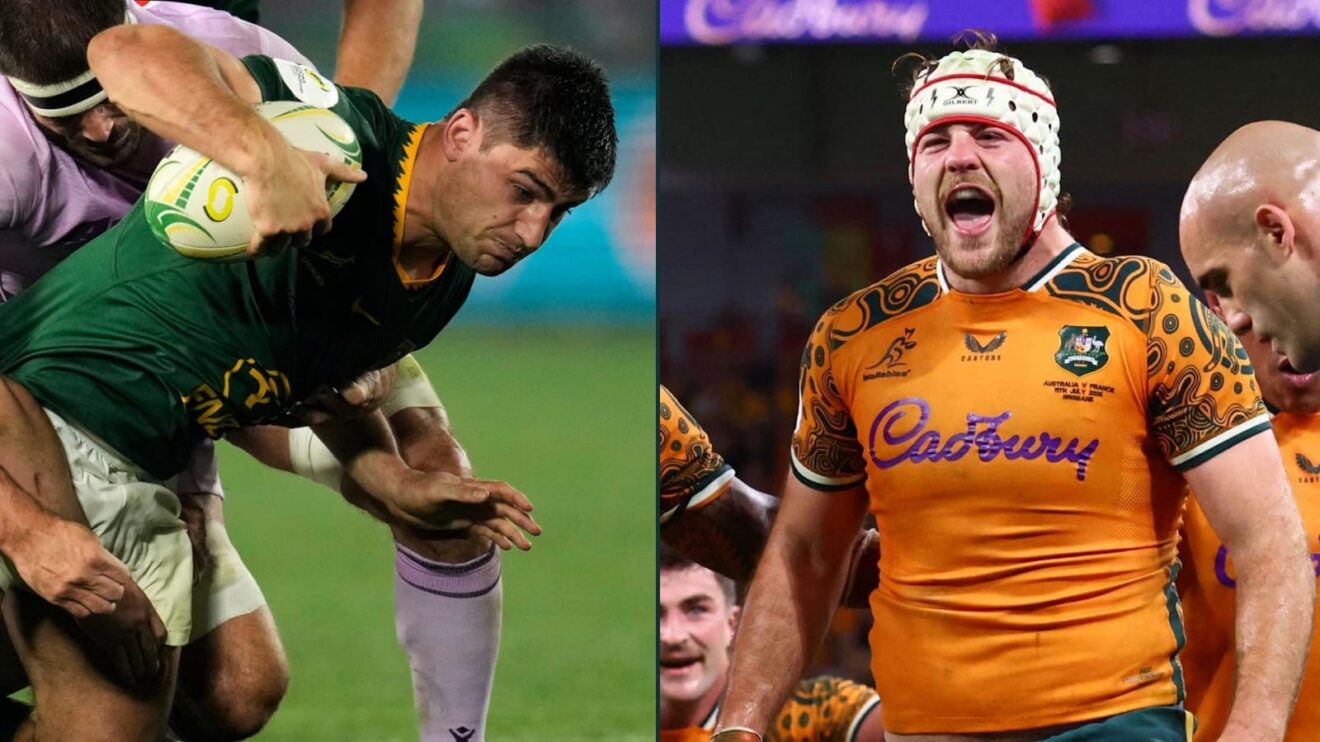
Paul de Villiers and Fraser McReight will face off as the Springboks and Wallabies collide in Perth.
Rassie Erasmus makes 13 changes and hands the captaincy to Andre Esterhuizen for Sunday’s one-off Test at Optus Stadium, whilst Les Kiss sends Joseph-Aukuso Suaalii to the wing for the first time; here’s why the Wallabies have every right to fancy this one rather more than the bookmakers do.
The top line
Erasmus has changed 13 of the 15 that beat New Zealand in Baltimore a fortnight ago, and the shape of the changes says as much about planning for next October as it does about this Sunday. Siya Kolisi has the week off, Pieter-Steph du Toit and Damian de Allende are already back on the Highveld, Malcolm Marx, Ox Nche and Wilco Louw, who started three of the four matches in the Test series and then some, are on the bench, and the armband goes to Andre Esterhuizen, the 68th man to captain the Springboks and, at 32, one of the most patient.
The temptation is to call it a second string, and plenty have, but a second string doesn’t come with 240 caps in the second-row, Handre Pollard back at 10 after missing Cape Town, an average age of 28 or 29 with Jasper Wiese winning his 50th cap off the bench. Erasmus talked about rolling the dice on Friday, which is fair enough, but he’s rolling them with a front-row in reserve that would walk into any other Test side on the planet; this is a man building leadership depth for a World Cup 13 months away, not a coach making do.
Australia, for their part, arrive in decent order. Kiss has had the job since July and has beaten Japan twice, won in Argentina and drawn in Mendoza, so it’s four from five with a draw for the other, and the pack that did the work in South America is unchanged bar Brandon Paenga-Amosa and Allan Alaalatoa coming in for Billy Pollard and Taniela Tupou, who drop to a 6-2 bench. Carter Gordon broke his leg in Argentina, so Ben Donaldson partners Ryan Lonergan, one of the few Wallabies to have started every Test this year, and Suaalii goes to the wing so that Hunter Paisami and Len Ikitau can renew a midfield partnership for the 13th time.
The backdrop is last August. Australia won at Ellis Park from 22-0 down, the first Wallaby win in Johannesburg for 62 years, and then lost 30-22 in Cape Town a week later once Erasmus had watched the comeback and worked out how to stop it. Perth is four wins apiece and two draws from 10, the Mandela Challenge Plate is on the line, and there’s a Bledisloe at Eden Park a fortnight after this one to concentrate Australian minds.
Where the game will be won
At the scrum, and it’s a far more even contest than the badges on the shirts suggest. South Africa start Jan-Hendrik Wessels, Johan Grobbelaar and Zachary Porthen, and Porthen, with fewer than 10 caps, is a tighthead packing down against Angus Bell, 57 Tests, a loosehead who stood up to Louw in both Tests last year and came out of both with his reputation intact. Alaalatoa, on 93 caps, gets Wessels, a hooker who now earns his living at loosehead. Australia are good in this area, a great deal better than the wider conversation gives them credit for, and for 50 minutes they’re facing the understudies; if Andrea Piardi is rewarding the dominant scrum, Donaldson will get his shots at goal.
But somewhere around the 50th minute the tone of the afternoon changes. Nche, Marx and Louw arrive together, a brand new front-row with two World Cup finals in the bank, against Aidan Ross, six caps, Billy Pollard and Tupou, and whilst Tupou can hold his own against anyone when the mood takes him, Ross against Louw is the sort of mismatch Erasmus picks a bench to create. Kiss has seen that coming, and his bench is built for it. The 6-2 is no accident; Tupou, Lukhan Salakaia-Loto, Tom Hooper and Carlo Tizzano are four forwards picked to arrive at the same 50-minute mark the Springbok front-row does, and Tate McDermott’s tempo at nine is held back for the same window, when tiring forwards are least able to live with it. For the first time in a while Australia are meeting the Bok bench with a plan rather than a prayer, and whether it holds up at scrum time is the question the whole Test turns on.
The back-rows are the other battle, and for once it’s a fair fight. Paul de Villiers, Elrigh Louw and Marco van Staden at eight is a trio built low and quick to steal ball, the lightest loose forward unit Erasmus has picked in a long while, with Wiese held back for the last half hour and the heavy carrying handed to Esterhuizen at 12, assuming he stays there. It’s not beyond the bounds of extreme Rassie-ism that he’ll spend 15 minutes at nine and a further 15 at tighthead, such is Esterhuizen’s hybrid ability. Rob Valetini, Fraser McReight and Harry Wilson have played together through the Joe Schmidt and Kiss eras; they know each other’s lines like old cricketers know each other’s calling, and they’ll fancy their gainline against that lot. The breakdown is a proper contest here rather than a Springbok procession, and the Wallabies keeping hold of the ball for eight or nine phases is what keeps this game alive into the last quarter.
South Africa will kick, of course; it’s in the blood. Pollard and Herschel Jantjies will put it up, Aphelele Fassi has a boot that clears state boundaries and that’s precisely why Suaalii is on the wing. Kiss hasn’t moved him there to hide him; he’s moved him there because the aerial contest is one area this Test gets decided and Suaalii, a wonderful athlete in the air since his league days, is the best contestable-kick receiver Australia have. South Africa’s aerial answer is Ethan Hooker, six foot four, one of the two Baltimore starters Erasmus kept, and a man who’s made a Test career out of winning the ball at the top of its arc. Suaalii under the high ball is the key individual contest in the back three, and whichever comes down with more of them over the first half hour hands his side the territory the whole game plan is built on. Win it and Tom Wright and Max Jorgensen either side run every loose kick straight back; lose it and Australia spend the afternoon in their own half.
What they said
Erasmus was clear that the captaincy was about the squad rather than one man. “It wasn’t a question of who we were going to make captain; it was a question of whether we build our senior players so that everyone has a voice,” he said, adding that Etzebeth, Pollard, Jesse Kriel and Kolisi have all done the job before. On Esterhuizen himself: “Whenever you ask something of him, being a hybrid player or playing behind Damian de Allende and Damian Willemse a lot, and then accepting to play as a forward and backline player, we just feel we would love to see him in this situation against a really strong Australian team.”
On the opposition, he was respectful, and probably meant it. “This is going to be a big challenge against a team that has been playing good rugby, and who have won four of their last five matches, with their other result being a draw against the Pumas in Argentina. They have physical forwards and a very exciting backline, so it will take another big performance from us to get the result.”
Kiss kept it short, as league men do. “Playing against the number one team in the world focuses the mind and we have worked hard on key areas to meet this challenge and continue to grow our game. It’s our backyard so let’s go and make sure we show up and see what happens.”
Jeremy Williams, who’ll spend Sunday evening in the company of Eben Etzebeth and Franco Mostert, spoke for the Wallaby pack: “They’ve obviously named quite an experienced team. In the locks they’ve got around 240 caps between them. We know that if we go out there and set the tone physicality-wise, we’ll be a good shot.”
Harry Potter, asked about the Springboks naming their team on a Tuesday, offered a dry Australian view of Erasmus’s early announcements: “Perhaps we’ll wait for the 23 to be absolutely confirmed.”
Players to watch
Joseph-Aukuso Suaalii, on the wing for the first time at club or Test level, picked there for the aerial battle rather than in spite of it, and the interest is whether Kiss has found the position that turns the most valuable player in Australian rugby into the most effective one; we’ll know by half-time.
Rob Valetini is the heaviest carrier on either side and against this back-row he’ll carry from the first minute, and if he gets Australia over the gainline in the first half hour the Boks’ light loose trio has a long evening ahead.
Angus Bell is where the Wallaby scrum starts and ends, and Ben Donaldson, at 10 because of Gordon’s injured leg, has the game to hurt a side that’s changed 13, provided his kicking out of hand is accurate, because Fassi, Hooker and Edwill van der Merwe all love a running return.
For South Africa, Andre Esterhuizen is the definition of the modern hybrid. He’s played 16 Tests since the start of last season, having managed 19 in the six years before that, and the difference is that he stopped waiting for De Allende to pull a hamstring and accepted that his value to Erasmus was at 12, at six, at seven and off the bench, wherever his 117 kilos were needed that week. He carries like a back-rower, passes like a centre, jackals like a specialist and defends the 13 channel as well as anyone in the world game, and Danny Care, who played alongside him at Harlequins for years, said this week he might be the best player he’s ever played with; from a man who played with Nick Evans and Chris Robshaw, that’s some reference. For years Erasmus and Jacques Nienaber looked past him for Frans Steyn, Damian Willemse and even Lukhanyo Am; on Sunday, at 32, he leads his country out, and Paisami and Ikitau will find out inside ten minutes what the fuss has been about.
Springboks legend backs ‘go-to guy’ for landmark Test and young prop delivers verdict on new captain
Behind him, Zachary Porthen is the impressive but rookie tighthead with a whole stadium watching his bind, and Herschel Jantjies, who last started a Test in November 2021, has been picked against Australia by Erasmus more often than anyone else in this squad, which tells you what the coach thinks of him in this fixture.
Main head-to-head
Fraser McReight and Paul de Villiers are the two best flankers on the floor in world rugby who aren’t called Jack Willis. South Africa number their flankers the other way round from the north, so De Villiers at six is the Springbok openside and fetcher, the man who’s carried the jackal licence alongside Marx since he started all three Nations Championship Tests in Kolisi’s absence in July and topped the fitness testing the day he arrived in camp. He’s 23, he has fewer than 10 caps, he was our breakthrough player of the Southern Series, and he’s a low, fast, relentless poacher who gets to the ball a half second before the cleaner and then, rather annoyingly for the cleaner, stays there.
McReight is what De Villiers wants to be in five years. 46 Tests, the best jackal in Australian rugby and one of the few Wallabies who’d walk into this Springbok side if you swapped the shirts; his support lines are as good as any seven in the world, his tackle count sits in the 20s most weeks, and his timing over the tackled player is the reason Australia’s defence has held its shape through two head coaches. With no Kolisi and no Du Toit on the pitch, McReight has a genuine chance to dominate the breakdown, and if he’s won two or three turnovers before half-time the Wallabies are still in this deep into the last quarter.
Watch the ruck speed. South Africa’s ball averaged 4.23 seconds a ruck against New Zealand, slow by design because the Boks want the collision won first and the rugby played second, whilst Australia under Kiss want quick, front-foot ball to get Suaalii and Jorgensen into the game. Whichever of these two wins more of those half-second contests over the ball sets the pace of the whole Test.
Prediction
This is tougher for South Africa than most people think. The scrum might even prove a fair fight for 50 minutes, the back-rows are even, the Wallabies have a settled midfield, a proper kicking game and the memory of Ellis Park in their legs, and 13 changes always cost a side something in the first 20 minutes whilst the new combinations work out who’s going where. Australia will be in this at half-time, and might well be in front.
Want more from Planet Rugby? Add us as a preferred source on Google to your favourites list for world-class coverage you can trust.
But then the bench comes on, and this bench has won World Cups. Nche, Marx and Louw at scrum time, Wiese into the carry, Sacha Feinberg-Mngomezulu to play whatever’s in front of him, and Australia’s 6-2, picked precisely to counter, has to hold a scrum that’s just got a great deal heavier and a great deal wiser. The Wallabies win the first half hour and lose the last one, which is the Springbok way, and the Mandela Challenge Plate goes back to South Africa with a captain who waited eight years for a shirt and a good deal longer than that for the armband. South Africa by 15, 34-19.
The teams
Australia: 15 Tom Wright, 14 Max Jorgensen, 13 Len Ikitau, 12 Hunter Paisami, 11 Joseph-Aukuso Suaalii, 10 Ben Donaldson, 9 Ryan Lonergan, 8 Harry Wilson (c), 7 Fraser McReight, 6 Rob Valetini, 5 Jeremy Williams, 4 Josh Canham, 3 Allan Alaalatoa, 2 Brandon Paenga-Amosa, 1 Angus Bell
Replacements: 16 Billy Pollard, 17 Aidan Ross, 18 Taniela Tupou, 19 Lukhan Salakaia-Loto, 20 Tom Hooper, 21 Carlo Tizzano, 22 Tate McDermott, 23 Harry Potter
South Africa: 15 Aphelele Fassi, 14 Edwill van der Merwe, 13 Canan Moodie, 12 Andre Esterhuizen (c), 11 Ethan Hooker, 10 Handre Pollard, 9 Herschel Jantjies, 8 Marco van Staden, 7 Elrigh Louw, 6 Paul de Villiers, 5 Franco Mostert, 4 Eben Etzebeth, 3 Zachary Porthen, 2 Johan Grobbelaar, 1 Jan-Hendrik Wessels
Replacements: 16 Malcolm Marx, 17 Ox Nche, 18 Wilco Louw, 19 Lood de Jager, 20 Jasper Wiese, 21 Morne van den Berg, 22 Sacha Feinberg-Mngomezulu, 23 Quan Horn
Date: Sunday, 27 September 2026
Venue: Optus Stadium, Perth
Kick-off: 17:30 (local AWST), 10:30 (UK), 11:30 (France), 11:30 (South Africa), 19:30 (AEST), 22:30 (New Zealand), 06:30 (Argentina), 18:30 (JST), 05:30 (EDT)
Referee: Andrea Piardi (FIR)
Assistant Referees: Ben O’Keeffe (NZR), James Doleman (NZR)
TMO: Matteo Liperini (FIR)
FPRO: Richard Kelly (NZR)
Broadcasters: Nine Network / Stan Sport (Australia), SuperSport (South Africa / Africa), Sky Sport (New Zealand), Sky Sports (United Kingdom & Ireland), Canal+ (France / Andorra / Monaco / Luxembourg), FloSports (USA), TSN (Canada), ESPN (Argentina / South America), Wowow (Japan), Sky Italia (Italy), Premier Sports (much of Asia), Digicel / Sky Pacific (Pacific Islands)
READ MORE: Nick Mallett reveals the two key ‘lessons’ which Sacha Feinberg-Mngomezulu ‘has to learn’