Argentina v England: Five takeaways as ‘hand of God’ seals Los Pumas’ fate while ‘established trait’ remains a worry for Steve Borthwick


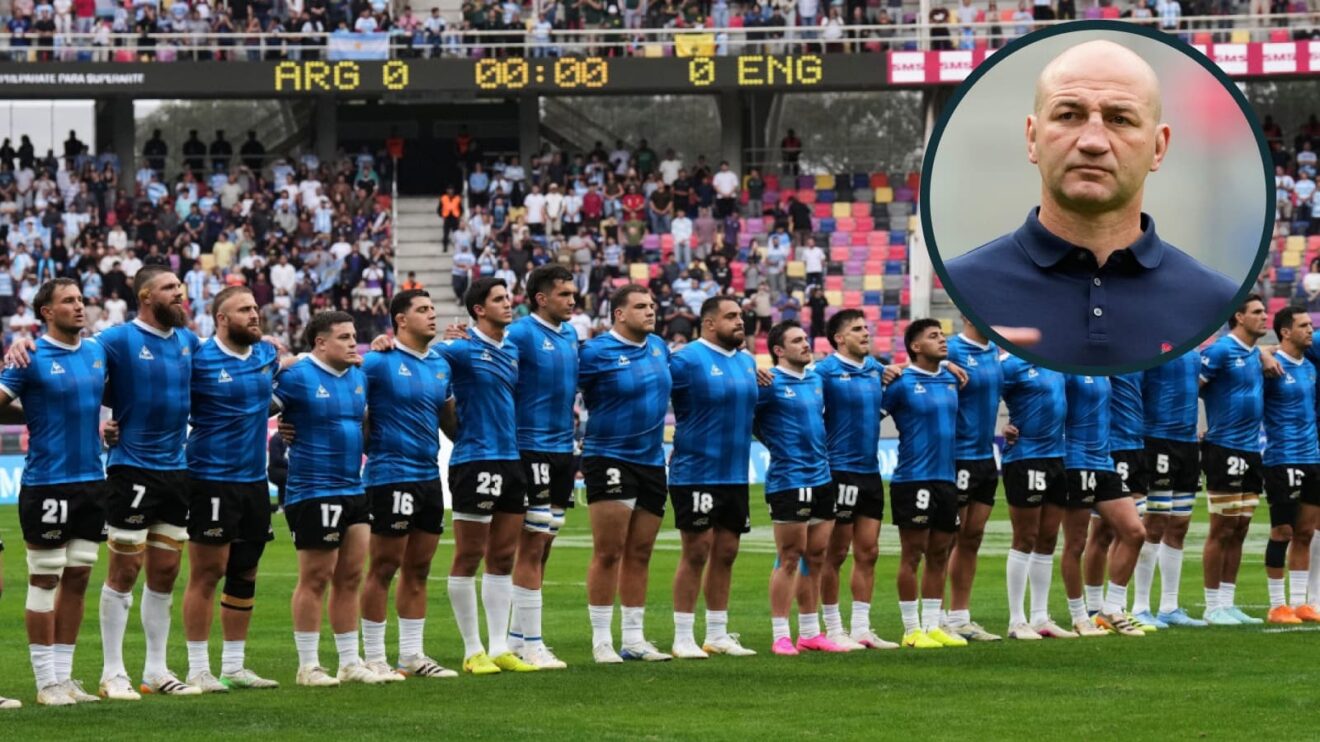
Argentina and England played out a feisty Nations Championship game.
England won 31-24 at the Estadio Único Madre de Ciudades in a Test containing seven yellow cards, a penalty try, a mass brawl inside the first minute and a finale whose last five minutes took 26 to play, before a disallowed try at the death settled the maddest match of the Nations Championship.
Here are our five takeaways from the game.
The top line
England scored five tries from 37 per cent possession to beat Argentina in Santiago del Estero, surviving a spell at 13 men with no recognised half-backs on the field, whilst Los Pumas turned 63 per cent of the ball and 188 carries into three scores and a night of self-inflicted wounds, all of it played out in replica versions of the shirt Diego Maradona wore against England at the Azteca in 1986, in a quite bizarre Test match.
Four yellow cards in a single Test is dreadful in any circumstances, and in victory it is arguably more damning than in defeat, because it happened on one of England’s best nights of the year and still nearly cost them the match. Jack van Poortvliet went for a cynical intervention with Argentina a man over, Alex Coles followed for a swipe at a loose ball that produced a penalty try with Pablo Matera crashing through the wreckage, Henry Pollock was binned for offside 20 minutes after arriving as a marked man, and Emmanuel Iyogun collected a yellow on debut.
This is now an established trait rather than misfortune: England played an hour with 14 men at Murrayfield in February and lost their winning run, conceded the decisive opening to France in Paris through a final-quarter card, and have shipped sin-binnings at the hinge point of every marquee Test this calendar year. They escaped in Santiago because Argentina spent their five minutes of two-man advantage forcing wrong options and emerged from it still behind, and South Africa in a November final will not be so generous.
A side that keeps building its own gallows and escaping the noose is gambling with character rather than displaying it.
The stress test passed
For a spell either side of the hour, England were down to 13, with Van Poortvliet and Coles binned simultaneously and Fin Smith in the head injury assessment room, leaving Marcus Smith scrapping at scrum-half and Henry Slade conducting at 10 against a baying crowd and a rampant Matera, who had arrived on his record 124th cap and dragged 19-3 to 19-17 within minutes.
What held was the set-piece: Ollie Chessum, blamed for escalating the opening-minute brawl, stole the first lineout Argentina had lost in the entire championship at the precise moment their corner maul was the obvious route to the lead, and England’s 89 per cent lineout return against Julián Montoya’s previously flawless throwing became the quiet foundation of survival.
The response then came the moment the spine was restored, Van Poortvliet returning from the bin to deliver the pass for Marcus Smith’s try, and England closed the final quarter with the subtle clock-killing of a streetwise side, which sits in strange contradiction with the indiscipline that made the crisis necessary in the first place.
Feyi-Waboso stars
Immanuel Feyi-Waboso finished with well over a hundred metres and four clean line breaks, tore through the middle to create Ben Earl’s first try, and sealed the match from 30 metres with a line and a finish that perhaps three players in the world produce. The deeper story is how England manufactured him into the game, because this was a side passing before contact all night, tip-ons and pull-backs keeping the ball alive at the line, Ellis Genge averaging 10 metres a carry and removing defenders to create the interior seams, a deliberate evolution from the lateral, contact-first attack that plagued the Six Nations.
When your most dangerous strike runner operates in that system rather than waiting on his island for scraps, you get four line breaks in the hardest away venue of the championship, and the selection debate around England’s wings should now be considered closed. One caveat survives the praise: England’s width still runs on a single flat line with no second wave of runners behind it, and the phases that died laterally in the third quarter showed the ceiling that separates this attack from France and South Africa.
The 10s delivered the billing
The pre-match framing of Fin Smith against Tomás Albornoz produced a genuine tale of two halves. Smith owned the first, dinking a cross-kick on the run and on the money for Tommy Freeman’s fourth-minute opener, a Northampton production rehearsed all season, and conducting the suffocation that had England 19-3 up at the break. Albornoz owned the second, manufacturing Argentina’s first try with a chip-and-regather from nothing, running at England for the best part of 120 metres whilst his forwards fed him slow ball, and finishing the championship 21 from 21 off the tee, the last of them a drop-kicked conversion taken without waiting for the tee.
On the eve of Lionel Messi’s World Cup final, the little 10 from Tucumán was the best player on the pitch in a beaten side, which is its own category of Test performance and often the hardest to deliver. If Argentina ever build a structure worthy of him, the 2027 World Cup has a star in waiting. Smith, though, won the night, because orchestrating a functioning team beats carrying a broken one.
Argentina’s self-harm, sealed with a hand of god
Argentina were poor, and honesty demands the word. They attacked narrow and slow off Gonzalo García for most of the evening, one-out carriers into a set defence, feeding Earl’s jackal and England’s line speed, and their mountain of possession produced repeated empty visits to the England 22.
The self-inflicted wounds arrived in procession: Santiago Carreras kicked dead from a pressure-relieving restart, Albornoz kicked dead at the peak of the revival, Joaquín Oviedo crocodile-rolled Guy Pepper to the bin just as his side had all the momentum, and then, in the night’s perfect image, Santiago Carreras was sin-binned for deliberately slapping down Van Poortvliet’s pass. 40 years on from the Azteca, another Argentine hand intervened against England, in the very shirt worn for the original, though where Maradona’s changed history, this one merely changed the penalty count.
Want more from Planet Rugby? Add us as a preferred source on Google to your favourites list for world-class coverage you can trust.
The bench revival through Matera, Boris Wenger and Albornoz proved an interlude rather than a transformation, and the final quarter regressed to the shapeless rugby of the first, a side overwhelmed by an occasion it had dressed for so deliberately.
A finale for the ages, and a sense of perspective
The endgame belonged to football in every sense, England shutting up shop and simply declining to play, protecting their lead the way their round-ball counterparts protect a one-goal advantage, and the arithmetic became absurd: the last five minutes took 26 to complete and the second-half ran to 69 in real time.
Much of the delay was consumed by lengthy treatment to Benhard Janse van Rensburg, who was removed on the medical trolley after taking a knee to the head in a tackle, the remainder a procession of resets, rehydration breaks and Justo Piccardo’s converted try that cut the margin to seven.
Bautista Delguy then appeared to score after 22 phases, the on-field decision was try, but the television match official ruled the ball had been grounded short and the score was disallowed, with Argentina furious that a possible high tackle in the build-up went unexamined, a disputed Anglo-Argentine decision to end a night staged in tribute to the most famous one of all. But they, like England back then, had a point; the ball point looked clearly to have hit green grass before being pressed down onto the white line; Noah Caluori’s shoulder tackle is routinely given as a seatbelt in the Prem, and Henry Slade’s last act looked high on Delguy as he went down for the score – a hell of a lot to unpack, and a debate that will continue for a long time and one Argentina will certainly believe left them very short changed.
England will resist any framing of this as revenge for Wednesday in Atlanta, and rightly, because three championship points in July heal nothing of a lost World Cup semi-final. What the win does provide is harder currency: Steve Borthwick’s record against Argentina now stands at six wins from six, and England travel home with a try-bonus five-pointer that keeps them squarely in the race for the Nations Championship finals in London this November. But it wasn’t good, it wasn’t pretty and it almost ended in self inflicted disaster.
READ MORE: Argentina 24-31 England: Check out the stats, facts and more from the Nations Championship clash