All Blacks team: Five takeaways as Rennie returns to ‘winning formula’ but makes Mo’unga concession
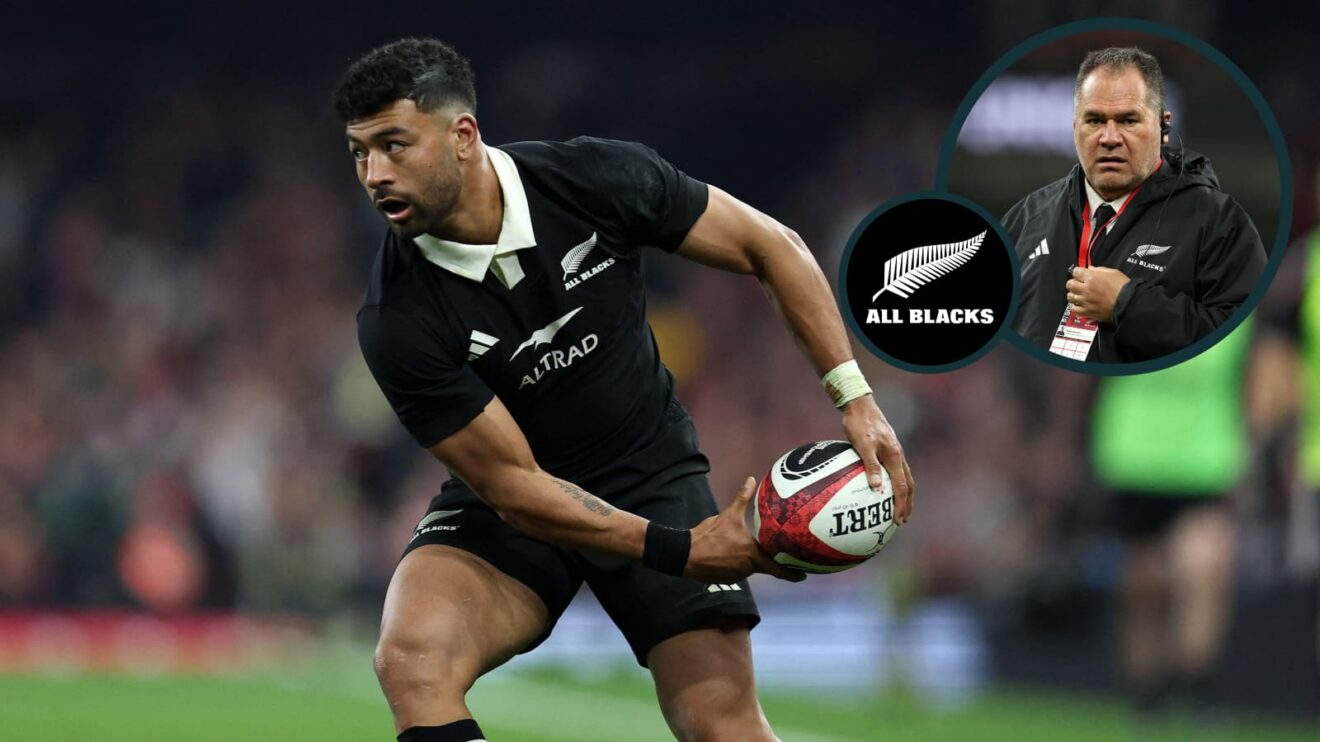
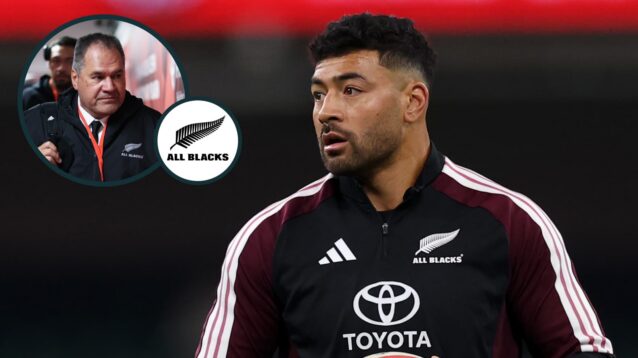
All Blacks fly-half Richie Mo'unga and an inset of head coach Dave Rennie.
Following the announcement of Dave Rennie’s All Blacks team to face England in the Nations Championship, here are our five takeaways.
Top line: Back to the winning formula
It’s back to the usual suspects this week for the All Blacks after a heavily rotated team fell to a maiden defeat to Wales in the professional era in Cardiff. Rennie gambled on his squad depth and rolled snake eyes but has now returned to the safer bet for the trip to the home of English Rugby.
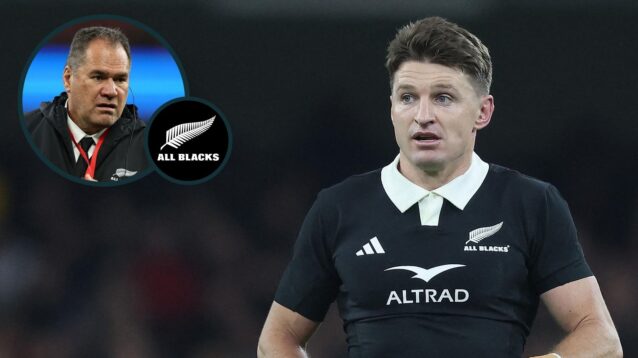
Beauden Barrett is retained at full-back and earns his 150th Test cap, a tally not even the great Richie McCaw reached in the black jersey with only Sam Whitelock hitting that milestone. He also becomes the first-ever backline player to reach the mark, and he will be hoping the outcome this week will be far better than his maiden Test as captain.
He is one of three backline players who survived the axe from the defeat to Wales, along with winger Josh Moorby and centre Anton Lienert-Brown, who plays his 96th Test cap and 100th game for the All Blacks this weekend.
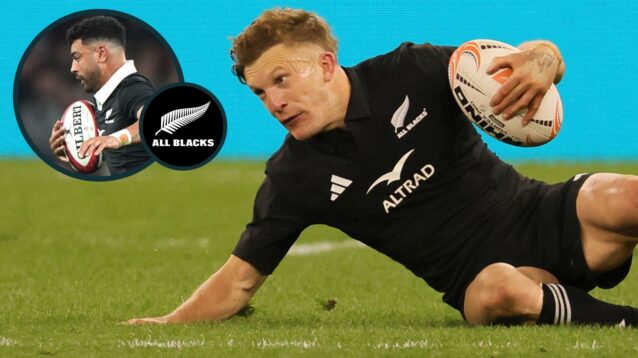
Cam Roigard and Damian McKenzie return in the half-backs after being rested last week, the partnership rekindled after claiming back-to-back wins over Australia and beating Scotland at Murrayfield. Jordie Barrett is back in the 12 jersey with Lienert-Brown shifting to outside centre, replacing the injured Quinn Tupaea. Will Jordan is on the right wing, Moorby on the left with the eldest Barrett at full-back.
Rennie has made four changes to his pack as Codie Taylor is reinstated as the starting hooker and captain of the team whilst Ethan de Groot starts at loosehead prop again and Fletcher Newell is retained at tighthead.
Scott Barrett continues in the four jersey but is partnered by Fabian Holland again with Josh Lord dropped from the matchday 23. Anton Segner falls to the bench with Tupou Vaa’i named at blindside flanker and partnering Peter Lakai and Wallace Sititi, again the loose trio that beat Australia and Scotland.
Rennie has named a versatile bench for the encounter, with Asafo Aumua and George Bower dropping from the starting XV into the replacements, providing front-row cover with Pasilio Tosi. Segner will provide loose forward cover along with Leicester Fainga’anuku, while the benched backs are Cortez Ratima, Richie Mo’unga and Rieko Ioane.
All Blacks team v England: Beauden Barrett celebrates milestone as seven survive Wales embarrassment
The lucky seven
The New Zealand public will have been demanding a brutal, ruthless reaction from Rennie and his selectors after the crushing defeat to Wales, their first in 73 years. The head coach has partially delivered on that with just seven starters retained from the defeat to Wales.
Newell is comfortably the All Blacks’ best tighthead prop right now, so that is no surprise. Scooter Barrett was quiet in Cardiff but wasn’t terrible and certainly has the potential to shift into another gear this week, while Sititi and Lakai were the pick of the forwards in defeat.
As for the backs, would Lienert-Brown be starting if Tupaea was fit? Probably not. Moorby is picked as part of a more settled combination but may not have survived the axe if Rennie had more options at his disposal, while big brother Barrett is the luckiest of the lot as the coaching staff clearly don’t want Jordan at full-back and Mo’unga was just as bad in Cardiff.
Ultimately, the seven crack the nod due to a mixture of being the last men standing or prior performances in a combination have earned them some leeway – with the exception of the two back-rowers retained.
Richie Mo’unga dilemma
Rennie and his staff have made a concession for Mo’unga this week that they have made just once before this season by affording him a place on the bench. The defeat to the Springboks in Baltimore was the only other game where Rennie found room for playmaker cover among his replacements, as B. Barrett was given a handful of minutes when the series was pretty much done and dusted.
Mo’unga is named in the 22 jersey despite his abysmal display in Cardiff, where he orchestrated an attacking performance that lacked a cutting edge, direction, or real bite, while there was little to no game management evident.
The All Blacks staff have made no secret of their desire to have Mo’unga in their ranks for the World Cup next year, but right now, it’s hard to make a case that his form warrants selection and that he is getting the nod almost purely on pedigree and promise. It means that Josh Jacomb is denied a Test debut yet again, and it’s unlikely to come next week for the Highlanders-bound fly-half, especially if New Zealand are to be in the Grand Final.
The dilemma is this. Mo’unga in his pomp, on top form, is a world-class first-five, one of the best in the game, but right now, he is a shadow of the player who conducted the All Blacks’ run to the 2023 World Cup final; but the staff is well aware of what he is capable of and wants him in the mix and getting match minutes in the structures as a potentially pivotal player in Australia next year.
4-4 split
Rennie joked that the All Blacks could select a 4-4 bench split when he took charge of the team earlier this year, and he has done precisely that for the clash against England, who have selected a 6-2 split.
Fainga’anuku made the 6-2 split possible last week, and it was supposed to be less risky with his ability to cover the backs, but the ploy imploded as the All Blacks’ Bomb Squad failed to save the day against Wales. He has been listed as a loose forward replacement, like last week, but allows the flexibility for a 4-4 split as he is more than capable of playing centre and wing – arguably his better positions at international level despite what his Super Rugby form suggests.
Want more from Planet Rugby? Add us as a preferred source on Google to your favourites list for world-class coverage you can trust.
Mo’unga’s inclusion among the eight does create an imbalance compared to previous make-ups on the bench this year, while the All Blacks look set to surrender some tonnage in the latter stages of the game against the English.
The construction of the bench has become more and more important in the modern era of international rugby, and after the 6-2 split imploded, perhaps the 4-4 is better suited for the men in black; only time will tell.
Another scrum assessment awaits
After passing the Scotland scrum litmus test in the opening weekend of the Nations Championship, the All Blacks battered the Welsh in the set-piece, which had little bearing on the game’s outcome.
However, England pose a challenge more akin to that of the Springboks after producing the best penalty differential at the set-piece in the Six Nations and were once again sharp against Australia and Japan.
In Ellis Genge and Will Stuart, England have aggressive scrummaging props coming off the bench, with Fin Baxter and Joe Heyes being no mugs in the run-on team either.
South Africa showed how they can turn a Test match through the scrum against the All Blacks in Rugby’s Greatest Rivalry, and England pose a similar threat in that regard, especially with the power of their maul to boot- a weapon that New Zealand have struggled to blunt throughout 2026.
England’s scrum and maul pose a far more serious threat than Wales’ did and if the game is close, as we expect it will be the set-piece could decide it. There have been improvements in this facet since facing the Boks but they have been against less potent packs than the one in Green and Gold.
READ MORE: Rassie Erasmus on Wales’ shock All Blacks win: ‘Luckily it wasn’t us’