All Blacks got ‘punched in the nose’ by Wales as Codie Taylor warns of the Northern ‘washing machine’
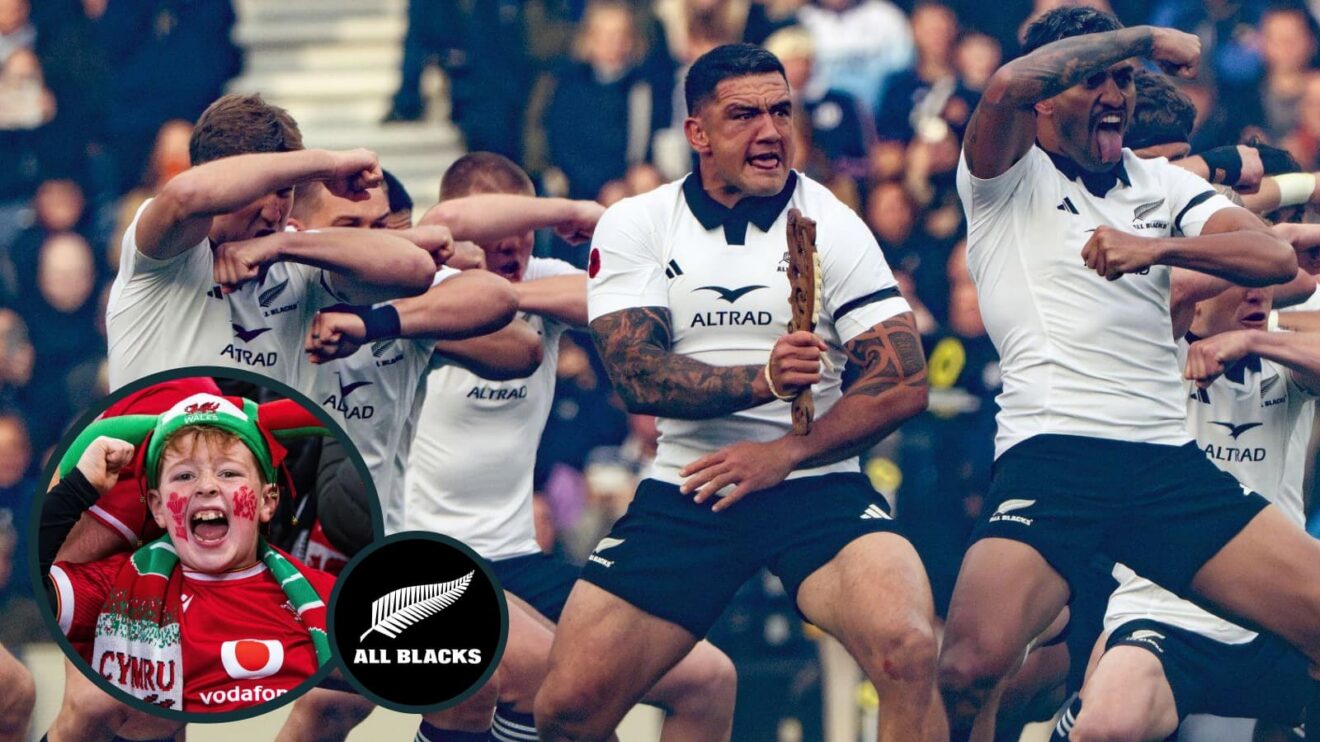
All Blacks hooker Codie Taylor returns to the matchday squad against England.
All Blacks hooker Codie Taylor has admitted New Zealand didn’t prepare well enough for last weekend’s 35-28 defeat by Wales, and he expects England to bring the same pressure at the Allianz Stadium on Saturday.
Taylor has been in enough dressing rooms after enough Test matches to know when a crowd has seen something it’ll talk about for the rest of its life, and last Saturday at the Principality Stadium, on the wrong end of Wales’s first win over the All Blacks since 1953, he saw all of it at close quarters.
“Being on the receiving end of a loss isn’t always nice, but we got to experience a pretty ecstatic stadium last week,” he told Planet Rugby on behalf of STATSports academy. “You hear that there were tears in the stands, and even when I went to the post-match function, with all the corporates and stuff, you could just see how happy they were. That’s what sport does for your nation sometimes, especially when you’ve been going through a pretty tough time.”
Punched in the nose
That’s a generous view from a man who’d just lost a Test match, but Taylor was just as candid about why it happened, and he traced it back to the week before kick-off.
“I think we probably didn’t prepare well enough and turned up in a way that we shouldn’t have, and we got punched in the nose early,” he admitted. “It’s hard to win a Test match when you give away points pretty early like that, which shows the importance of starting well over here. The game’s all built around pressure, and England really like that too, so it’s going to be hard for us this weekend.”
Nowhere was that pressure more obvious than close to the Welsh line. New Zealand got a little narrow at times in Cardiff, and for a side that’s usually so ruthless in the red zone, 16 entries into the Welsh 22 brought them 1.8 points apiece, roughly half the return Wales got from their 10. When the All Blacks sat down to review it, the chances were all there on the screen.
“It’s a funny thing, pressure, eh,” he said. “We looked at the review and you see so many opportunities where it just took one more pass to get it away, but when that pressure comes on, sometimes you don’t see those opportunities, and then you carry and you lose the opportunity. So the idea this week is to hopefully open up, create more, and then be able to give that pass.”
That’s easier said than done against England, a very different proposition; Wales scrapped for every inch, whilst England will be very physical and very direct, with a long kicking game and fierce rucks, and that variety of challenge from one week to the next has been one of the great things about the Nations Championship. Taylor has a fair idea of what’s coming.
“We know they’re a high-pressure team,” he said. “They want to play down the right end of the field, so they kick a lot, they kick the most out of any team in the world, and then with their defence they want to bring that pressure and try to win that physical battle. So again, it’s about us playing smart. We don’t want to play with the ball too much, and when we do get the opportunity, it’s about being able to exploit space. But they’re a very confident side, and rightly so, so that’s going to be hard.”
Transition is the obvious place to find that space, and with Damian McKenzie back at full-back, New Zealand have a counter-attacker built for exactly that. “Having him at the back, hopefully we can open up the game a little bit with his counter-attack ability,” said Taylor.
“We’re pretty lucky in that regard in terms of the drivers of our team, so him and Beaudy [Barrett] will do a good job.”
Taylor is one of the elder statesmen of this group now (apologies, Codie), and with a crop of youngsters coming into the side, I asked him how a leader gets the culture to filter down to them, and what the All Black culture actually is.
“I think it’s around genuine connection,” he said. “We’ve been together for a long time now, and I think culture is built on the standards that you set for the team, so there’s no, what’s the polite way to say it, no idiots in the team. Everyone’s out there trying to be better. We have a team vision that we’re trying to work towards; we want to be the best team in the world, and that means you have to go a bit deeper with everything.”
As for the new faces, Peter Lakai and Fabian Holland among them, he likes what he’s seeing. “I’ve been really impressed with the young boys and how well they’re playing, and there’s a great bunch of boys coming through, so we’re fortunate,” he added. “And coming over here, they get the chance to experience what Northern Hemisphere rugby is like, because it is different.”
New Zealand is a very beautiful but quite small country, defined by its sporting brilliance and, you could argue, the most successful sporting nation in history. The men in black carry the weight of an awful lot of people on their shoulders when they tour, and Taylor feels it most when the results don’t come.
Punch above our weight
“We’re well aware that there’s, what, five or so million who love the game, and you do wear it when you don’t get the results,” he said. “But I don’t know, I suppose New Zealanders are just a pretty reserved bunch who try to be quite innovative. Like you say, we’ve bred some talent over the years, and we’ve also got Pacific Island talent that consider New Zealand home too, which helps with rugby. I suppose we do punch above our weight.”
With the World Cup in Australia now less than a year away, I finished by asking what New Zealand take from this tour, and Taylor started where any hooker would, at the set-piece.
Want more from Planet Rugby? Add us as a preferred source on Google to your favourites list for world-class coverage you can trust.
“It’s a big 12 months,” he said. “I think it’s being able to take away that set-piece pressure. Northern teams, South Africa, they’re all great at set-piece, so it’s about being able to really shore up that part of our game. Then it’s just getting the balance right between attack and defence, playing with the ball and playing without it, and being able to apply pressure that way.”
That’s a shift for a country that has always backed itself with ball in hand, and he was frank about why it has to happen. “New Zealand’s always wanted to play with the ball and attack, but Test footy now doesn’t really allow that sometimes, so you have to be smart,” he said, “or else you get caught in the washing machine, and that’s what Northern teams are really good at.”
STATSports ACADEMY
The All Blacks use STATSports GPS technology to measure their physical performance in training and matches, including metrics such as speed and distance covered.
STATSports Academy brings the same technology to rugby players at all levels, enabling them to measure and analyse their own performances.