‘We are all hurting’ claims England boss following unshackled performance overshadowed by ill-discipline


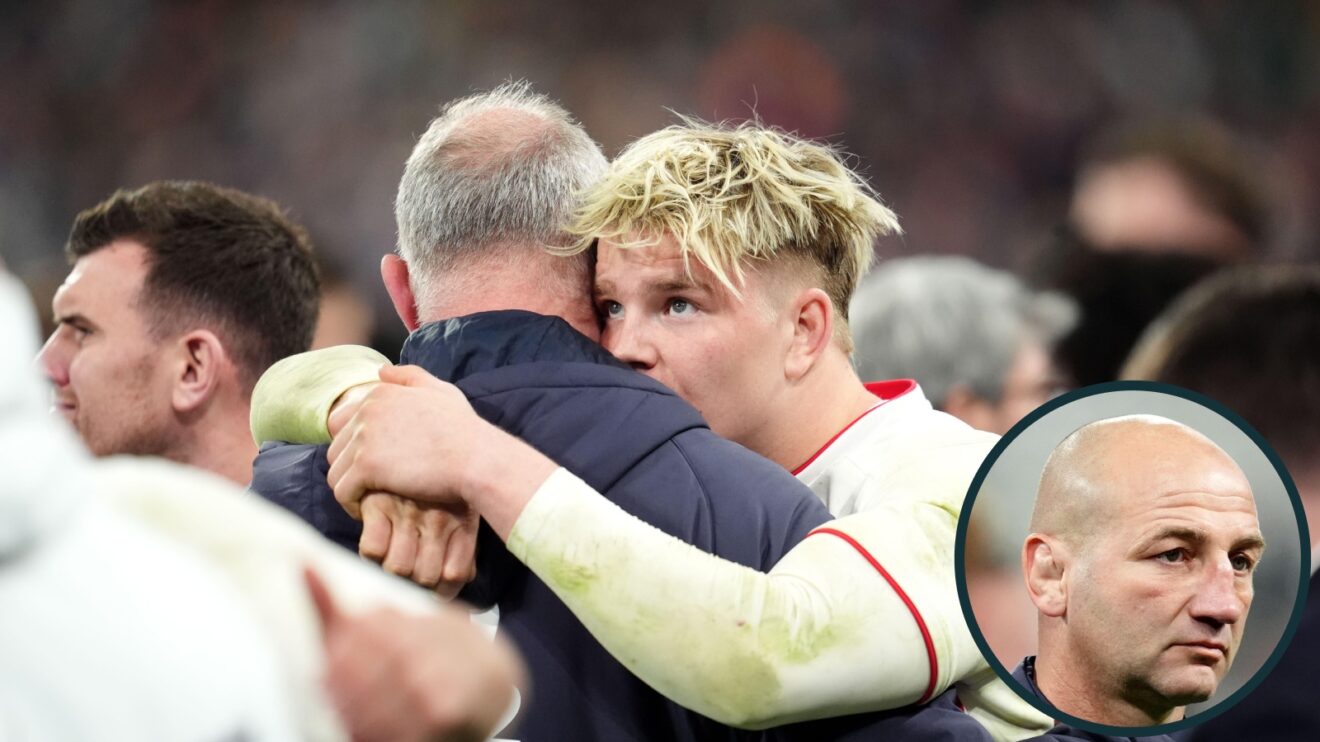
'We are all hurting' claims England boss following unshackled performance overshadowed by ill-discipline
Sir Clive Woodward had a word for it, an acronym, actually. He called it T-CUP, which stands for Thinking Correctly Under Pressure. With it, England won a Rugby World Cup; without it, they coughed up victory in Paris.
There were two minutes left in a game for the ages when England took the lead for the third time. France restarted, and Ollie Chessum plucked the ball out of the night sky. Possession secured, 117 seconds left on the clock.
The French were down a man and about to see the Six Nations title ripped from their grasp by tournament also-rans from across the Channel. England only needed to deploy T-CUP and the prize was theirs.
Scrum-half Jack van Poortvliet had the ball at his feet at the base and decided to give possession away. It was the first of three catastrophic errors by Steve Borthwick’s side.
Van Poortvliet launched a kick too long to be contested. Thomas Ramos fielded it, Mathieu Jalibert ran it back. France recycled, and with 62 seconds left, Thibaut Flament trucked the ball up.
Step forward Henry Pollock to strip him, brilliantly. That should have been that. England back in possession, only not in control.
Rather than protect the ball, the Northampton flanker threw it away, in the general direction of Caden Murley, but nowhere near close enough for the wing to catch.
France were again reprieved and could not believe their luck. Still, time was against them. “Ireland 20 seconds away from the title,” Nick Mullins declared, breathlessly, on ITV commentary.
Want more from Planet Rugby? Add us as a preferred source on Google to your favourites list for world-class coverage you can trust.
Discipline once again an issue
The clock went red, one last play, and England needed only to keep their discipline. They could not oblige. The referee’s arm went up. Not one but too white-shirted offences. A high tackle and a deliberate knock-on.
A penny for Woodward’s thoughts as the digital timepiece showed 82:47 and Ramos slotted the penalty winner. England had scored more points against France in France than ever before, yet had nothing to show for it.
“It’s been a painful tournament and we are all hurting,” head coach Steve Borthwick would say later.
Just how painful for Borthwick and his coaching team the Rugby Football Union must now decide.
Saturday night saw England cap the least-disciplined campaign in Six Nations history with a ninth card, to finish with four losses (for the first time), below Italy (for the first time) and claim a joint worst-ever fifth place ranking.
“England fans rightly expect a team that learns and grows through adversity,” RFU chief executive Bill Sweeney said after successive defeats against Scotland, Ireland and Italy.
At Stade de France they undoubtedly did grow through adversity, though it remains to be seen whether that was at the direction of the coaches or a rebellion by the players against the ‘straitjacket’ rugby previously imposed on them.
Even allowing for Louis Bielle-Biarrey’s four-timer, giving him an astonishing 17 tries in two Six Nations campaigns, England had France’s measure for most of the evening.
World Cup winner Ben Kay put his finger on the reason. “England look like a team not worried about losing,” he said. “That’s the difference.”
That again comes back to the management. All tournament long, players who perform with unfettered ambition at club level have appeared haunted by a fear of failure.
Kay’s observation came as England eased into a 10-point lead before half-time, with Alex Coles touching down to add to earlier tries by wings Tom Roebuck and Murley.
With nothing to lose, there was a freedom to their game. Anything seemed possible, even on this grandest stage; doubts over their fitness and conditioning were replaced by praise for their boundless energy.
This was England unshackled, and it was impressive to see. Yet ill-discipline once again did for them, both in thought and deed.
Ellis Genge’s yellow card on the stroke of half-time, gifting France a penalty try; Roebuck in front of the kicker at a restart, again handing the French momentum; Pollock cupping his ears and shushing the crowd when the job was not done.
Points go begging…
Chessum running away to score his second try from an intercept and not having the presence of mind to touch the ball down anywhere near the posts despite being free as a bird.
The Leicester forward was England’s best player but, in that moment, was guilty of thinking incorrectly under little pressure. The two points that went begging as a result hurt not only England, but Ireland.
“In the end,” former Irish wing Luke Fitzgerald tweeted, “some eejit worried about celebrating his try and not dotting down closer to the posts costs Ireland the win.”
The calculation Sweeney and his fellow blazers must make is whether there is good enough reason to stick with Borthwick based on the evidence of Paris when so much else in the campaign points to the need for change.
Former England fly-half Andy Goode told Planet Rugby on Friday that the RFU must wield the axe and approach Michael Cheika as “Steve’s not coaching in a manner that excites people. It’s so out of touch, in my opinion, from where the game’s moved to.”
A fourth successive defeat later, and Stuart Barnes, another ex-England No.10 was agreeing with Goode that England should move heaven and earth to sign up the Australian.
“Whenever Steve Borthwick is involved in competition rugby, he pulls up the drawbridge and reverts to the safety-first option of the boot,” Barnes wrote in The Sunday Times. “It is time for change.”
Barnes argued that while “brave”, England’s performance was an “isolated” one in a Six Nations season of “concentrated conservatism” and should not alter the “overwhelming” question of whether Borthwick stays or goes.
The conclusion to which he arrived is that three “inexcusable performances” against Scotland, Ireland and Italy are sufficient evidence that England “need a fresh man to take them to the World Cup.”
With England’s next game against world champions South Africa in their altitude fortress of Ellis Park, now is the time for Sweeney to take a leaf out of Woodward’s coaching manual.
The pressure is on, will he think correctly?