Loose Pass: Courtroom shenanigans as ex-players hit ‘unedifying speed bump’ and last minute stocking fillers
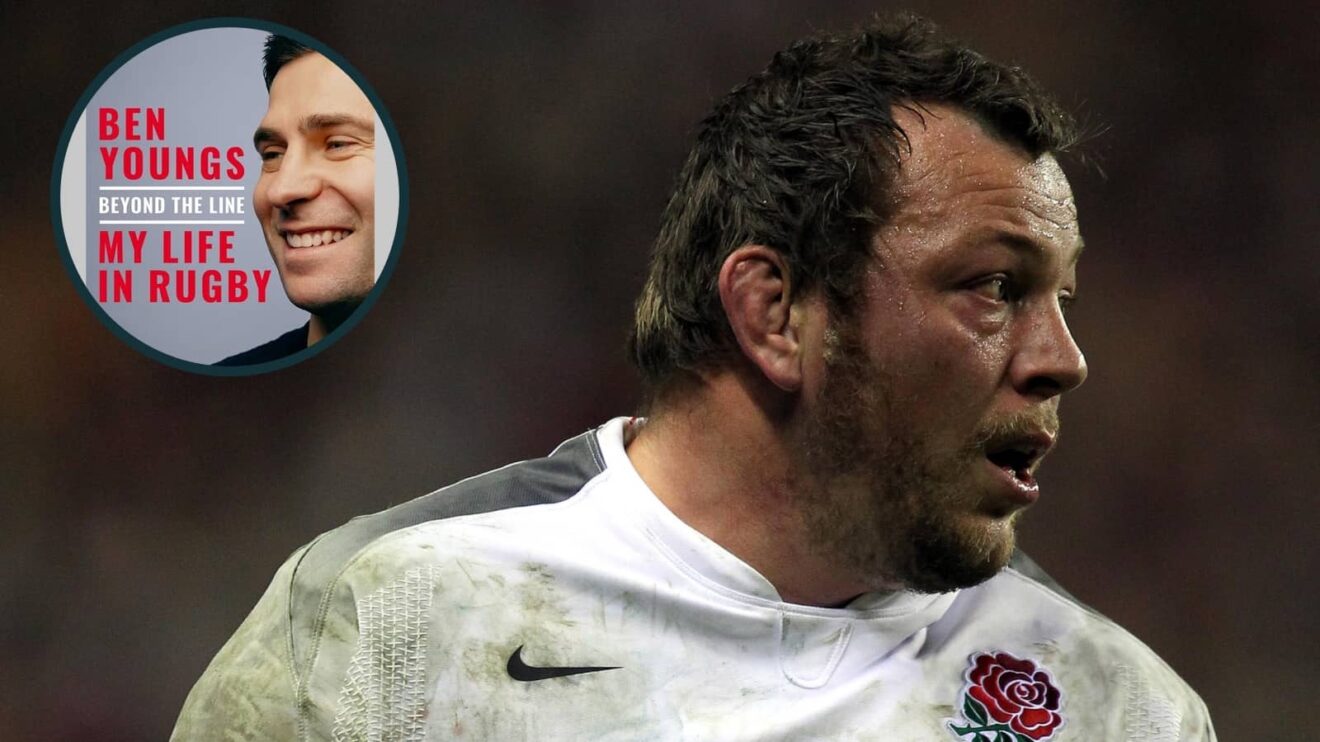
Steve Thompson and an inset of Ben Youngs' book Beyond the Line.
This week we will mostly be concerning ourselves with Christmas reads and courtroom shenanigans…
Last-minute stocking fillers
Yes, it’s December 24. Yes, time is short. But even if it is too late to dash down the shops and fill someone’s stocking with pages of rugby literature, a good book is always a worthwhile gift for whatever the occasion.
In a year when the Lions ruled Australia and in which several of rugby’s luminaries made their last carries, hits and passes, there has been a rich vein of released literature, of sides and versions of incidents, of stories and anecdotes, straightened records and clarified memories.
Two English scrum-halves, Ben Youngs and Danny Care, between them having amassed 228 caps’ worth of international experience as well as countless domestic highs and lows, both called time on their careers in June and promptly avalanched bookshelves with the stories of their careers.
Youngs’ Beyond the Line is probably the more intimate read, with his career hit by the loss of family to terminal illness at far too young an age and his earnest battle to maintain his love for the game which led to him withdrawing from a Lions tour in 2017. Told with refreshingly simple with and warmth, it’s a page-turner that brings forth an eminently likeable character whom you end up only wishing well.
Yet Care’s story is also no ordinary one, taking in the closing of the door on a career in soccer, which opened the door to one in rugby, the decision to not tour with England and take the holiday where he met his wife, the pair of unsavoury incidents off the pitch which almost cost him everything. At times it’s confessional, at times also confrontational, but as the title – Everything Happens for a Reason – makes clear, Care’s story is about being able to maintain positivity and move on from setbacks and understanding that you are not defined by them, rather by how you respond to them. As such, it is perhaps the more inspirational of the two.
But if it is players defined by setbacks you are after, look no further than the epic The Bish, by David Bishop. Often spoken about as one of, if not the, best scrum-half Wales ever produced, this is a rugby story only early on, then sinking into a deeply personal trouble. Having recovered from a broken neck early in his career to become Pontypool’s starting nine, Bishop won just a single cap for Wales in 1984, scoring a try on tour in Australia. Widely tipped to be the next starting nine after Terry Holmes headed to rugby league, Bishop landed a punch on the jaw of Chris Jarman in a game and was banned for eleven months by the WRU. His career never recovered, while his private life off the pitch began to go off the rails as well. A story of a rugby career and person gone awry, it’s as compelling a ‘what-if’ read as you could find.
Irish fans will likely appreciate Conor Murray’s autobiography, but for books about Irish rugby, Peter Bills – whose tome about French rugby a couple of years ago was just as good – has written a slightly removed and more character-driven study of Irish rugby called Triumphs, Trophies and Troubles, in part to commemorate the 150th birthday of the IRFU.
Down south, Ian Foster has become the latest of his coaching generation to write about the experience of New Zealand’s top job, but this is perhaps the most interesting of all of them, coming as it did with the onset of the end of New Zealand’s golden era as well as some – at times abhorrent – politics and personal attacks. Gilbert Enoka, the psychology specialist who was widely credited as the secret sauce for so much of that golden era, has also reflected on his time with the All Blacks and has tried, as so many do, to pen a psychological blueprint for budding players and coaches to work from, which makes for a challenging – in the positive sense – read.
Finally from the players, Eben Etzebeth’s Unlocked is a more heartwarming and simple story of growing up, determination and ambition in South Africa, which can so often feel otherworldly to those who do not come from there.
And one more book, which really should be in every older, wiser rugby lover’s library, is Paul Williams’ Rugby Was ******* Better When, an off-beat look at the normal moans and groans (many of which can be frequently found in this column) about how rugby never seems to get better. Williams takes a data-driven approach to many of those statements, peppers it all with some fine humour and attempts to either confirm or refute those consistently negative comparisons of the modern game with the ‘good old days’.
Rugby’s day in court postponed
The class action from a number of rugby players, which has grown to over a thousand across the two codes, hit an unedifying speed bump this week, when the claimants’ solicitors, Rylands Garth, lost their appeal against having been found to have failed to fulfil obligations to disclose necessary medical material to the defendants – World Rugby, the RFU and the WRU, and the Rugby Football League.
The defendants had requested full medical histories of all the players involved in the class action lawsuit, including GP records, a request Rylands Garth had argued was an impossible task due to its size.
Want more from Planet Rugby? Add us as a preferred source on Google to your favourites list for world-class coverage you can trust.
Rylands Garth claimed to have already submitted ‘hundreds of thousands of pages’ of supporting documents and accused the defendants of trying to ‘hold up the case’s progress’ rather than responding formally to the claim.
But the presiding judge said that the demands of the court were both clear and lawful. It would appear now that those players whose medical records are incomplete face having their cases struck out, not only dealing a blow to themselves but also delaying rugby’s day in court further.
In the meantime, five years on from the initial onset of litigation, those players affected continue to suffer, while clarity of information on head injury risks remains elusive, inconsistently dealt with and riddled with agency. But two things are clear: the players continue to get bigger and the collisions are not becoming fewer.