All Blacks ‘committed’ to tactics as Dave Rennie backs high-ball despite failures against the Springboks


Dave Rennie says that the All Blacks won't ditch their aerial game tactics.
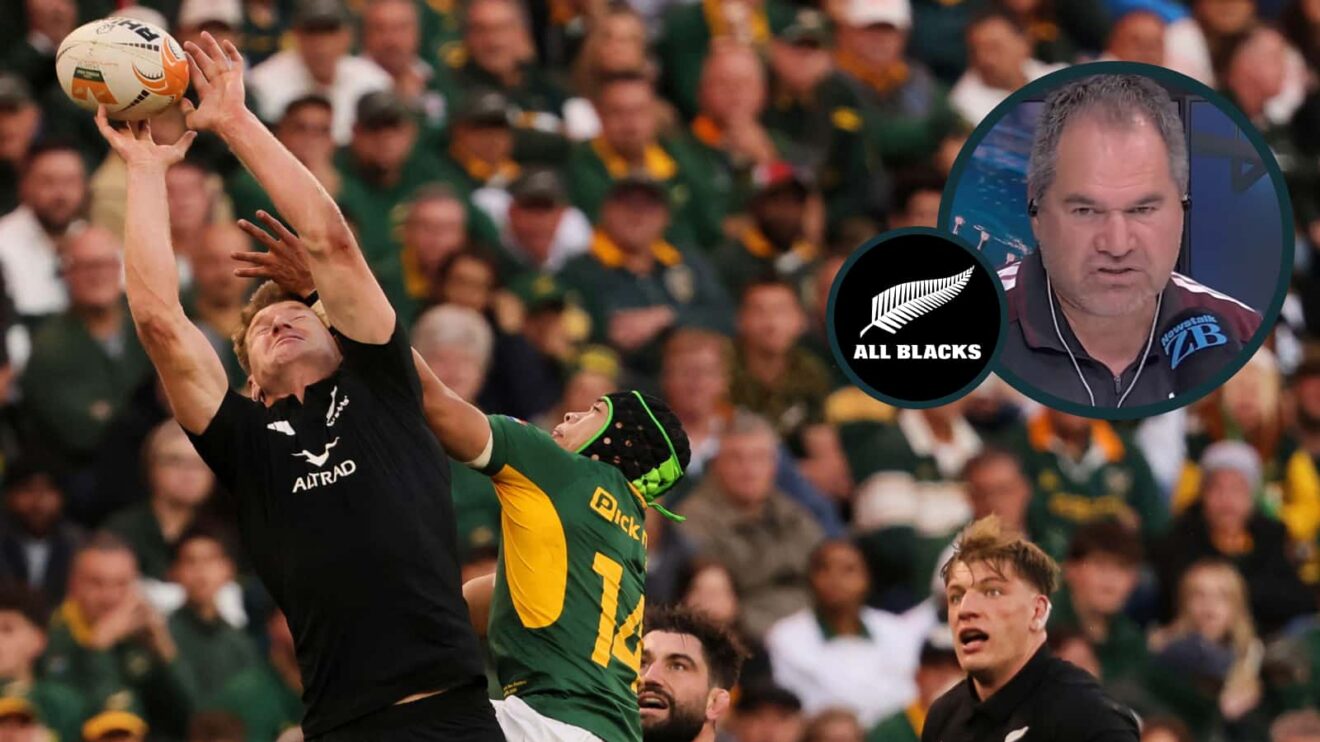
Dave Rennie says that the All Blacks won’t ditch their aerial game tactics despite its failings against the Springboks in Rugby’s Greatest Rivalry series.
New Zealand have adopted the tactic of running back to catch high balls instead of onto the ball like most other nations. This after World Rugby outlawed escorts in 2024, which created a greater contest for possession.
The ploy wasn’t overly effective against South Africa, with the Boks able to gain a major advantage in the aerial battle.
Despite the All Blacks’ struggles under the high ball, Rennie says that they will continue to deploy the tactic going forward after its effectiveness in the July Nations Championship matches.
New Zealand’s style of play
New Zealand’s style of play has changed significantly since Rennie took over from Scott Robertson earlier this year with a greater emphasis on retaining possession and playing with tempo in attack.
After seven Test matches, the head coach says that the team ‘aren’t far away’ from coming to terms with the new style of play and structures.
“We’ve put a lot of emphasis around conditioning because we want to play a real high-tempo game and so we’ve tried to build that over time,” Rennie told Newstalk ZB’s Weekend Sport with Jason Pine.
“Certainly when we were in South Africa, you get to the end of a seven-week campaign and you’re probably trying to pull back a little bit.
“Obviously, we had a lot of travel, especially leading into the Baltimore game. So I think conditioning-wise we’ve moved in the right direction, but we’ve put a lot of time into skill set because that’s a big part of our game. If you’re going to play, you need to be really accurate.
“We got tested aerially against the Springboks and they do it a little bit differently to most sides. In July, the teams that we played would kick longer and you’re able to cover that and get back and connect, whereas these are very short and you’re almost standing under a ball trying to compete there.
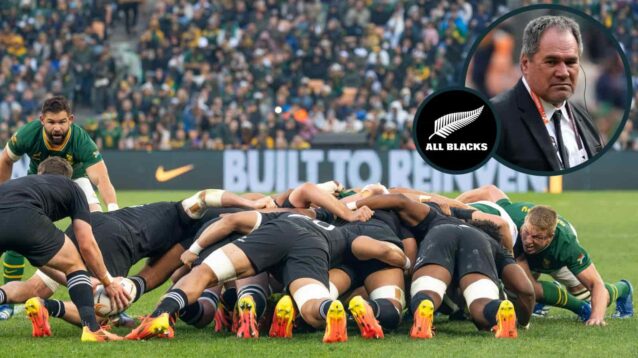
“We had lots of conversations around what that looks like to get more success in that area and then obviously set-piece was vital against the South Africans and how we can be better there. So lots of learnings, but the mindset and how we want the players to play, we’ve been really rap with. They’ve really embraced the style that we want to play, and we understand there’s a bit of risk-reward.
“You use the ball a lot more; you’re not always going to get it right, but the thinking is if we can play at that pace, we’re going to hurt teams and we’ve just got to get a little bit more accurate.”
‘Devastating’ setback as All Blacks lose Ruben Love for the remainder of the international season
All Blacks’ high-ball tactics
Commenting on the side’s tactics under the high ball, Rennie said: “A few years ago, it was a pretty simple process because you could have three or four guys running a screen which denied chasers the opportunity to get up and compete. So the idea is that you get a high ball that’s uncontested and you’re catching 95% of those and then you’ve got a group of guys in front of the ball who can then look after the ruck and you can play a lot of tempo off that.
“The way things have changed now, anyone, it’s ironic, you can be running back even if you try and get out of the way, but you run in the path of someone coming from a different direction, you can get penalised.
“So the concept of retreating back is that you can actually escort and catch the ball. So generally, when the kicks are a little bit deeper, it allows you to then feed the full-back or 10 who is back and then we get the player to immediately try and move the ball away from that congested area. But when the kicks are shorter, it’s a little bit harder for the guys at the back to come forward anyway. So it’s a combination of both.
“If it’s over-kicked a little bit, you want the guys coming forward. I still think guys retreating gives us a chance to stop their chases getting directly at the ball and if we can link and connect from there, then we get to use the ball immediately.”
Want more from Planet Rugby? Add us as a preferred source on Google to your favourites list for world-class coverage you can trust.
Selection of back-three players
The coach was asked how much a player’s aerial ability plays into his selection, particularly when it comes to the back three.
“We do a huge amount of work on it and people may question that, but it’s a part of a game, but it’s not the only part of the game. We’re picking outside backs for a number of reasons,” he explained.
“Some of that is their defensive ability or their ability to finish, their work ethic to get all around the field and invariably, we play Will Jordan a lot on the wing; he’s played a lot of full-back, which is a real asset, I believe.
“If you look at the guys we have used on the wing, they’re on both sides of the park – so it suits our game. It is definitely part of it and it’s an area that the boys put a lot of time into. We are committed; we understand you play teams like South Africa. You’re going to get tested, so we’ve got to be better.”