Why the Les Kiss era at the Reds was ‘a failure’ as next Wallabies boss the latest to join ‘uncharted territory’ club


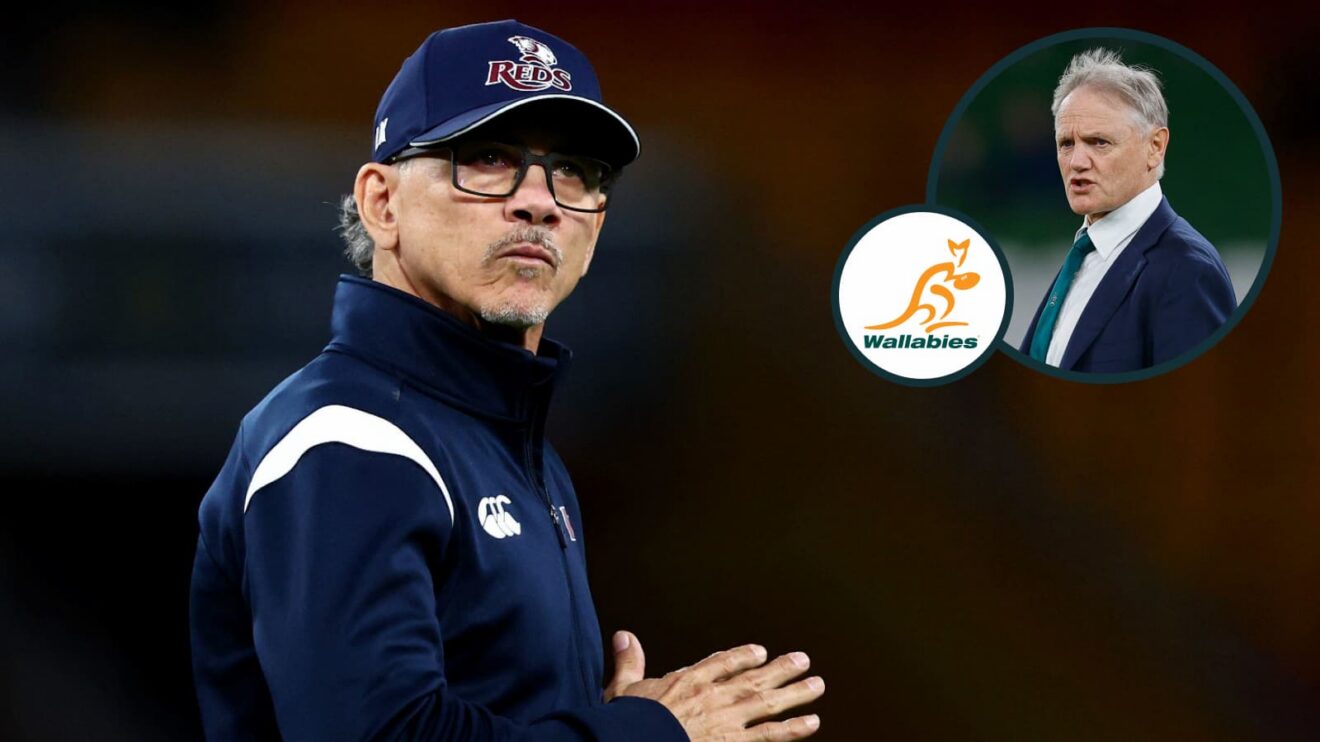
Les Kiss's Reds side were well beaten by the Chiefs.

There’s no way to dance around it: the Les Kiss era at the Reds was a failure.
After the Reds rebuilt under Brad Thorn, Kiss was brought in to take the Super Rugby side forward and deeper into the finals. But Joe Schmidt’s successor only managed to get as far as Thorn: the quarter-finals.
That fact can’t be sugarcoated.
Kiss might have been left proud of his side’s effort against the Chiefs (their physicality was a level above what the Brumbies produced), but, at the end of the day, they were well beaten by a Chiefs side that took their chances and stood up when the game was on the line.
The failure to finish in the top four, especially not finishing in the top three and securing a home final, was a killer.
Kiss will look back and lament dropping games to the Force, who were Australia’s great movers in 2026 but should not have been good enough to win both games against Australia’s top ranked side.
Their slow start against the Waratahs in Sydney was another forgettable display, which ultimately cost the Reds dearly.
The inconsistency was reflected in his overall 55 per cent win-loss record.
Kiss’s Reds certainly played some spectacular rugby at times, but they were far too inconsistent and their tight-five lacked the edge to match it with the best regularly.
The decision to let go of Ryan Smith – the consistent, hard-working and well drilled lineout operator – was one that ultimately came back to bite the Reds.
While the arrivals of Lukhan Salakaia-Loto and Josh Canham brought a new edge to the Reds, the duo only really got going in late 2026 – and they came at a financial cost, too.
One thing going for Kiss is that unlike Dave Rennie, Eddie Jones and Schmidt, the former Maroons and Kangaroos winger has been ingrained in the Australian rugby ecosystem for years now, so he won’t take any time getting up to speed with the strengths and weaknesses in the game, as well as the nation’s depth charts.
But there’s also no papering over the fact that Kiss will take the Wallabies coaching reins without going deep in Super Rugby, let alone winning the competition, and that’s uncharted territory for Australian rugby coaches since the game turned professional.
Schmidt won’t take chances for Ireland
For all the talk of a seamless transition from Schmidt to Kiss, the Wallabies are in an unusual – and less than desirable – situation 15 months out from the home World Cup.
While the Wallabies should be viewing July’s Tests as a time to grow and discover, Schmidt will be wanting to consolidate and finish his two-and-a-half-year tenure on a high with his adopted country. That’s what happens when you lose seven of your last eight Tests.
It means Schmidt’s conservative nature as a selector will likely come out, especially when picking the matchday squad.
Canham and Salakaia-Loto have been the big movers over the past month, but will both make the matchday squad?
And what about the third half-back and fly-half?
Teddy Wilson or Louis Werchon should firmly be in the mix after Jake Gordon’s injury, but will the continuity of Kalani Thomas, who was drafted into last year’s Spring Tour following Tate McDermott’s injury and Nic White’s retirement, see him retain his spot?
Schmidt also has a big call to make at fly-half, with the third spot wide open after Tom Lynagh’s injury-plagued year and Tane Edmed’s bizarre season sitting on the pine for the Brumbies.
The bolter who could force Test regular out
Schmidt cast the net wide during his inaugural season in 2024, but naturally he narrowed his focus in year two, and there’s likely to be only one or two new faces when he names his first squad of the year later next week.
Uncapped props Tom Lambert and Massimo De Lutiis will be in the mix given their new deals to stay in Australian rugby, injury to Blake Schoupp, as well as the lack of quality elsewhere.
And while rookie backs Treyvon Pritchard and Sid Harvey have garnered plenty of headlines, the biggest bolter of the lot could be Brumbies lock Lachie Shaw.
The 23-year-old became a mainstay in the Brumbies’ pack last year, and this year has kept Test regular Nick Frost out of the starting XV. Frost, who has struggled in 2026 and regularly come off the bench, might even be the one who is squeezed out if Shaw is picked by Schmidt.
It’s a matter of time before Shaw earns his maiden Test cap.
After all, the 200cm ruck-hitting lock’s work-rate is elite, and that hasn’t gone unnoticed by the Wallabies.
That said, the Brumbies lost another five lineouts during their embarrassing qualifying loss to the Hurricanes, and even when they did secure possession, the ball was often won at the front by the quick-leaping Charlie Cale.
What early Aussie exit means for Super’s future
Ever since Moana Pasifika fell off a financial cliff, clubs, coaches and players have all advocated for a home-and-away season.
But the idea of a conference system, which ensured Australian involvement at the pointy end of the competition, was also thrown up by broadcasters.
That line of thinking would have garnered more discussion over the weekend as Australia’s last two hopes exited the competition with two weeks left to run.
It means that for the first time, it will be an all-New Zealand last four.
Not only is that a shocker for Rugby Australia and the clubs, but it’s also a killer for the broadcaster in Australia because the audience numbers will likely suffer.
That point isn’t likely to be forgotten anytime soon, either.
Ex-Wallaby coach’s stinging comments still cut through
The other disappointment in Australia’s early exit was that it denied Schmidt and Kiss another opportunity to see how their playing cohort handles the pressure.
Composure has been one of the crucial missing elements in Australian rugby for years.
From missed penalties to the failure to take important kick restarts, matches, including Bledisloe Tests, have often been blown at the end because of the inability to handle the pressure in the dying minutes. The list is long over the past decade, including late Bledisloe defeats in Brisbane (2014) to Dunedin (2017) and last year at Eden Park.
Want more from Planet Rugby? Add us as a preferred source on Google to your favourites list for world-class coverage you can trust.
But it was also a theme in recent Spring Tours and in the disastrous 2023 World Cup.
Pierre-Henry Broncan was one of Jones’ unusual choices as an assistant coach, but the Frenchman highlighted the area late in the piece of the failed World Cup in 2023 and said the early exits weren’t helping in Super Rugby.
“A big difference between the Top 14 and European Cup and your Super Rugby competition in Australia, with New Zealand, is the pressure,” Broncan told reporters.
“In France, we have pressure every game because there are massive things about relegation or qualification. It’s very important for the French and European teams.
“In Super Rugby there is no relegation and [it’s just] against New Zealand and Australian teams.”
Now, with two weeks left in the competition, it’s just New Zealand sides left standing.
READ MORE: Rugby Championship expansion ‘stepping stone’ revealed as SANZAAR revisit Fiji and Japan decision