Wales v Scotland: Five takeaways as Gregor Townsend’s men execute ‘Houdini’ escape against wonderful Welsh adding substance to accusations


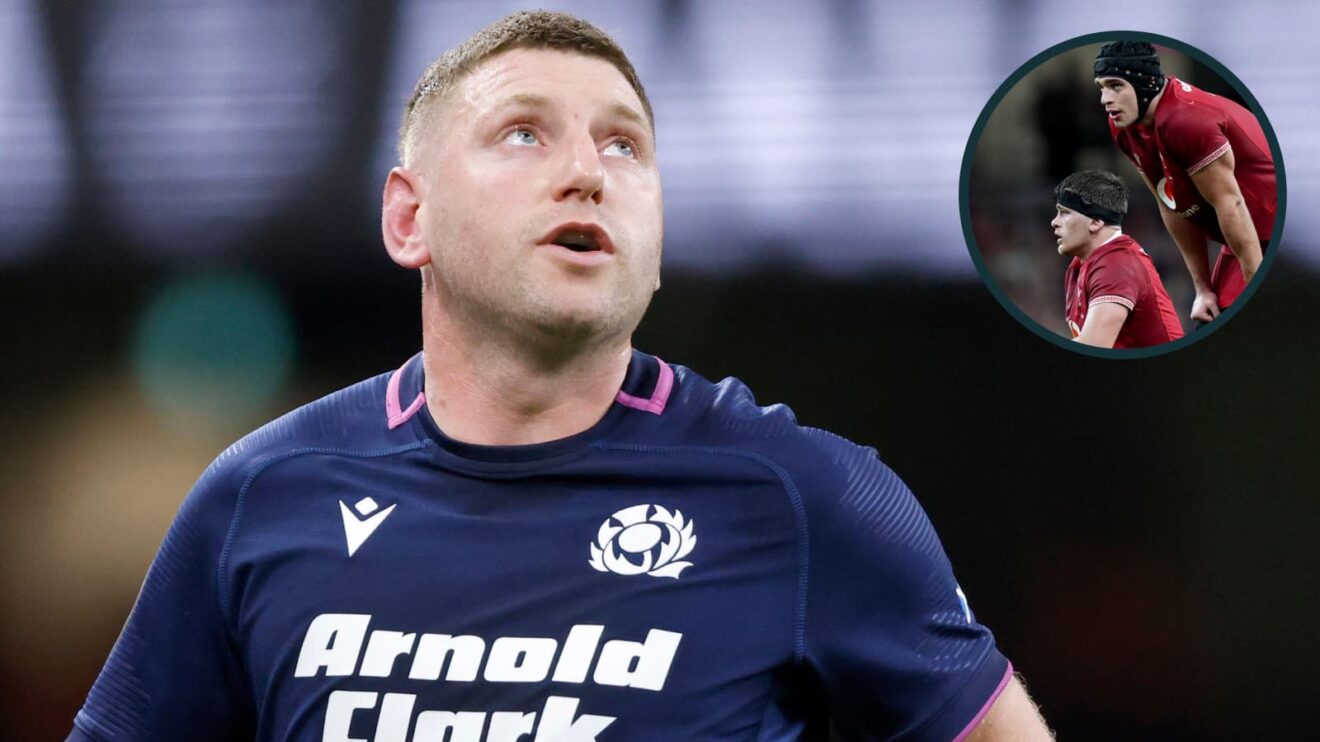
Scotland's Finn Russell with an inset of Wales' Alex Mann and Dafydd Jenkins.
Following Scotland’s clutch 26-23 victory over Wales in a Six Nations epic at the Principality Stadium in Cardiff, here are our five takeaways.
Top line
Prior to the first blast of Matthew Carley’s whistle at the majestic stadium in the Welsh capital, no one really gave the men in red a chance of a victory and rightly so as Wales shipped 50 points in both of their opening games of the 2026 campaign and had lost 13 successive Six Nations encounters.
The writing was on the wall for the Welsh but unfortunately, no one mentioned that to Dewi Lake and co. who came flying out of the blocks and looked hellbent on reclaiming their fortress and were almost successful in their mission.
The script for the Welsh followed that of the first two matches as once again discipline let them down with Joe Hawkins sent for a 10-minute breather just four minutes in the game, but the outlook quickly shifted as Rhys Carre hammered over the line in the ninth minute to put Wales in front.
Wales bossed the gain line and the breakdown and looked to be on course to do the unlikely when Kyle Steyn pinched one back for the visitors on the right-hand touchline. Finn Russell’s missed conversion meant that the hosts remained in front and Josh Adams furthered their lead on 19 minutes with Sam Costelow holding his nerve to convert and then add a penalty some 11 minutes later.
The two sides headed to the sheds with the Principality rocking and rolling, the home side up 17-5 after 40 minutes and believing that maybe, just maybe, this would be their day.
Belief only grew more when Costelow built on the lead with a penalty on 47 minutes and when the defence held firm against a Scottish onslaught of 26 phases, but the 27th saw Russell spot the smallest of gaps and exploit it to add his name to the try-scorers list.
Pressing to re-establish their advantage, the Welsh went 23-12 ahead through the boot of Jarrod Evans but quick thinking from Russell and Darcy Graham gave Scotland a route back into the game as the former took the restart quickly and the latter caught the hosts napping to score.
Into the final quarter and with the game on the line, the Scottish maul heaved forwards and George Turner emerged from the turf as the Cardiff villain, scoring the try to break Welsh hearts.
Scotland dramatically snatch Cardiff ‘pot-boiler’ after Wales seemed set for upset victory
Welsh trade bravery for ugly Gatland grunt
While Mel Gibson made Scottish bravery famous through his sensational depiction of William Wallace, the term has become more synonymous with Welsh rugby in recent times, with the men in red putting up a good fight but getting utterly battered, bullied and embarrassed by top-level international teams.
However, they dropped the tag on Saturday, producing an ugly, abrasive and sheer-bloody-mindedness performance that was once so proudly associated with the big Welsh bullies that so often bossed this iconic competition.
In the Warren Gatland heyday, Welsh rugby was never pretty, but goodness it was brutal and damn hard to beat. That aura was evident again for serial overachievers who have become the tier-one whipping boys over the past three years. It suggests that the sleeping giant was simply hibernating, but only time will tell if this is a false dawn.
Still, the kudos were very much deserved on Saturday as Steve Tandy’s men charged around the Cardiff turf like men possessed, spearheaded by their enforcer on the side of the scrum, Alex Mann. A man eye-gouged by Eben Etzebeth, headbutted by Ellis Genge but one who battered and terrorised the Scots.
While Sam Warburton brought an unmatched efficiency at the breakdown to the number seven jersey, and Justin Tipuric an otherworldly skillset, Mann is far less subtle, bringing a savage edge and borderline barbaric disregard to the opposition that makes him such an effective back-rower but a nightmare to play against.
He was ably abetted by his skipper Lake, who packed in his granite shoulders to thunder Scottish attackers backwards and was sorely missed in the latter stages of the affair, while Aaron Wainwright went through the kind of workload one expects from an entire loose trio, never mind just the number eight.
If Tandy is to make sure playing simple is a shot of light in Welsh rugby’s dark, dark era, then the trio is the foundation on which a competent forward pack can be built upon. Not to forget the sensational James Botham, who pilfered, pillaged and battered his way through a sublime 71-minute shift, and the brilliance of Dafydd Jenkins in the second row.
Costelow’s accuracy built the lead for Wales, but it was the work done up front that set the platform for what should have been a long-awaited Six Nations victory.
Wales player ratings: So many Welsh ‘heroes’ but bench fail to ‘see it through’
No reason to smile
After brilliantly putting England to the sword and reclaiming the Calcutta Cup last weekend, an under-pressure Gregor Townsend remarked something to the effect of Scotland fans have something to smile about for 12 months.
England great Courtney Lawes took issue with those comments, stating that it ‘summed up’ the Scottish mentality that beating their neighbours was all that really mattered.
That may have been true two decades ago but supporters of Scottish rugby are far more demanding now and the calls for Townsend’s head that rang so loudly before and after the defeat to Italy in Round One will be even louder now after an escape job that would make Houdini blush.
Simply winning the Calcutta Cup is no longer good enough for this team. It shouldn’t be. A ‘golden generation’ should not only be targeting the Triple Crown but the Six Nations title and perhaps even a Grand Slam.
The last of which is off the cards, but the longer the SRU persist with Toonie in charge, the more the dream of seeing Sione Tuipulotu hoist anything other than the Calcutta Cup and the Doddie Weir Cup above his head looks nothing more than just that, a dream.
Scotland have been accused of only really pitching up physically, emotionally and tactically against England. On the evidence of the past fortnight, those accusations have an abundance of substance.
Scottish sexiness overshadows shortcomings
Wales exposed the shortcomings of Scotland, who had to resort to the individual brilliance of their superstars to get any kind of foothold into the encounter.
Steve Borthwick’s England really made it look difficult to beat Scotland last weekend but Wales provided a blueprint for France and Ireland to follow. Pressure the set-pieces, be aggressive at the breakdown and fly up on defence. When the Scottish lineout faltered, the entire attack fell apart.
The Welsh defence was brilliant in not only driving Scottish ball carriers backwards but also competing on the deck, too, meaning that more bodies with blue jerseys on had to be resourced to protect possession.
In short, the Scots were simply not allowed to have it all their own way in attack and had to live off scraps which, to their credit, they did.
Steyn’s try was simply Scotland exploiting the same flaw in Wales’ defensive system from a lineout that Matthieu Jalibert took advantage of twice last Sunday. The Welsh were incredibly narrow and while the French playmaker used his boot to punish, Russell made use of Tuipulotu’s delicate touch, freeing up Blair Kinghorn, who served Steyn on a platter.
Russell’s try came from an individual error as Louis Rees-Zammit closed his shoulder to the playmaker and, in doing so, undid all the hard work of the 26 phases, rolling the red carpet open for the Scottish 10 who is far too good to waste that invite. Quick thinking and Welsh fatigue then gifted Graham a try, with the latter also contributing to Turner’s winner.
Test match experience and fitness got Scotland over the line along with the individual brilliance from the likes of Russell, Graham and Rory Darge but fundamentally, the visitors were found wanting in so many facets of the game that better teams like France and Ireland will exploit with far more ruthlessness.
The Six Nations is unpredictable again!
With one match to go before Round Three of the 2026 Six Nations is complete, we have already been served some delicious courses of international rugby across the three weekends.
France’s thrashing of Ireland was something to truly marvel while Italy rose to the occasion to beat Scotland in Rome barely 48 hours later. England got the job done against Wales as expected, but Round One had already provided us an indication as to how unpredictable Test rugby this year will be.
That theme continued in Round Two’s Calcutta Cup, but Round Three has proven to be the most shocking of the lot. Ireland robbed the English supporters of joy at the Allianz Stadium, ramping to a record victory in what was earmarked to be a one-sided affair to celebrate Maro Itoje’s milestone appearance.
Meanwhile, the Principality wasn’t sold out again, as parting with one’s hard-earned pounds was a hard sell to watch Wales get battered again. But that was not the case. With all eyes now turning to Lille on Sunday, maybe, just maybe, we have more shock in store.