‘You see stars after scrummaging against Ox Nche’ – Springboks powerhouse claims South Africa training more difficult that Tests


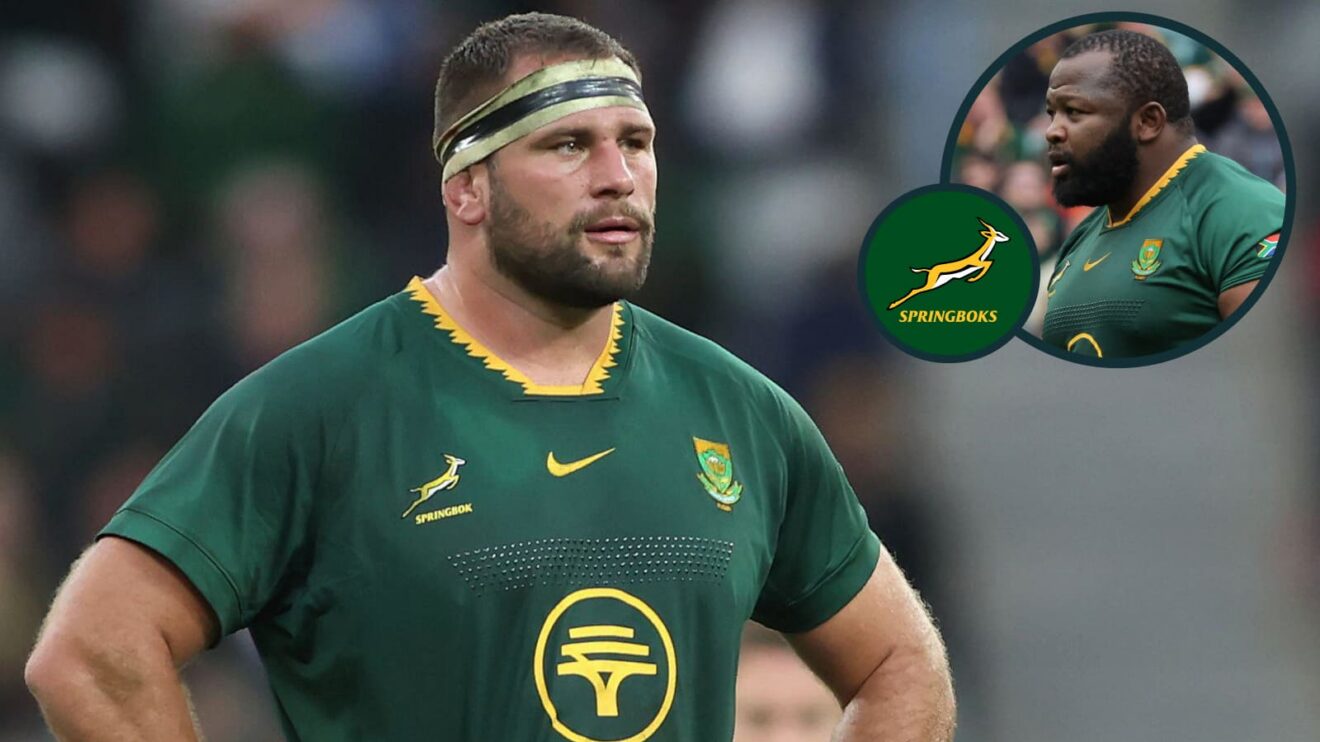
Springboks props Thomas du Toit and Ox Nche.

Thomas du Toit states that it is a tougher task to get through Springboks training unscathed than it is to face some of the other best teams in the world.
South Africa have become the standard-bearers over the past few years, winning back-to-back Rugby World Cups and consistently residing at the top of the World Rugby rankings.
They are renowned for having the most fearsome scrum in the sport, where Du Toit has become increasingly influential.
He is now an established part of that Springboks XV and the competition in camp may have had a big part to play in that.
Springboks looseheads ‘phenomenal’
“Springboks scrum training is like that, you go up and you just see stars – you know when black dots start appearing. That happens very often,” he said on The Good, The Bad and The Rugby podcast.
“I think the current looseheads are phenomenal at the Springboks, so between Ox [Nche], Gerhard Steenekamp and Boan Venter, training against them honestly feels more difficult than the game, they are seriously impressive athletes and they scrum very well in the system.
“Scumming against those guys is fantastic.”
Asked specifically about Nche, who is regarded as the best loosehead in the world, Du Toit states that he is “a combination of both” power and scrummaging dark arts but that “he is physically unbelievable, he’s very, very strong. His body shape also helps him quite a bit.”
The Bath star also gave some insight into the technicalities of scrummaging, something which perhaps isn’t discussed enough.
Du Toit is able to play on both sides of the front-row and the 31-year-old spoke about the differences between loosehead and tighthead.
“The first stupid answer is the loosehead scrums against one person and the tighthead scrums against two – he scrums against the loosehead and the hooker,” he said.
“Secondly, I would say one big difference is the loosehead tries to scrum upwards whereas the tighthead tries to scrum downwards.
“That’s why you would always see the referees go loosehead down, so that’s opposite to what he has to do and a tighthead going up, which is the opposite to what he wants to do – those are the two biggest things.”
Playing tighthead more ‘draining’
Du Toit also revealed why the loosehead is often seen as the more dynamic between the two in the loose and is perhaps used more as a ball carrier.
“The game has changed quite a bit in the last 10 years but traditionally the looseheads will be seen as more the players that get around the park,” he added.
“I will admit, having played on both sides of the scrum, tighthead is very taxing on your body. I don’t know what your heartrate spikes at when you get in a scrum but I can imagine it’s high.
“Having played both sides, I can sometimes feel on the loosehead side I’ve got more energy. It is draining.”
READ MORE: Springboks prop set to miss the Rugby World Cup after doping suspension handed down