Springboks alignment camp squad: Five takeaways as Rassie Erasmus addresses future shortcomings with an ‘advantage’ no other nation has


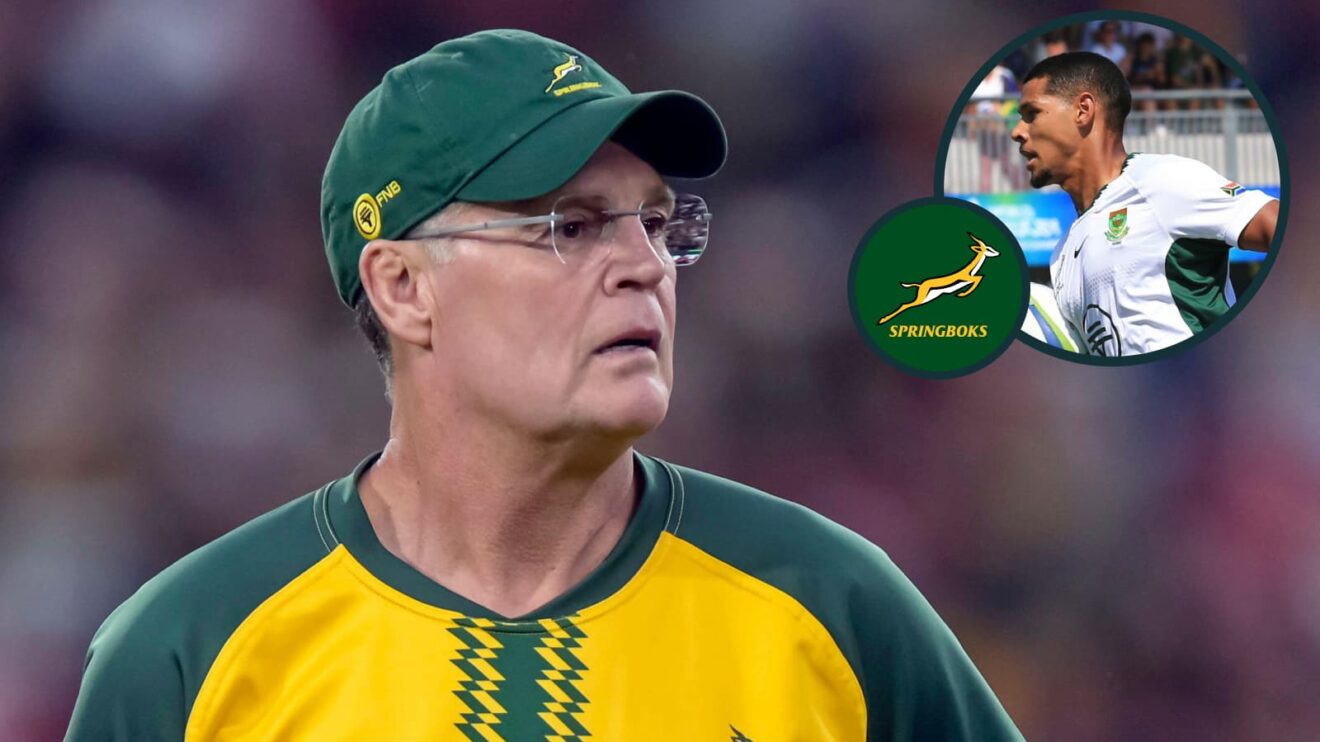
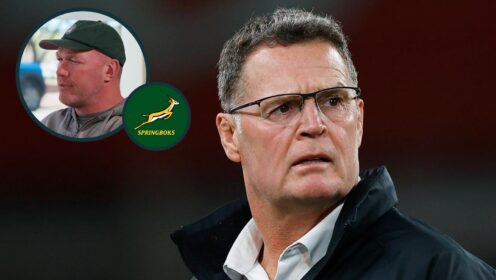
Springboks head coach Rassie Erasmus with an inset of Haashim Pead.
Rassie Erasmus has named his first alignment camp squad as the Springboks ramp up preparations for the 2026 international season, and here are our five takeaways from the selections.
Top line
The alignment camps always draw a ton of interest as it’s the first indication of the coaching staff’s planning for the upcoming season, and the transparency around those invited and those who have been omitted fuels early debates.
That has proven to be the case yet again in 2026 as Erasmus has not disappointed in his selection, casting a wide net of 49 locally-based players who will congregate in Cape Town next week.
The usual suspects will be in attendance, the likes of Eben Etzebeth, Siya Kolisi, Ox Nche, Wilco Louw, Ruan Nortje, Gerhard Steenekamp, Marco van Staden, Jan-Hendrik Wessels, Andre Esterhuizen, Aphelele Fassi, Kurt-Lee Arendse, Handre Pollard, Canan Moodie, Sacha Feinberg-Mngomezulu, Cobus Reinach, and Damian Willemse, to name just a few.
However, there are 11 uncapped players included, some of whom are getting their very first taste of the Springboks environment with Erasmus dipping into South Africa’s u20s stocks, including two rookies who played for the South African Schools team last year.
Prop Kai Pratt and centre Markus Muller are the two straight out of school inclusions and the nine other uncapped players are: Emmanuel Tshituka, Siphosethu Mnebelele, Paul de Villiers, Riley Norton, Bathobele Hlekani, Jaco Williams, Sebastian de Klerk, Cheswill Jooste and Haashim Pead.
All in all, it’s a healthy mix of been there done it experienced campaigners, fringe players chomping to become regular stars, in-form local talents pressing for regular squad inclusions and the next generation who might or might not be ready just yet.
Plus, the return of Frans Malherbe, which cannot be understated, as the world-class tighthead prop looks set to finally return to the field after spending a year on the sidelines with back and neck injuries.
This is just the first alignment camp of the year as a virtual camp will follow it with 21 overseas-based players before a second in-person camp will be conducted in May.
Invitations don’t equal caps
Every year, Erasmus explains this point, but it’s worth emphasising it as the debates quickly turn to who has been included and who has not.
For the first camp back in 2024, 16 uncapped players were initially invited to the camp but only nine of them would go on to debut for South Africa that year, Ben-Jason Dixon being the 10th who was later included.
Twelve players made their Test debuts for the Boks that year but only nine of them were part of the first alignment camp with Phepsi Buthelezi and Edwill van der Merwe joining Dixon as the exceptions.
Many of those players would only feature once for South Africa that year like Cameron Hanekom, Andre-Hugo Venter, and Ruan Venter.
Erasmus included another huge group of 16 uncapped players for the first camp in 2025 but again just four would go on to make their Test debuts later for the Boks: Neethling Fouche, Asenathi Ntlabakanye, Cobus Wiese and Ethan Hooker.
Fouche, Ntlabakanye and Wiese were invited for the second camp in May as well, Hooker wasn’t, and were joined by Vincent Tshituka and Marnus van der Merwe, who would both go on to make their debuts.
It’s a clear pattern from the Bok coaching team of them getting some hands-on experience with a host of players who haven’t pulled on the Green and Gold jumper before deciding whether or not they are ready to make the step up. Marnus van der Merwe, for example, was involved in his first camp in 2024 but only debuted for the Springboks in 2025.
On the flip side of that, players like Boan Venter and Edwill van der Merwe didn’t attend any alignment camps before making their international bows.
Ultimately, this proves that while the alignment squads provide insight into who is on the coaching staff’s radar, it is just part of the full picture and worth dissecting.
Especially with the youngsters from last year’s Junior World Championship title winners. When Johan Ackermann guided the team to victory, it was always going to be interesting to see which of those stars would make the jump up to the highest level and how quickly.
Three of them piqued Erasmus’ interest almost immediately with Cheswill Jooste, Haashim Pead, and Bathobele Hlekani training with the Springboks in Johannesburg. The trio are primed to earn Test debuts at some point but don’t put the house on it happening in 2026.
It’s worth remembering that Sacha Feinberg-Mngomezulu got his first taste of the Bok set-up in 2022 and only debuted in 2024.
Willie Le Roux, Vincent Koch and Bongi Mbonambi’s futures
In the same sense that inclusions don’t equal caps, omissions don’t equate to non-selections. Evan Roos and Johan Grobbelaar are the prime examples of that, as they both were overlooked for the second alignment camps but still made appearances.
However, reading not too deeply in between the lines shows that the Springboks are planning for life after Willie le Roux, Vincent Koch and Bongi Mbonambi.
The trio were central to both Rugby World Cup-winning campaigns but are very much at the end of their respective international careers. Could they make the plane to Australia next year? Of course. Experience is paramount at the highest level and South Africa have plenty of that, but their performances are starting to dip and the brutality of professional sport means that someone is always waiting for their chance.
Aphelele Fassi took his and moved up the full-back pecking order in 2024, particularly in the absence of Damian Willemse who stamped his mark in 2025 and now Quan Horn waits for his opportunity. Le Roux’s replacements are lined up and ready to go.
The same applies to Marnus van der Merwe, Johan Grobbelaar, Jan-Hendrik Wessels and rookie Siphosethu Mnebelele who are lining up to challenge for Mbonambi’s spot.
With Malherbe back in the mix, Koch’s stocks take an even bigger dent which also wasn’t helped by a dip in form with the Sharks, with Thomas du Toit and Wilco Louw starring last year before Zachery Porthen entered the mix.
Le Roux, Mbonambi and Koch stocks might be down but they are absolutely not out.
Sharks beat SA rivals to Bongi Mbonambi successor’s signature but lose Junior Springbok to Bulls
Rassie looks to youth to address key depth concerns
The Springboks’ depth gets the plaudits that it deserves but with an ageing squad, plans need to be made and Erasmus is addressing a lot of the concerns with youngsters.
Steven Kitshoff’s premature retirement illustrates just how paramount these kinds of plans are, while there are countless examples of players simply failing to rediscover the form that led to them earning an international call whether that be through confidence or injury.
One area where Erasmus admits that the Boks are ‘thin’ going forward is at lock once you remove the possible international retirements that could occur after the 2027 World Cup with Franco Mostert, Eben Etzebeth, Jean Kleyn, RG Snyman, and Lood de Jager now all into their 30s.
Ruan Nortje and Salmaan Moerat are two players that the Boks clearly want to invest caps into and beyond that, Junior Boks captain Riley Norton has now entered the conversation.
He is another that we might not see make the step in 2026 or even 2027 but the Springboks are investing time and IP into him now to ensure that when it is time for him to step up, he is well equipped to do so.
The number seven Green and Gold jersey has basically been sewn into Pieter-Steph du Toit’s skin since 2019, but again, Erasmus is looking beyond the two-time World Rugby Player of the Year, first with Vincent Tshituka and Ben-Jason Dixon, but even more long-term with Bathobele Hlekani.
The hooker position has been a sticking point for South Africa for a long, long while now. Malcolm Marx and Mbonambi have dominated the number two and 16 jumpers during Erasmus and Jacques Nienaber’s tenures, with third-choice front rowers filling in when necessary.
However, it’s clear that Siphosethu Mnebelele is viewed as the player who can fill Mbonambi’s void long-term. Out of all the youngsters called into this alignment camp, Mnebelele possibly has the best chance of making the World Cup squad.
There is also a lot of noise around prop Kai Pratt and centre Markus Muller, two players who haven’t even played for their clubs yet. Prop will continue to be a crucial position at the highest level, and Pratt is heralded as a prodigy for South Africa going forward. Centre is a similarly specialist position and getting Muller primed, prepared and ready to have a crack, even if it’s midway through the next World Cup cycle.
Want more from Planet Rugby? Add us as a preferred source on Google to your favourites list for world-class coverage you can trust.
The value of long-term coach contracts
And that is where the value comes in with having the long-term future of the coaching team set in stone. Extending Erasmus’ contract through to the 2031 Rugby World Cup is a risk on SA Rugby’s part, as things can quickly fall apart, just look at how things unravelled for Eddie Jones at England. But as things stand, the positives far outweigh the possible negatives.
Instead of the pressure of making sure that he performs well at the 2027 World Cup, which will still be there, Erasmus is able to cast an eye to USA 2031 in a way very few, if any, international coaches are able to currently.
Confirmation on the future of the Springboks assistant coaches is expected soon, and that will allow Erasmus to further align his plans with his staff.
As things stand, this is an advantage that the Springboks hold over every other top 10 nation in Test rugby as none of the others can confidently state that their current head coach is more than likely to be in their role come 2031. If they were, they’d be contracted until then.