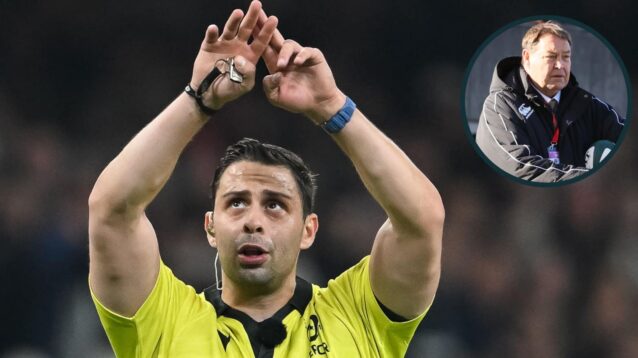
Sir Steve Hansen provides fascinating insight into coaching philosophy as his competitiveness ‘was a weakness’


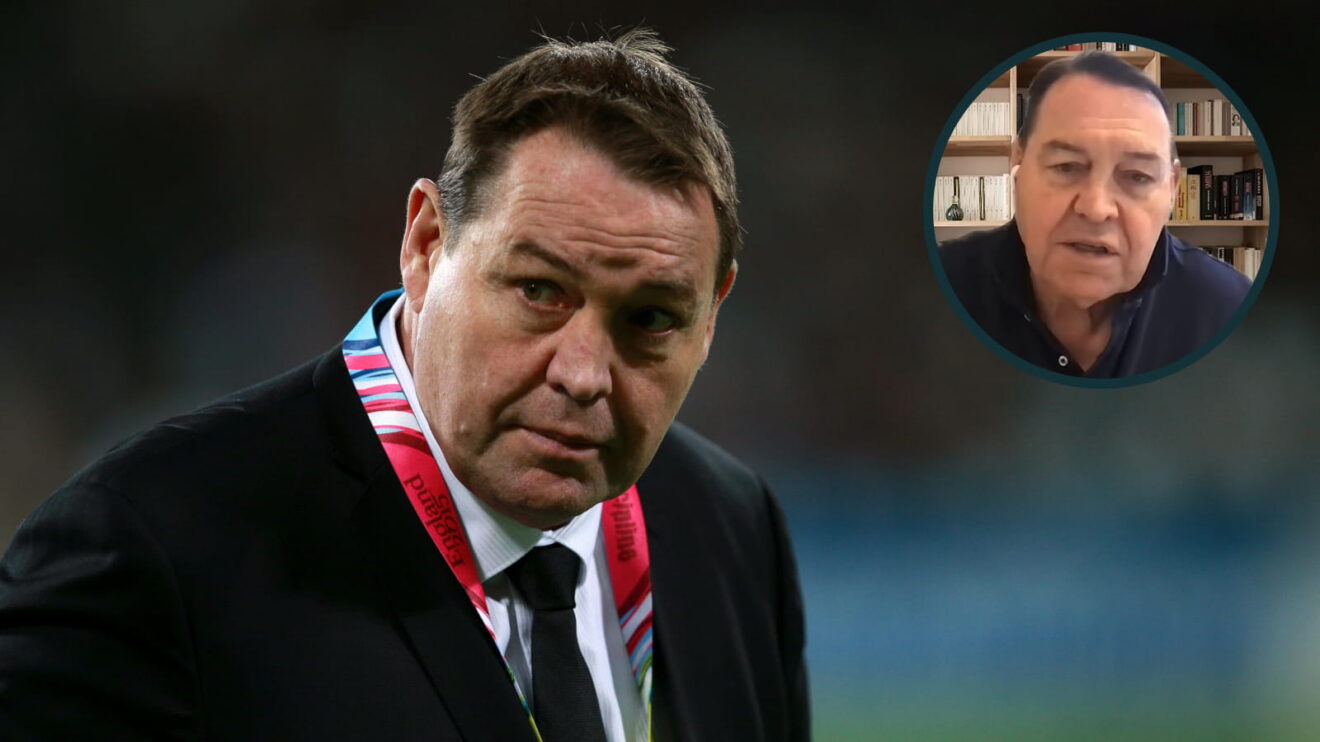
Sir Steve Hansen during 2015 Rugby World Cup and on Rugby Unity podcast.
Sir Steve Hansen admitted that he had to learn to keep his emotions in check with his sheer competitive streak a “weakness” early in his career.
The 67-year-old is regarded as one of the game’s greatest ever coaches after guiding the All Blacks to the 2015 Rugby World Cup title.
Hansen was also part of Sir Graham Henry’s backroom team during the 2011 World Cup victory.
Their win record was remarkable during that time but those successes only came because the All Blacks remain level-headed, particularly after disappointing defeats.
A strength and a weakness
“You’ve got to have your strengths and weaknesses. One of my strengths is I’m very, very competitive but that makes it one of my weaknesses,” Hansen told the Rugby Unity.
“Invariably, your greatest strength is what you go to when you’re under pressure but, if you’re losing and you’re under pressure, all s*** can go out the door.
“It’s not a matter of when you lose, not feeling it and not being disappointed and not being upset by it, it’s a matter of not showing it at the wrong times.
“Everybody in your group feels a loss but your job as the head coach is to find solutions to why you lose and then drive the environment so it improves so it doesn’t happen again.”
Hansen stated that he learned a valuable lesson early in his career which forced him to reassess how he goes about his coaching.
“First and foremost for me, I learned a great lesson when I was a young coach. We lost a game and I was moaning and making it all about me and my competitiveness,” he said.
“The older coach just turned around and went, ‘okay, how about we stop moaning about everything and then we look at what we did this week? What could we have done better? And then we can start looking at everything else.’
“When we lost, I accepted the fact that we lost. I didn’t like it but then I started to reflect and review what I had done that week that I could have done better. What did I miss? And then you start to challenge yourself and improve yourself.
“You can then talk to the players and say: ‘Righto, this is what we tried to do, what did we miss? What did we get right?’
“Eventually, you get back on track. If you sulk for too long it becomes about you and it can’t be about you, it always has to be about the team.
“That’s how I used to look at it. I hated losing, I was so competitive, but that doesn’t help you when you do.”
You can lose the dressing room
Hansen insists that it’s important not to be too reactive after the game, whether it’s a win or a loss, otherwise it can negatively impact the players’ opinion of you.
“Who are the most important people looking at you? It’s the players. When we win, Steve’s lovely, when we lose, Steve’s an a*******, but your players don’t want that. What your players want is the same bloke,” he said.
“If you love them at 4:30 and you lose and you hate them, you lose the changing room. If you love them at 4:30, win or lose you still love them afterwards.
“That’s how you manage and keep your shed because you just stay consistent to who you are and what you believe in.”
He added: “The scoreboard, yes it’s where we need to be in the end but the scoreboard will always be looked after if you do the processes right and to a really high level.
“You’ll then be good enough to win and keep winning, but if your focus is about winning, that’s up and down all the time because you’re not always going to win.
“When you’re reflecting on your week, you say: ‘How was our preparation around our performance? Did I clutter it with too much coaching and not enough doing?’
“Those are the sorts of things I think keep you on an even keel and non-emotional. Once it becomes about winning and losing, it can easily fall into a selfish, emotional rant, which is a waste of time.”