Nations Championship Team of Week: Finn Russell’s ‘finest’ Test match of his career and history made for Henry Pollock and ‘easiest’ selection


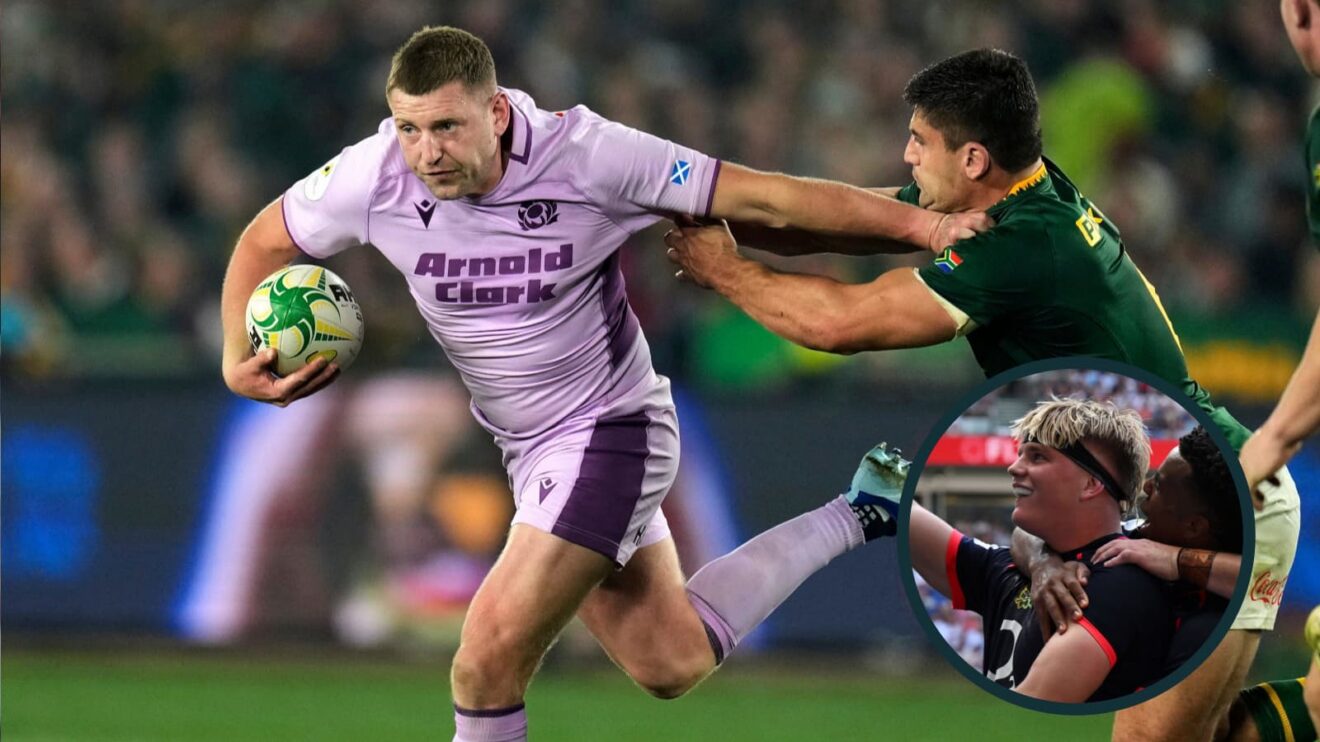
Finn Russell impressed for Scotland against South Africa.
Following a magnificent second round of Nations Championship rugby, from Will Jordan’s record-breaking night in Wellington to a Loftus Versfeld classic, via famous French history in Brisbane and Pumas power in San Juan, here is our Team of the Week.
15 Matthieu Jalibert (France)
The boldest selection of Fabien Galthié’s summer, vindicated in full at Suncorp. Starting in the same XV as Romain Ntamack for the first time, Jalibert gave Les Bleus a second playmaker and a counter-attacking thrust from the back, and as France ran in 30 unanswered second-half points to post their highest ever score against the Wallabies on Australian soil, the dual-conductor experiment looked less like a gamble and more like a glimpse of the 2027 blueprint.
Runner-up: Jimmy O’Brien (Ireland), a lively, intelligent presence in the back three as a much-changed Ireland ground out a bonus-point win over Japan in Newcastle.
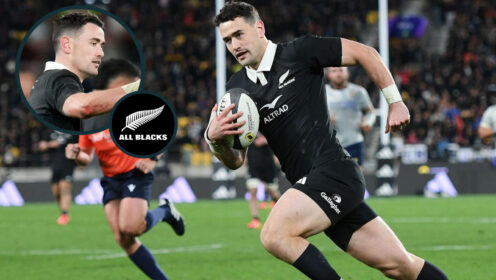
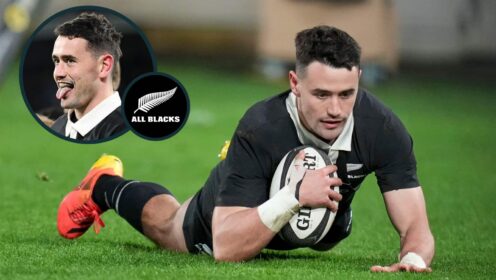
14 Will Jordan (New Zealand)
The easiest selection of the weekend. A hat-trick against Italy in Wellington took Jordan to 50 Test tries in just 56 appearances, past Doug Howlett as the All Blacks‘ record try-scorer, and the manner matched the milestone: predatory support lines, ruthless finishing and the game’s cleanest reading of transition. History made, and at a strike rate the game has rarely seen.
Runners-up: Immanuel Feyi-Waboso (England), whose 77 metres, nine defenders beaten and airborne corner finish made him Liverpool’s most dangerous runner; and Tommy Freeman (England), a constant working threat off the other wing in the 11-try rout.
13 Jesse Kriel (South Africa)
The sealing moment of the weekend’s best match belonged to Kriel, timing his run off Handre Pollard’s shoulder to the centimetre to gather the grubber and put a Loftus classic beyond Scotland two minutes from time. Around it sat 13 tackles and an honest, unglamorous shift in a rebuilt backline; a few tackles slipped, but the system swallowed them, and when the night’s biggest moment arrived, the veteran was exactly where champions are.
Runners-up: Henry Slade (England), who gave England’s backline a shape and alignment it has lacked all year and took his try with typical economy; and Fabien Brau-Boirie (France), the Pau centre who grew into the Brisbane contest superbly at 13, an early back-pass of pure touch followed by a 48th-minute break and one-handed delivery that lit the fuse on the second-half surge.
12 Sione Tuipulotu (Scotland)
The captain retains his place from round one, and this was the greater performance: 14 carries for a match-leading 72 metres, six defenders beaten, two clean breaks, the early cut-back lines that set Scotland‘s terms inside five minutes, and the two-man demolition that created Kyle Rowe’s try. He said before the match that Scotland had evolved into the team they wanted to become. In Pretoria, he led them there in person.
Runners-up: Damian Willemse (South Africa), 15 tackles, nine carries and the driven-maul try that broke Scottish resistance, all from a midfield berth he had barely visited; Yoram Moefana (France), the gainline rock beside Brau-Boirie in Brisbane; and Justo Piccardo (Argentina), a try of his own and the clean break that created Joaquín Oviedo’s second in San Juan.
11 Aaron Grandidier-Nkanang (France)
Two tries in the comeback of the round. With Les Bleus trailing by nine at half-time in Brisbane, Grandidier-Nkanang’s brace formed the spine of 30 unanswered second-half points, his second score dragging France to within one before Ntamack put them ahead. France had not won in Brisbane since 1972; their left wing did as much as anyone to end the drought.
Runners-up: Noah Caluori (England), 19 years old, a debut try, the match’s most clean breaks and the beautifully calm inside ball for Slade’s score, the propelling pencil’s time will come; and Santiago Carreras (Argentina), who finished a flowing move untouched off Bautista Delguy’s long pass as the Pumas pulled away from Wales.
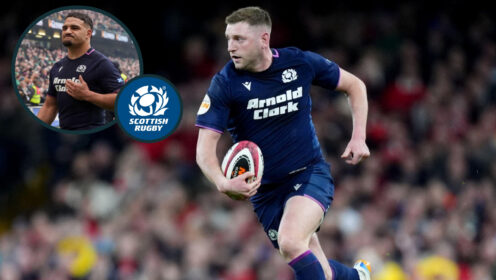
10 Finn Russell (Scotland)
Quite possibly the finest Test match of his career, in defeat, at altitude, against the best defence in the world, after two months out injured. Russell refused the tee four times, teased the thin Loftus air with his contestables, floated cut-out passes over the blitz, flipped the outrageous back-pass offload for Rowe’s try, and produced one second-half sequence of ten and more phases in which he moved the point of attack before every collision. The scoreboard denied him; nothing else did. And he’s our Player of the Week for sheer genius in the face of adversity.
Runners-up: Fin Smith (England), the Player of the Match in Liverpool, whose nine from eleven off the tee, manufactured opener and nine tackles kept every standard intact on an afternoon built for slippage; Tomás Albornoz (Argentina), ten points and calm control of a five-try Pumas display; and Pollard (South Africa), the official man of the match at Loftus, superb in the air all night before his grubber sealed a classic. Ntamack, magnificent in Brisbane, can count himself desperately unlucky that this was the weekend the world’s fly-halves chose for career days.
9 Maxime Lucu (France)
Captain of a famous win. With Antoine Dupont absent, Lucu steered France home in Brisbane with a masterclass in game management, his 46-metre penalty beginning the fightback before his control, box-kicking and tempo governance shepherded 30 unanswered points and a first French win in the city since 1972. Leadership measured in outcomes.
Runners-up: Ben White (Scotland), the intellect beside the artist in Pretoria, whose tempo, service and sniping kept the Springbok fringe honest for 80 minutes before he squeezed over for Scotland’s fourth try in the delirious finale; and Embrose Papier (South Africa), whose first Test in eight years brought a first Test try, a 30-metre snipe of pure instinct at his home ground.
Want more from Planet Rugby? Add us as a preferred source on Google to your favourites list for world-class coverage you can trust.
The forwards
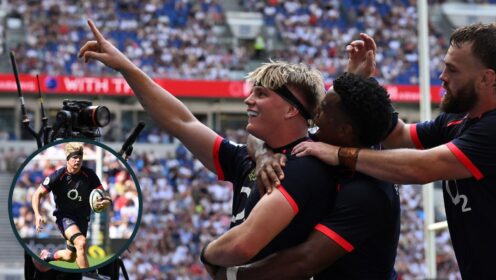
8 Henry Pollock (England)
History off the bench. Three tries in a cameo, each finished with raw acceleration, the second gassing Salesi Rayasi over 35 metres on the outside, made Pollock the first England back-rower to score a Test hat-trick since Nick Easter against Uruguay at the 2015 World Cup. The starts-versus-bench debate will rage; the impact is beyond argument.
Runners-up: Oviedo (Argentina), a brace in San Juan, the first finishing a sweeping attack, the second arriving on Piccardo’s shoulder, and held up over the line in between for good measure; and Sean Jansen (Ireland), the star of Ireland’s win over Japan on debut, a try and a night of heavy, hungry carrying announcing the Connacht number eight at Test level.
7 Fraser McReight (Australia)
Two tries in defeat, one burrowed over with France a man down, the second crashed in off a rolling maul, and the outstanding openside display of the weekend in the loose exchanges. The Wallabies faded after the break, but their number seven never did.
Runners-up: Paul de Villiers (South Africa), the openside in the Springbok numbering, whose 14 tackles and 53 metres in only his second Test marked out a beautifully balanced runner and a long-term Bok answer at seven; and Killian Tixeront (France), whose bench impact in Brisbane moved him up the depth chart in a single evening.
6 Lenni Nouchi (France)
A genuinely rare two-way shift. Nouchi topped the entire Brisbane match with 17 carries whilst making 14 tackles alongside them, leading a Test in carrying volume from left flank whilst near-leading the tackle count, and his gainline work was the engine of a comeback from nine points down at a ground France had not won at since 1972. On a weekend of magnificent back-row performances, nobody produced a more singular one.
Runners-up: Almost impossible to leave out, Pieter-Steph du Toit (South Africa), another mammoth shift from a player who has forgotten how to produce anything else, captaining the Springboks in Siya Kolisi’s absence with 15 tackles, the primary lineout duty and a ninth-minute double hit with Wilco Louw that set the physical terms at Loftus; and Matt Fagerson (Scotland), huge from the first whistle in Pretoria with 15 tackles and the beautifully finished maul try that dragged his side level.
5 Scott Cummings (Scotland)
Immense in every phase of a match that demanded everything: the defensive shift, the lineout work, and then, deep in the final quarter, the line break through a tiring green wall that created Josh Bayliss’s try, followed by another surging incision in the desperate late charge. A round-one try-scorer on his 50th cap, and somehow better this week.
Runners-up: Florian Verhaeghe (France), whose try extended the Brisbane comeback and capped a powerful second-half shift; and Guido Petti (Argentina), marking his 100th Test with an engine-room display worthy of the milestone as the Pumas overpowered Wales.
4 Ruan Nortjé (South Africa)
The pick of the Springbok forwards on a night their defence carried the franchise. Nortjé led the entire match with 19 tackles, won a crucial turnover, and produced the moment that turned the third quarter: a 40-metre burst out of defence, from lock, with Scotland’s siege at its height. Resilience personified, at his home ground.
Runners-up: Cobus Wiese (South Africa), whose 35-metre restart rampage created the Roos try and set the tone for everything that followed before injury ended his night early; and Tadhg Beirne (Ireland), captaining his country from the start for the first time and producing the crucial maul turnover that rescued Ireland from their own 22 in Newcastle.
3 Zach Porthen (South Africa)
The Bomb Squad’s newest graduate delivered when it mattered most. Porthen struggled through a couple of scrums after his introduction, but everything else about his cameo spoke of a tighthead of real maturity: 12 tackles, relentless work in the tight exchanges, and the crucial try off the reclaimed overthrow that put a Loftus classic beyond Scotland’s reach. With the Springbok production line behind him, the future of the Bok number three shirt looks in fine order.
Runner-up: Joe Heyes (England), who drew first blood at the scrum inside two minutes in Liverpool and anchored a platform that won 90 per cent of its own ball all afternoon.
2 Jamie George (England)
The captain mauled over to equal Lawrence Dallaglio as England’s most prolific try-scoring forward, marshalled a set-piece that ran at 90 per cent and delivered the fast start his side had failed to produce a week earlier. A milestone earned the hard way, in 35-degree heat.
Runners-up: Dewi Lake (Wales), whose fourth-minute catch-and-drive try gave Wales the perfect start in San Juan before injury cut the captain’s evening short; and Julián Montoya (Argentina), who led the Pumas to their first win of the tournament with blood hosing down his face, which is about as Montoya as it gets.
1 Ethan de Groot (New Zealand)
A try, a dominant scrummaging display and 60-odd minutes of heavy lifting as the All Blacks ground down a brave Italian challenge in Wellington. On a night when the headlines belonged to Jordan, the platform belonged to the front-row.
Runners-up: Rhys Carre (Wales), the loosehead who powered over from a well-worked short-range penalty move in San Juan, a fifth try in six Tests, a remarkable strike rate for a prop; Boan Venter (South Africa), whose powerful carrying and soft hands in the Roos try build-up matched his scrummaging shift; and Pierre Schoeman (Scotland), who weathered the early Springbok siege and finished the night with the scrum ledger square.
READ MORE: Will Jordan opens up on breaking All Blacks’ try-scoring record: ‘A moment I’ll remember forever’