England squad: Five takeaways as ‘conveyor belt of talent’ becomes clear while Steve Borthwick ready to ‘pull trigger’ on new-look attack
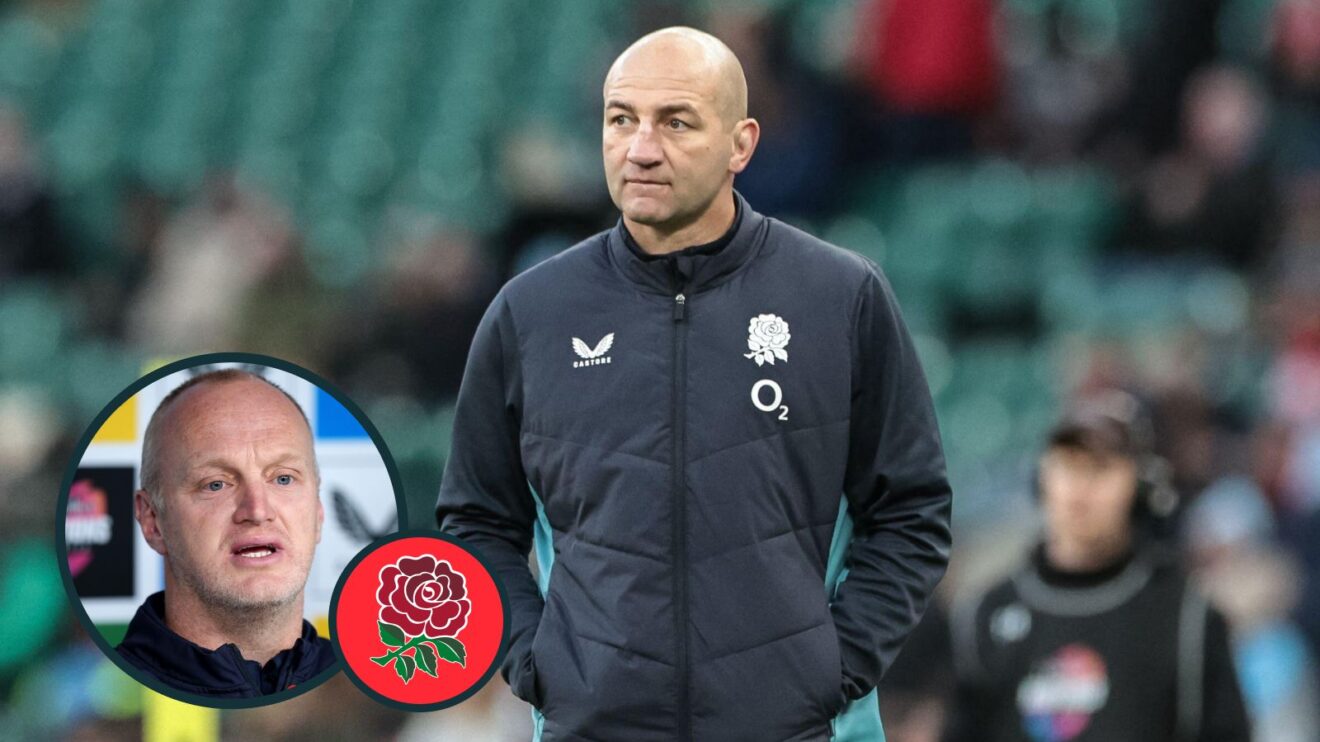
England head coach Steve Borthwick with an inset of attack coach Lee Blackett
Following the announcement of England’s wider training squad for the Six Nations, here are our five key takeaways from Steve Borthwick’s selection.
The top line
Borthwick has named a strong 36-man squad for the upcoming Six Nations. Bath’s Vilikesa Sela, Northampton’s Emmanuel Iyogun and Exeter Chiefs’ Greg Fisilau are in line to win their first senior caps this Championship after being included in the wider group, while Trevor Davison, Bevan Rodd and George Furbank also return to the squad.
Elsewhere, Maro Itoje retains the captain’s armband after guiding his side through a strong 2025 campaign, while there is a strong group of experienced heads in the likes of Henry Slade, Jamie George, Elliot Daly and Luke Cowan-Dickie.
Commenting on his squad, head coach Borthwick said: “We’ve picked a squad with a good balance of experience, leadership and exciting potential.
“The margins in the Guinness Six Nations are incredibly fine so our aim over the coming days is to come together quickly, prepare thoroughly, and make sure we’re ready to perform.
“If we prepare well and keep demanding the highest levels from one another, it puts us in the strongest possible position when the Championship begins.”
Visible prop pathway
Borthwick himself has admitted the injuries to front-line front-rowers Will Stuart, Asher Opoku-Fordjour and Fin Baxter are not ideal, but there is a genuine conveyor belt of propping talent at the moment.
Bath tighthead Sela and Northampton loosehead Iyogun are the latest signs of the pathway system producing ready-made talent, with the pair among the three uncapped players in Borthwick’s squad, while Rodd and Davison have also earned a recall to the Test squad after missing out in the autumn.
Yes, they are all inexperienced at Test level, with Rodd the only capped man among the group – and he only has 10 to his name at the time of writing – but they have all really impressed at PREM level this season across all areas of their game. Around that, this is a very good chance for Borthwick to fully test out his depth chart, which will only further strengthen that wider group with one eye on the 2027 World Cup.
This also further proves just how much work England have put into their scrum in recent years, with Borthwick detailing just how on-the-ball scrum coach Tom Harrison is with his front-row stock.
“I think Tom knows about every prop in England to level seven. He has them all documented, all the scrum profiles measured and understood, just in case,” Borthwick quipped.
“Tom is doing a tremendous job. I can’t overstate the importance of that, understanding the players coming through the pathway with Nathan Catt.
“Do we want these injuries in the front-row? No. Did we know who was next in? Absolutely. Had we already been in contact with them? Yes.”
Pom Squad changes?
England’s deployment of a 6:2 split was a big part of their success in the autumn, but could we be about to see Pom Squad 2.0 this Six Nations?
This is something already on the boss’s mind, with Borthwick detailing the aforementioned injuries in the front-row could force a little bit of a shake-up.
“Possibly. You deal with each of those situations on their own merits,” he said. “We have also got plenty of depth in other positions and playing experience. We were talking about the midfield. You can look at other positions and there are plenty of top-quality players here.
“I will at this point say that some players have got a big role to play – Ellis Genge, Jamie George, Luke Cowan-Dickie – who are senior Test match players. And I know they will embrace this because we have already spoken about it. They are so important to this team and so important to the development of players who come into the Test match arena. I want these players to feel supported and encouraged. Challenged as well, but knowing their team-mates are there and are going to help them develop.”
Want more from Planet Rugby? Add us as a preferred source on Google to your favourites list for world-class coverage you can trust.
As Borthwick alludes to, a shake-up is not necessarily a bad thing. If bringing on the likes of Sela, Iyogun, Davison or Arthur Clark alongside the heavy-hitters works, then that will only speed up their development. It’s that sort of confidence which lets players settle into life at this level.
You would still expect the likes of Henry Pollock, Tom Curry, Chandler Cunningham-South and Alex Coles to be key members of the group, but mixing it up and bringing in those inexperienced yet hungry players could give it an even more interesting dynamic.
Attacking style clear
One thing that’s overlooked in this squad selection is the clear sense of attacking identity. We can already kind of see how England will play ball-in-hand.
England: Steve Borthwick issues Six Nations rallying cry as title ambitions aired
The possibly surprising return of Furbank is at the heart of that. The Northampton Saints man will give England that link player in the backfield they are after, and have been pretty much since his absence too given the shifting of Marcus Smith to 15 and the change in Freddie Steward’s game as well. That link player at full-back is such a crucial point, as it shows England could be looking to fully pull the trigger on the Lee Blackett attack.
The Autumn Nations Series could be described as Blackett-lite. The demo mode, if you will. All the foundations were clearly set in, but now they will likely go all-in and build their game around it.
Having Furbank involved, then, also makes sense. As shown at Bath over his time, Blackett’s system works really well with that ball-playing 15, but more in the sense that it gives the attack a floating playmaker to pop up anywhere in backline. The Saints man suits that down to a T.
Unlucky for some
While this will be a good day for 36 men, it is also unlucky for others.
The likes of George Hendy, Tom Pearson, Miles Reid, Afolabi Fasogbon, Ben Bamber and Noah Caluori, amongst others, can possibly feel hard done by, but it’s probably a good thing for the wider crop that there are players in the form of this group not making the Test side.
It just shows just how much depth and quality there is in the English game right now, led largely by the shifting tide in the PREM, and that can only be a positive.
It’s harsh for this group, though.