Opinion: South African teams must get to grips with northern-hemisphere referees, trends


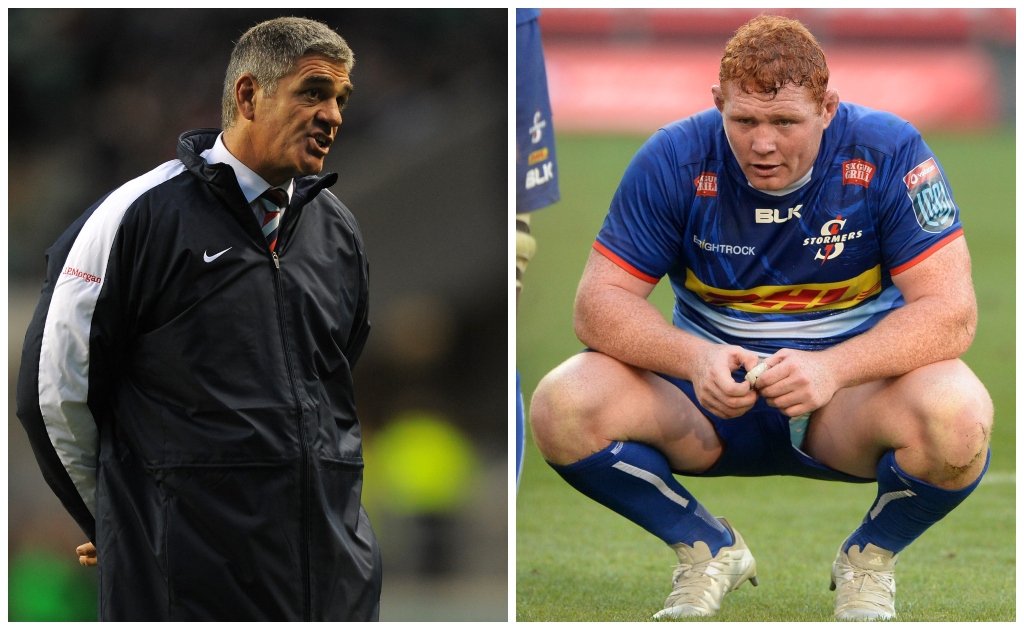
The South African franchises won’t contend for any European titles until they learn to manage local referees and conditions a lot better, writes Jon Cardinelli.
Every week, the rugby conversation is flooded by comments about referees and officiating.
Social media explodes over specific decisions and performances. Inevitably, there are reactions to reactions and hot takes on hot takes.
Occasionally, the players and coaches join the broader conversation. Following the Stormers‘ narrow defeat to Connacht in Galway, captain Steven Kitshoff and coach John Dobson politely questioned some of referee Ben Blain’s calls.
Backlash from media in South Africa
Other knowledgeable members of the rugby community are often less than polite.
Former Bok prop Robbi Kempson described Blain’s management of the maul battle as ‘terrible’ in his post-match analysis for South African broadcaster SuperSport.
On the same panel, former South Africa coach Nick Mallett denounced Blain’s decision to give Stormers centre Ruhan Nel a yellow card – a sanction that cost the visitors momentum at a crucial stage of the second half.
Later on Saturday, after the Test between England and Wales at Twickenham, there was plenty of chat about the incident that preceded Alex Dombrandt’s try.
Writing for the Telegraph, former Test referee Nigel Owens highlighted the obstruction of Adam Beard at the lineout. Owens said that the transgression by Maro Itoje – which was missed by the officials at the ground – freed up Dombrandt to score. Owens was a fair and straight-talking official – easily one of the best of the modern era – and has adopted the same approach to writing and commenting about the game.
These incidents and reactions have become commonplace. Beyond the noise on social media – which tends to be fuelled by fans’ support for Team X or Team Y – there are very real concerns about the standard of refereeing and indeed a convoluted law-set that places too much pressure on the officials.
Coaches and players are becoming increasingly frustrated by the lack of consistency, and more and more of them are lashing out through the media. One would hope that their voices are eventually heard and that World Rugby and the lawmakers tackle the issues which continue to compromise the sport.
Meanwhile, the coaches and players must become more street-smart and accept that every fixture will present a unique set of challenges.
Nowadays, teams prepare for a specific match with the management style of the appointed referee in mind. The better teams have the ability to adapt during the game itself. The better leaders are capable of managing the referee, and steering their charges in a different tactical direction.
This is where South African teams need to improve if they are to succeed in Europe.
There have been a lot of complaints about the standard of officiating since the Bulls, Lions, Sharks and Stormers moved north to feature in the inaugural edition of the United Rugby Championship. It will be interesting to see how these teams react when they enter the European Cup tournaments from next season, and how they manage the officiating in France, which is – according to many foreigners who have played in that part of the world – very idiosyncratic.
In short, it’s not going to get any easier.
The Stormers dominated Connacht at the scrums and mauls this past Saturday. Early in the second half, Manie Libbok scored an opportunistic try to boost his side into a 10-point lead. From there, the Stormers should have closed the game out – or pushed for a bonus-point victory.
Instead, they managed the game poorly. Their kicking and decision-making was below par, as was their level of discipline. Instead of adjusting, they lost their composure.
The reaction to some of Blain’s decisions – questionable as they were – wasn’t good enough. The Stormers slipped into a negative mindset instead of taking control of the situation and getting the job done.
The Stormers aren’t the only South African side that has been guilty of poor game management in recent months. All four of the teams have been vocal about the challenge of northern-hemisphere conditions and the way the game is officiated in that part of the world, yet all four franchises continue to struggle to adapt.
These teams have drifted in and out of recent matches staged in Europe. While the Bulls and Sharks claimed bonus-point victories against under-strength Italian sides over the weekend, they failed to control those contests for large periods.
Recent performances beg the question of whether the South African teams are ready to challenge the top URC sides in northern climes. There have been successes in Italy and Wales, but the collective is still searching for wins in Ireland and Scotland.
Clearly these sides have a lot more to learn before they can dream about toppling the major teams en route to a Champions Cup final – a fixture that will in all likelihood continue to be staged in Europe.