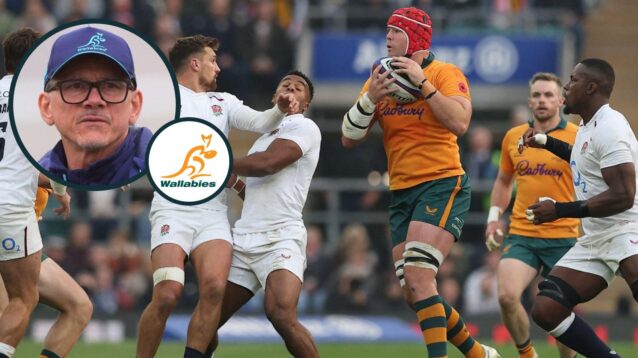
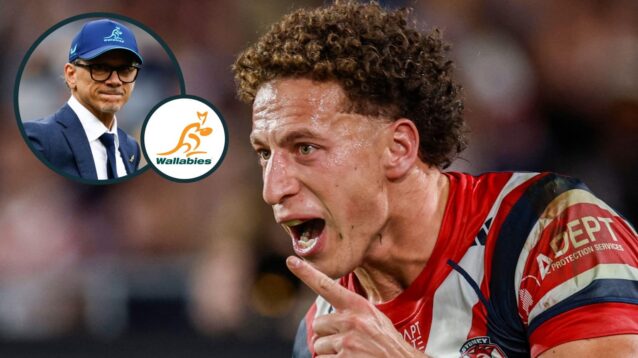
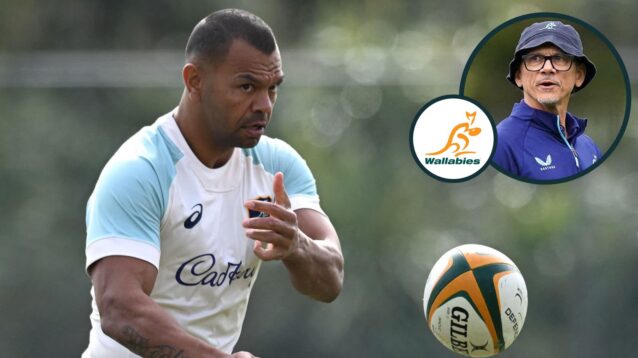
Wallabies team: Five takeaways as Joseph Suaalii to lead ‘aerial assault’ but inexperience could cost Les Kiss against the All Blacks
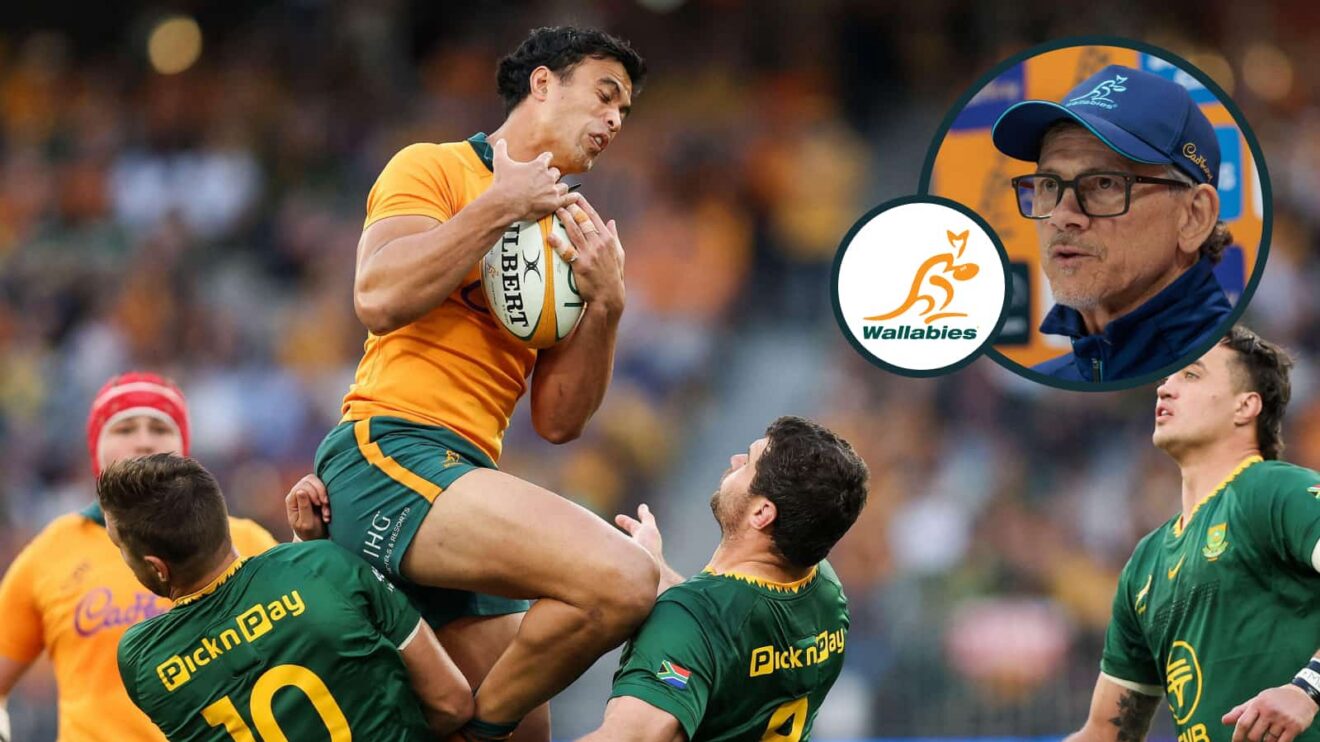
Five takeaways from Les Kiss' Wallabies team to tackle the All Blacks at Eden Park.
Following the announcement of Les Kiss’ Wallabies team to tackle the All Blacks at Eden Park in the Bledisloe Cup, here are our five takeaways.
The top line
It’s more of the same from the Wallabies this week, with the head coach making just one change to his starting XV, and it’s enforced. Hunter Paisami’s suspension for his dangerous tackle on Sacha Feinberg-Mngomezulu has cost the centre his spot in the team for both Bledisloe Cup fixtures.
Instead of shifting Joseph-Aukuso Suaalii back into the midfield to partner Len Ikitau, Kiss has opted to hand Isaac Henry the starting number 12 jumper in what is his most important Test match to date.
Ikitau passing fit for the fixture is a major boost for the Wallabies as it allows for the remainder of the backline to remain unchanged as Suaalii and Max Jorgensen retain their starting roles on the wing with Tom Wright at full-back.
Ryan Lonergan and Ben Donaldson are the run-on half-backs yet again while the pack remains intact from the one that beat the Springboks in Perth. Harry Wilson skippers the side in a settled loose trio with Rob Valetini and Fraser McReight flanking him.
Lukhan Salakaia-Loto earns his 49th Test cap in the second-row, retaining the starting position after Josh Canham’s late withdrawal last time out, and he partners Jeremy Williams. The front-row features loosehead Angus Bell, hooker Brandon Paenga-Amosa and tighthead Allan Alaalatoa.
The changes Kiss has made come on the bench with Billy Pollard and Massimo De Lutiis taking over from Josh Nasser and Taniela Tupou respectively, with Aidan Ross the only replacement front-rower retained from the last time out.
Kiss has also shifted away from a 6-2 split, opting for the more traditional 5-3, with Lachlan Shaw and Nick Champion de Crespigny being the other two replacement forwards, the latter taking over from Carlo Tizzano.
The final change sees Declan Meredith return as he provides cover at fly-half and full-back, with Tate McDermott and Harry Potter being the other two backline replacements.
Les Kiss doubles down on Springboks slayers
It was nip and tuck against South Africa in Perth, but for the majority of that game, the more settled Wallabies’ starting XV got the better of the much-changed Springboks in several facets of the game. In Western Australia, it was plainly obvious how much the team benefitted from that cohesion and consistency in selection, particularly in crucial positions.
Like any good coach, Kiss has rewarded the performances, making just one change, and he simply didn’t have a choice there with Paisami ruling himself out of the game with his poor tackling technique.
What we can takeaway from that performance against the largely changed Springboks team was that the Wallabies definitely have reliable players in key positions. Paenga-Amosa is the reliable hooker that Australia desperately needed with the younger talents coming through. Wilson might not be the best number eight in the world, but he is certainly a consistent and hard-working loose forward.
Given time in the saddle, Lonergan is looking more and more like a competent international scrum-half and produced arguably his best performance in Wallaby gold against the South Africans before his brain-fart yellow card. The Brumbies man is also a pinpoint kicker, which relieves some of the pressure off of whoever is starting in the 10.
Ikitau has been world-class for multiple seasons now, while Wright is the best fit for the Wallabies at full-back despite some struggles earlier in the season. Yes, fly-half is an issue, but considering the state of this squad after the 2023 World Cup, Joe Schmidt has certainly laid a good foundation for Kiss to launch from.
In between these reliable performers, Australia have seriously talented stars in the form of McReight, Suaalii and Jorgensen, which is just as important looking to the Rugby World Cup.
High-flyers to trouble All Blacks
The area of the game where the Wallabies well and truly battered the Springboks was in the air. Suaalii and Jorgensen were central to their success in that regard and have been trusted to wreak havoc upon the All Blacks’ back-three and if it were on the betting sheet, the odds would be greatly in favour of the Australians.
This is after the Springboks were incredibly successful in the air against New Zealand during Rugby’s Greatest Rivalry, and Rennie hasn’t reacted to those failings with his selections. The All Blacks have deployed Leroy Carter and Will Jordan on the wings once again while Beauden Barrett starts at full-back to fill the void created by Damian McKenzie moving to fly-half with Ruben Love and Richie Mo’unga injured.
An aerial assault looks to be the most obvious route to victory for the Wallabies, but it does require Suaalii and Jorgensen to repeat their efforts, and the same is true with Lonergan kicking.
Ending the All Blacks’ insane unbeaten run at Eden Park is a huge ask, but Australia certainly have the weapons to get the job done – they just need to be nigh on flawless.
Wallabies need the bench to rise to the occasion
While the air is an area of the game where the Wallabies may have the upper hand, the bench is not. In fact, it was the failings of the replacements that almost cost Australia the win against the Boks.
Now, the All Blacks might not have the same powerhouse front-row waiting to explode in the second half, but they do have a vastly more experienced bench. Against South Africa, there were 218 Test caps worth of experience on the bench, but that number has plummeted to just 111 with Taniela Tupou and Tom Hooper returning to their clubs. Kiss has also opted to back the ballast of Champion de Crespigny over the breakdown threat of Tizzano for the visit to the All Blacks’ fortress.
The eight replacements on the bench are just as important as the starting XV at the highest level nowadays, and Kiss is certainly rolling the dice with such an inexperienced selection, but changes were needed. The Wallabies were outplayed in the latter stages of the game in Perth, and if they are to have any hope of breaking the streak, an explosion in the final 20 is needed, not another implosion.
Want more from Planet Rugby? Add us as a preferred source on Google to your favourites list for world-class coverage you can trust.
The centre combination
Another area where the Wallabies will need to be sharp is in the midfield, with Ikitau and Henry combining and going head-to-head with the outstanding All Blacks pairing of Jordie Barrett and Quinn Tupaea.
During Schmidt’s tenure, it was Ikitau and Suaalii who combined regularly in the Wallaby gold, but Kiss has understandably opted not to rekindle that partnership after the success in Perth. That puts the pressure on Henry to perform, and it’s a huge opportunity for him to do so with an eye on the 2027 Rugby World Cup.
Schmidt focused on building the partnership of Ikitau and Suaalii with Kiss reinvesting in Paisami and Ikitau. Building some depth in the centres will allow for the Suaalii experiment to continue and Henry to get the first chance to really stake his claim in a big Test match with the return of Jordan Petaia looming.