Tier One strike rate XV: Springboks legend and All Blacks ‘anomaly’ included and why ‘astonishing’ Louis Bielle-Biarrey stands on his own
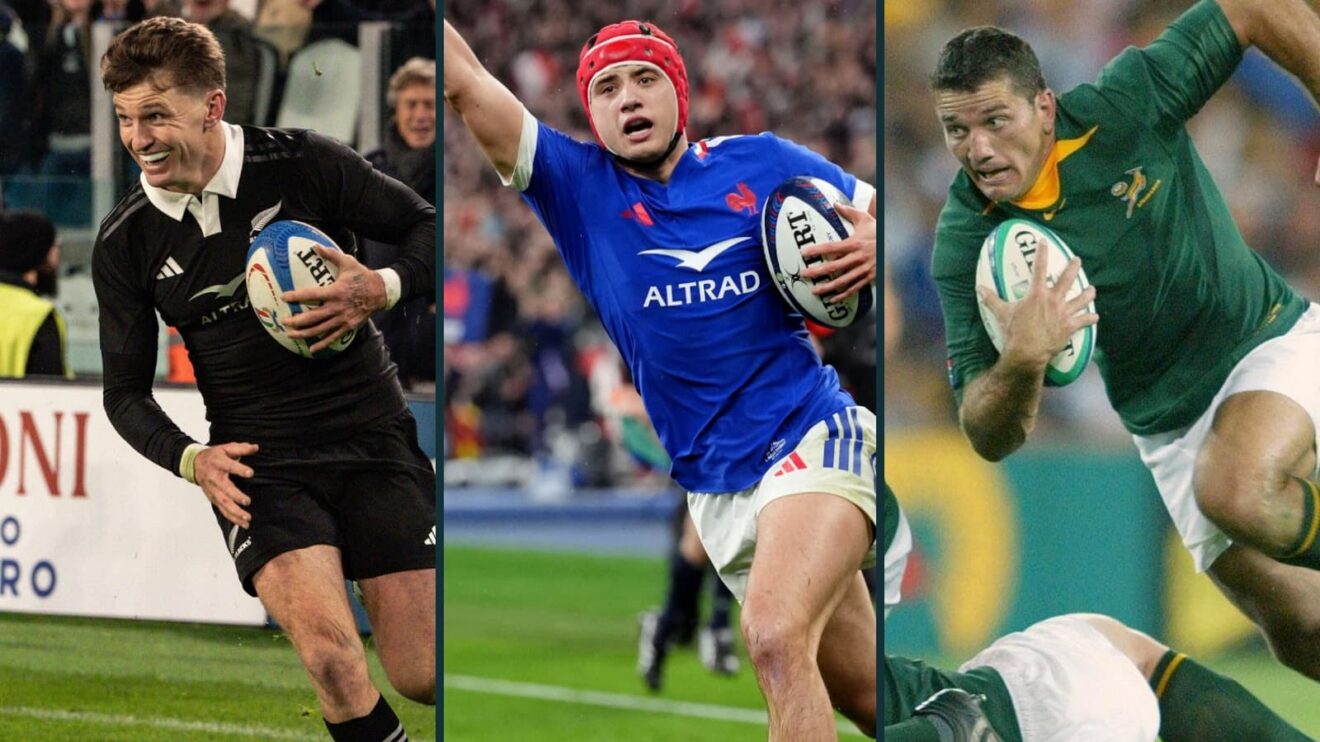
Beauden Barrett, Louis Bielle-Biarrey and Joost van der Westhuizen make the team.

James While punches the numbers to find out who are the most deadly players in Tier One international rugby in terms of try strike rate per position.
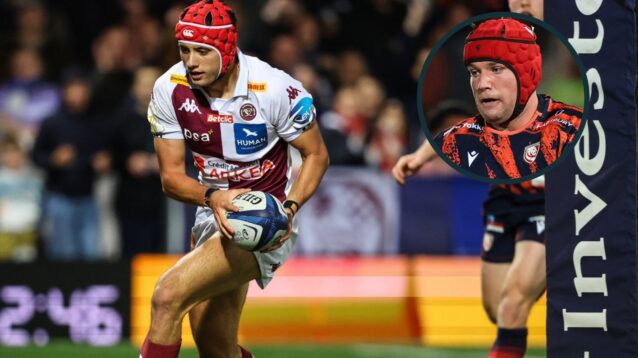
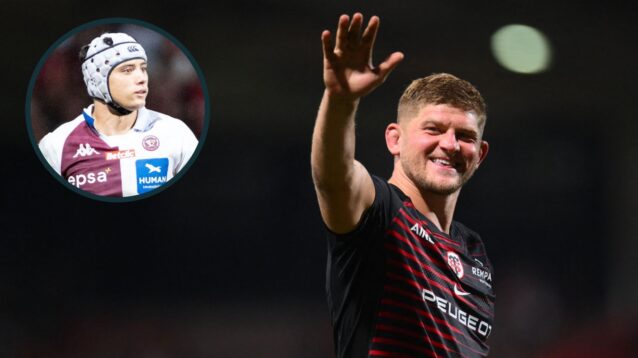
Let us start with Louis Bielle-Biarrey standing alone. 29 tries in 27 caps and a 1.07 strike-rate is evidence of a player operating in genuinely different space, sustained excellence at a frequency no modern back-three finisher has managed. Will Jordan sits at 0.83 across 54 caps, the closest in recent rugby to consistent high-rate finishing, which means Bielle-Biarrey is reaching the line at something nearer three times in every four matches. At 22, with the French system at the height of its powers, he is the clearest outlier the modern game has produced. He is not, as it turns out, the only freak on the list, and the other one played his rugby half a century ago.
The question with Bielle-Biarrey is positioning versus system versus predator. Fabien Galthié’s France and Yannick Bru’s Bordeaux-Begles have both been built around width, and he occupies the space where back-three creativity meets the gain-line. He sits shallow, reads the ruck exit early, and finishes with a carrier’s intent rather than a winger’s patience. Whether that holds outside Galthié’s frame remains open. For now the data is unambiguous, and the anomaly of the red-capped wing is astonishing even given the high-scoring nature of modern rugby.
The back-three finishers
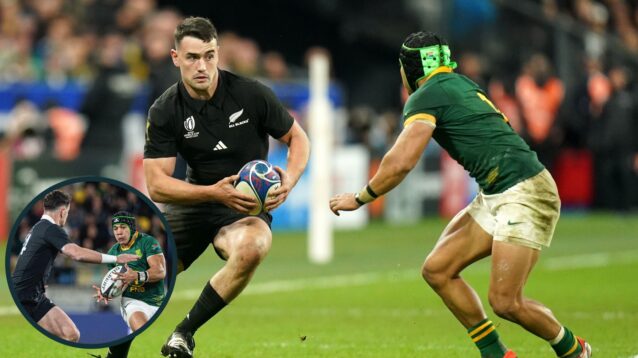
New Zealand has produced a different species of winger. Jordan at 0.83 and Christian Cullen from an earlier generation at 0.79 represent what an All Blacks back-three has always looked like when coached toward attacking shape. The New Zealand winger is often a roaming full-back in disguise, and the full-back often carries with a winger’s geometry, and that positional fluidity, woven into the system rather than stumbled upon, has produced a measurable try-finishing premium. Cullen was the original template, a full-back who attacked the ruck exit like a centre and finished like a winger.
Compare that to the English midfield work of the Clive Woodward era. Will Greenwood at 0.56 and Jeremy Guscott at 0.46 were both centres, and here is the remarkable structural point, that England produced two centres in this top XV, an achievement no other nation matches. The two men played in overlapping decades under the same coaching philosophy, inside systems built around structured backline movement. Guscott operated at outside centre, the runner and the finisher, all gliding breaks and clean lines. Greenwood played inside him in the narrower channel, the orchestrator who read the game and timed his support rather than relying on pace. Both found tries at 0.46 to 0.56 despite playing positions not traditionally weighted toward heavy try output, which is a system effect more than anything else. Woodward’s England built scoring chances for its best finishers regardless of where they happened to stand.
Why ‘coach’s dream’ Benhard Janse van Rensburg is the England midfield answer hiding in plain sight
Joost van der Westhuizen at 0.43 operated as South Africa‘s scrum-half through the late 1990s and early 2000s, when the Springboks were moving toward wider attacking shapes under Nick Mallett and John Smit. A scrum-half at 0.43 is doing something different from a hooker at 0.46, yet the convergence points to an era effect, a period when Test rugby grew more fluid in certain hemispheres and attacking half-backs profited from the shape their coaches were willing to deploy.
The forward structure
Ian Kirkpatrick is the genuine anomaly of this list, and the longer you sit with his numbers the stranger they look. 16 tries in 39 Tests for the All Blacks between 1967 and 1977 gives a strike-rate of 0.41, a figure that would be outstanding for a modern openside and is close to inexplicable for a flanker of his era. The rugby Kirkpatrick played was tight, territorial, and built around the forward grind, a game with none of the width or structured back-row attacking shape the modern flanker takes for granted. No loose forward of his generation comes anywhere near him, and very few of the backs do either. He was finishing at 21st-century rates inside a 1970s frame that asked nothing of the sort from a number seven.
Charles Ollivon at 0.36 is the modern echo, and the pairing of the two flankers is the heart of the whole exercise. Ollivon captains France from blindside and number eight, a loose forward in a system built to put him on the ball at the ruck exit, and 0.36 is the reward a frame like Galthié’s hands a back-rower of his quality. Kirkpatrick reached higher with none of that scaffolding, which is why his number reads less like a product of its time and more like a defiance of it. Set against either man, Tadhg Beirne at 0.17 fills in the other half of the picture, a lock who shifts into the back-row when Ireland need him, finishing his tries from lineout-maul support and loose disruption inside a system that prizes forward-dominated possession and line-speed. The French back-rower finishes from width, the Irish lock from the set-piece, and Kirkpatrick from somewhere his era had not yet learned to build.
Dan Sheehan sits at 0.46, a modern hooker matching the rate of a 1990s centre, two numbers that look alike and describe entirely different jobs. Sheehan plays in a side built around lineout control and loose-play athleticism, finishing from maul defence, open-play disruption, and the occasional backline moment where Ireland’s tactical shape calls a hooker into the line. His rate matches Guscott’s only because Andy Farrell’s Ireland, like Woodward’s England before it, has found ways to weaponise its best athletes across the whole field.
Thomas Gallo at 0.18, Michael Hooper at 0.18, and Beirne at 0.17 sit at the floor of forward try-finishing. Gallo is Argentina’s first-choice loosehead prop on 40 caps and Beirne an Ireland lock on 70, both working the collision point and the gain-line in spaces where tries simply do not gather, and six to 12 tries each is credible finishing for that work. Hooper is the man Kirkpatrick displaces to the bench, and the comparison does him no favours across either era or system. He captained the Wallabies across a 125 Tests between 2012 and 2023 and finished 22 tries, a return of one in every five and a half matches. He was asked to lead first, to control territory, to anchor the defence in a side often fighting for possession, a different ask from a French openside and a world away from what Kirkpatrick managed in a tighter game still. Taniela Tupou at 0.12 across 68 caps is tighter again, because a tighthead in a Wallabies pack built around forward dominance spends his energy on the set-piece and the breakdown, and eight tries from that role is a realistic return rather than a poor one.
Ben O’Keeffe wants World Rugby to ‘innovate’ by exploring ‘important avenue’ that fans will ‘love’
Ardie Savea offers a different read. His 0.31 across 101 caps is the mark of a number eight and pack workhorse in a side built around forward-led phases, the carrier who secures possession before anyone else gets to use it. 31 tries from that role speaks to an athlete who has found his loose-play opportunities and the occasional backline moment, and the strike-rate reflects exactly what his coaches asked of him. Within that frame he has been world-class at the job.
Thibaud Flament at 0.16 across 38 caps sits at the tight end of the same forward compression. Like Gallo and Beirne he works in spaces where tries do not gather, and six across his Test career is straightforward second-row finishing in the French system, the position and the role between them constraining the opportunity.
The absent names
The threshold of 20 caps creates its own silences. Colin Charvis, the Welsh flanker, finished with an impressive try haul yet fell short of the cut-off. Richie McCaw, the All Blacks great, played 148 times for New Zealand and crossed for 27 tries, a rate of 0.18 that sits above Beirne and Tupou, firmly in the forward compression zone. That figure speaks to McCaw’s positioning far more than his quality. He played in a system that asked him to lead, to secure possession, and to create the space that others finished in, and the New Zealand flanker archetype under Hansen and before him prized territory and ball security above all. The contrast with Kirkpatrick is the sharpest on the whole list, two All Blacks openside flankers separated by 40 years, one at 0.20 and one at 0.41, and the difference is not quality but the kind of finisher each man was allowed and inclined to be.
The reading
The list maps system design more than it ranks finishers. New Zealand’s back-three framework yields high strike-rates because width is built into the philosophy. England’s Woodward era produced consistency across positions because his architects found ways to get their best finishers onto the ball wherever they stood. France under Galthié has handed Bielle-Biarrey such a steep advantage that he finishes at a frequency almost impossible to hold over a long career.
Want more from Planet Rugby? Add us as a preferred source on Google to your favourites list for world-class coverage you can trust.
The forward pack sits lower because physics and phase-play leave little room for tries to gather. A tighthead in a set-piece-dominant system will finish fewer than a centre in the same side, and that has nothing to do with skill and everything to do with where the ball goes.
Two names stand outside the system reading altogether. Bielle-Biarrey is the modern outlier, lifted toward 1.07 by a French attack engineered around him. Kirkpatrick is the historical one, and he is arguably the more astonishing of the pair, because he reached 0.41 with no system lifting him at all. One man is the product of a design and the other is the refutation of an era, and the rest of the list sits in the ordinary middle where positioning, coaching and the simple geography of the ball decide how often a player reaches the line.
Bielle-Biarrey remains the story of the present, a finisher whose rate may not survive a longer career or a change of system. Kirkpatrick is the story of the past, a finisher whose rate has survived everything, sixty years of context and every attempt to explain it away. One sits alone at the summit of the modern game and the other alone inside his own era, and between them they frame what this whole list is really measuring.
Tier One XV (strike rate in brackets): 15 Christian Cullen New Zealand (0.79), 14 Will Jordan New Zealand (0.83), 13 Jeremy Guscott England (0.46), 12 Will Greenwood England (0.56), 11 Louis Bielle-Biarrey France (1.07), 10 Beauden Barrett New Zealand (0.31), 9 Joost van der Westhuizen South Africa (0.43), 8 Ardie Savea New Zealand (0.31), 7 Ian Kirkpatrick New Zealand (0.41), 6 Charles Ollivon France (0.36), 5 Tadhg Beirne Ireland (0.17), 4 Thibaud Flament France (0.16), 3 Taniela Tupou Australia (0.12), 2 Dan Sheehan Ireland (0.46), 1 Thomas Gallo Argentina (0.18)
Bench: 16 Michael Hooper Australia (0.1)
READ MORE: France axe Shaun Edwards and highly regarded South African coach – report