Springboks v All Blacks: Seven talking points from Soweto as South Africa go 2-1 up


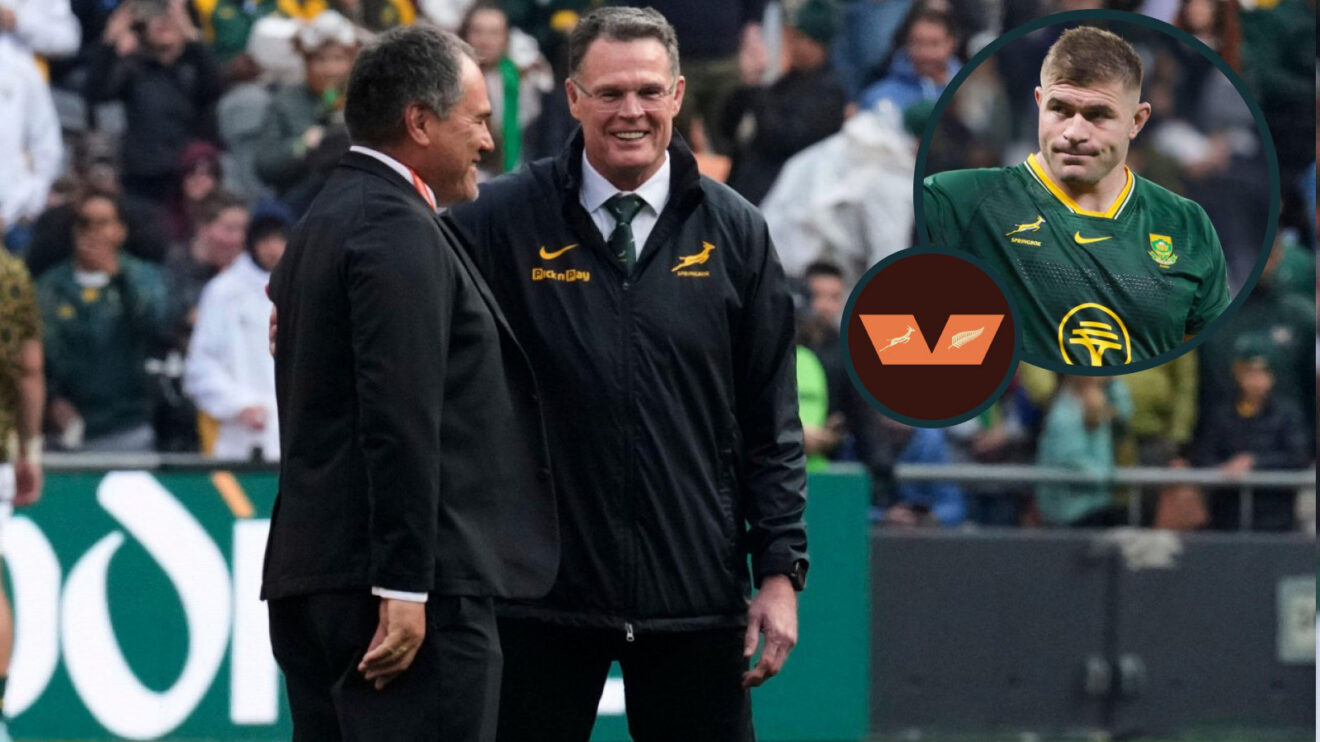
South Africa's head coach Rassie Erasmus with New Zealand counterpart Dave Rennie and Springboks hooker Malcolm Marx (inset).
Following the third Test of Rugby’s Greatest Rivalry series, here are seven talking points from the thrilling action at the FNB Stadium in Soweto on Saturday.
South Africa beat New Zealand 29-24 at FNB Stadium to lead Rugby’s Greatest Rivalry 2-1, and a fortnight of argument about the Springbok scrum ended after an afternoon of crushing dominance.
They like to leave it late; South Africa didn’t lead until the 59th minute and still won by five points. Kurt-Lee Arendse, Jesse Kriel and Malcolm Marx scored, a penalty try came in between the first two, and Sacha Feinberg-Mngomezulu kicked two conversions and a penalty. Ardie Savea scored twice inside the opening half-hour, Will Jordan crossed midway through the second half and Samisoni Taukei’aho went over from short range after the hooter. It was 12-12 at the break and 29-17 with ten minutes to play in a Test that became its own cliffhanger.
The series isn’t won. South Africa can’t lose it, but New Zealand can square it in Baltimore next Saturday, and Rassie Erasmus was cautious when he was asked how the achievement felt. He talked the performance down as well. “We’re not sitting here thinking we are awesome,” he said, and put a good deal of it down to luck. What’s waiting for them at M&T Bank Stadium is a first series win over the All Blacks since 1976.
A new referee, and a different scrum
Dave Rennie spent a fortnight questioning how the Springboks scrummage, and after Cape Town he said they’re able to walk around and go straight through the New Zealand tighthead. Erasmus answered with the swearing and both camps sent footage to the officials during the week. The referee appointment had also changed. Nika Amashukeli had been withdrawn ill before the second Test and Angus Gardner moved forward to cover it, which left the Georgian with Soweto amidst a media furore.
Gardner had let collapses run rather than reset and penalise, so neither pack got much out of applying pressure. Amashukeli penalised the All Black scrum whenever it went backwards, and George Bower and Fletcher Newell finished with two penalties against them each, Tyrel Lomax and Xavier Numia one apiece; six from four front rowers in eighty minutes is a rout in anybody’s language.
The reason sits in the South African selection, because Wilco Louw was picked to scrum first, foremost and probably lastmost too, Ox Nché was picked for the same job on the other side, and between them they made every set-piece a painful examination that New Zealand had no answer to. Bower was overpowered on his own put-in in two of the first three shoves and was pinged for hinging in the first scrum of the second half, which is what a loosehead resorts to when he’s losing; he drops his bind and folds at the hips to stop himself going backwards, and it’s a penalty every single time a referee is looking for it. Amashukeli was looking for it.
Rennie, who had been the loudest voice on it all fortnight, needed about a dozen words on the subject afterwards. “They got rewarded for dominance at times so no issues with that,” he said. A fair reflection, when your tight five have been pumped for 80 minutes.
The penalty try that wasn’t given
Feinberg-Mngomezulu went to the bin on ten minutes for sticking a hand out and knocking forward a Savea offload. Peter Lakai was outside him, unmarked, on the right wing, and South Africa were under sustained pressure inside their own 22. Amashukeli ruled the knock-down deliberate, which is what produced the card, and the law then asked him whether a try would probably have been scored had the ball gone to hand. He decided it wouldn’t, much to the surprise of many. The Associated Press, not ones for hyperbole, reported Feinberg-Mngomezulu as ‘fortunate’.
In the final analysis it cost New Zealand nothing. They kicked to the corner, Asafo Aumua carried at full tilt off the lineout, and Savea picked up and went over for his 34th Test try, which makes him the highest scoring forward in the history of Test rugby. Ruben Love converted for 7-0, and South Africa lost Cheslin Kolbe in the same passage of play, and Manie Libbok came on into a six-man backline.
The five minutes before the break
Cobus Reinach tackled Aumua on halfway and ripped the ball to start the counter, Jasper Wiese carried, Ox Nché found Libbok, and Libbok was stopped inches short after a run that would have been the try of the series. The Boks then came up short on successive phases until Love was carded for going offside to slow the ball down, and South Africa took the five-metre scrum rather than the three points. Somehow you knew they were always going to do that.
It wasn’t a gamble either, because Louw had already won a scrum penalty on his third engagement inside sixteen minutes and the Boks had watched New Zealand go backwards on their own ball twice before that. Nché went straight through Lomax, the All Black pack went backwards at pace with the ball controlled at the base, and Amashukeli had no option but to award the penalty try. New Zealand had led since the tenth minute and went in level at 12-12.
New Zealand had it at 17-12
Will Jordan kicked in behind from the left, Leroy Carter chased, gathered and popped the ball up in the tackle, and Jordan took the return for his 54th Test try, a marvellous piece of invention and one that seemed sure to be something near a killer blow. That was a quarter of an hour into the second half and the game was in front of them. Ten minutes later it had gone.
Both Springbok tries in open play came down the same channel, and that’s the number that ought to worry Rennie most. Damian de Allende got outside Carter in the 21st minute to send Arendse over in the right corner, and Kriel beat Carter one-on-one on 59 minutes for the score that put South Africa in front for the first time all evening. Carter is a wing, he was defending at 11 against a midfield of De Allende and Kriel with a combined 190-odd caps between them, and South Africa went down his channel twice and scored twice.
The other error was Jordan’s, kicking from deep and putting it dead, and Rennie described that one as a chain rather than a single mistake. “A big moment today was Will Jordan kicking it dead,” he said, before walking through what came off it, because the kick conceded the scrum, the scrum conceded the penalty, the penalty became a lineout and the lineout became the maul that South Africa drove a long way to score. Seven points for one poor kick, and that’s what playing South Africa in their own half costs you.
Love, meanwhile, had a night he’ll want back. He missed seven points off the tee in a blustery evening, two conversions and a penalty from 43 metres, and his yellow card produced the five-metre scrum that became the penalty try. Fourteen points, by any reasonable accounting, in a match lost by five.
Malcolm Marx’s evening
The maul try that made it 26-17 with fifteen minutes left was Marx’s, and he steered the thing from near the touchline to under the posts rather than simply riding it over the line, which turned a wide conversion into a formality. The reigning World Rugby Player of the Year produced a masterclass in hooker play and went off to a standing ovation.
The galling part for New Zealand is that they’d fixed the thing they went to Soweto to fix. Aumua hit seven of his eight lineouts in the first half, a considerable improvement on Cape Town where the throwing misfired repeatedly, and Rennie said afterwards that the lineout was strong and that they got their game going off it.
They mended one set-piece and the other one collapsed, and by the time the maul came they’d lost Savea, the best counter-mauler and jackal on the field, to an injured shoulder.
Chasing from 26-17, New Zealand had to widen the game and carry more risk, and the late penalties and the inaccuracy came out of that. Fabian Holland was pinged for an illegal clean-out inside his own half with ten to go, and Feinberg-Mngomezulu kicked the three that made it a two-score game.
The casualty list
Both squads leave South Africa short. Kolbe broke his jaw when Luke Jacobson ran over him, which removes the man who had kicked flawlessly through the series and put 18 points on New Zealand in Cape Town. Savea appears to have dislocated his right shoulder in a Wiese clearout at a breakdown. Quinn Tupaea damaged his MCL three minutes into the second half. Rennie confirmed his captain wouldn’t travel: “He certainly won’t be travelling to the States.”
It has got worse for New Zealand since. Jacobson, who took the armband when Savea went off, is out with an elbow injury, and Savea and Tupaea may both be finished for the year. Rennie is now without his captain and his stand-in on a tour that had already lost Caleb Clarke, George Bell, Anton Segner and Billy Proctor, with Patrick Tuipulotu, Codie Taylor and Jordie Barrett the candidates to lead in Baltimore and call-ups expected before the squad flies. Damian Willemse comes back fit at full-back for South Africa.
Want more from Planet Rugby? Add us as a preferred source on Google to your favourites list for world-class coverage you can trust.
Kolisi’s record, and Rassie’s apology
The win gave Siya Kolisi his 55th Test as Springbok captain, one clear of John Smit, and he had waved the milestone away beforehand as a team achievement whilst being entirely clear about the intent. “We want to win the series; we’re not playing to draw it,” he said on Friday. He led the match for tackles with eleven before he was replaced short of the hour, which is the sort of detail that tends to get lost under the ceremony.
Afterwards he was generous about the opposition, saying “They pushed us to the limit, they came like a house on fire”, and made the point that the closing twenty minutes were better than they had been in either of the first two Tests.
Erasmus, who had spent the week being anything but conciliatory, apologised for the swearing, called Rennie a gentleman and praised the brutality of the way he coaches. “I don’t want to swear again because I got into trouble last time…” was how he started. He said he had been unusually emotional about bringing the team to Soweto, and that on arrival he was struck by local people not being able to afford to get into the stadium, which the squad then talked about amongst themselves.
Kolisi had made the same point on Friday, saying they’re thankful for the people connected to that place who fought for the freedom that lets him do the job he does.
As an aside, the Black Ferns beat the Springbok Women 52-20 in the first Test between the sides as the curtain-raiser at the same ground, Amarante Sititi scoring off the bench a couple of hours before her brother Wallace came on for the injured Savea. Both squads fly to Baltimore together on Sunday for the final Test at M&T Bank Stadium on 12 September, where New Zealand can only draw the series; the 1996 side remain the only All Blacks team to have won one in South Africa.