Six Nations 2026: Rating the benches that will decide the Championship as England’s ‘structural weapon’ and Ireland’s ‘central problem’ assessed


Six Nations 2026: The Benches Will Decide the Championship
The modern bench no longer exists to protect matches or rescue performances; it governs them.
As we prepare for one final shindig of 2025, it is worth recognising that the most significant tactical shift in elite Test rugby has not come from shape, system or ideology; it has arrived later than that, once fatigue has done its work and referees have stopped negotiating.
As the Guinness Six Nations 2026 looms, opening with that Thursday night collision between France and Ireland in Paris on February 5, the Stade de France floodlights will cast shadows longer than the excuses offered by full-time. The noise will centre on attacking patterns, returning stars and familiar favourites. None of that will decide the title. What matters is what happens after the hour, when lungs burn, tackle height drifts, entry angles fray and officials move from persuasion to enforcement with the cold efficiency of traffic wardens on commission.
The final quarter is no longer a theatre for momentum or romance. It is a technical audit. One side remains credible under fatigue; the other starts staring at the referee in quiet disbelief. That separation is created almost entirely by what comes off the bench.
France: All that you touch and all that you see
France enter as reigning champions and overwhelming favourites, their depth now bordering on the unfair. For the first time since 2023, Fabien Galthié has his core fully fit. Charles Ollivon, François Cros and Antoine Dupont form a spine of physical authority, obsessive accuracy and outright genius that few international sides can live with for 80 minutes.
Cros remains the hidden engine and the most misunderstood forward in Test rugby. He is rugby’s angriest janitor, sweeping up breakdown debris with furious precision, personally offended by slow ball, tutting his way through rucks as if standards were a moral issue. His value lies not in steals or highlight moments but in arrival timing; early without rushing, violent without losing legality, resetting tempo before opponents even realise it has slipped away. When Cros has been absent, Toulouse and France alike have slowed, recycling softening, jackalers breathing and defences recovering. With him fit, possession becomes suffocating, and the ball never quite pauses long enough for opposition hope to form.
Galthié’s bench selections reflect that worldview. Whether he opts for 6-2 or the more punitive 7-1, the emphasis is not chaos but compression, the removal of space through behemoth bodies. Emmanuel Meafou shortens the field cognitively, reducing space rather than chasing collisions, redistributing force so opponents multiply errors while France stay low, square and legal. Others follow, margins removed piece by piece until penalties arrive without invitation.
The 10-shirt debate between Romain Ntamack’s surgical harmony with Dupont and Matthieu Jalibert’s late-game incision is almost academic. Either way, the bench behind them is obscene. Three home fixtures, including Ireland first up and England to close on March 14, give France control of the calendar as well as the contest. Their depth does not protect them; it coerces opponents into submission.
England: How I wish you were here
England arrive transformed, safe in the knowledge that Steve Borthwick’s side is no longer rebuilding; it is reloading. The 2025 run, 11 wins from 12 and a flawless autumn, established something more durable than confidence; it confirmed a bench built to govern matches rather than chase them.
Holding back Tom Curry, Sam Underhill and Henry Pollock is a structural weapon. Curry’s defensive output is always top-tier. Pollock brings the opposite threat, with explosive carries and ruthless edge work that punish tired defenders without ever looking hurried. When combined with Ben Earl’s power and mobility, England’s replacements preserve shape while increasing pressure, squeezing games rather than inflating them.
Want more from Planet Rugby? Add us as a preferred source on Google to your favourites list for world-class coverage you can trust.
And elsewhere, England’s depth has finally extended into the control positions, with genuine Test-ready options at centre and fly-half rather than emergency cover masquerading as succession planning. The emergence of multiple 10s who can run a game under fatigue, allied to centres capable of defending on the inside shoulder without folding and attacking without burning structure, has allowed England to finish matches with authority rather than merely survive them.
Three away fixtures will test resolve early, but home games against Wales and Ireland offer accumulation rather than desperation. England now understand the truth window – they wait for it, then they tighten the vice.
Ireland: Ticking away the moments that make up a dull day
Ireland’s challenge is subtler and therefore more dangerous because it sits in transition rather than decline. Andy Farrell’s side remains superbly drilled, emotionally cohesive, and technically sound across the opening hour, yet the issues exposed in 2025 were structural. The much-vaunted golden generation never quite arrived as a single, dominant cohort; instead, it thinned unevenly, leaving a side suspended between continuity and rebuild, still shaped by systems designed for players no longer there to execute them at peak level.
Bernard Jackman: Why ‘concerning’ Leinster issue will leave Andy Farrell ‘worried’
There are green shoots. Ryan Baird’s emergence has injected badly needed athletic violence into the engine room, his line-speed and carrying threat offering genuine late-phase impact rather than polite presence. He looks built for the fatigue window. One player, though, does not stabilise a pack.
The central problem remains escalation. Ireland repeatedly lost late-game breakdown margins in 2025, conceding penalties without increasing gain, and nowhere was this exposed more ruthlessly than in the front-row against South Africa. Once replacements entered, scrum integrity eroded, hips rose, angles shortened, and penalties followed in sequence. South Africa did not chase a personal battle; they removed the very notion that three players were world-class, and Ireland had no response.
Caelan Doris remains world-class, but the unit around him lacks the pure margin-removers France and England deploy as standard. Ireland can still generate pressure through cohesion and shared urgency, but the final quarter now demands something colder.
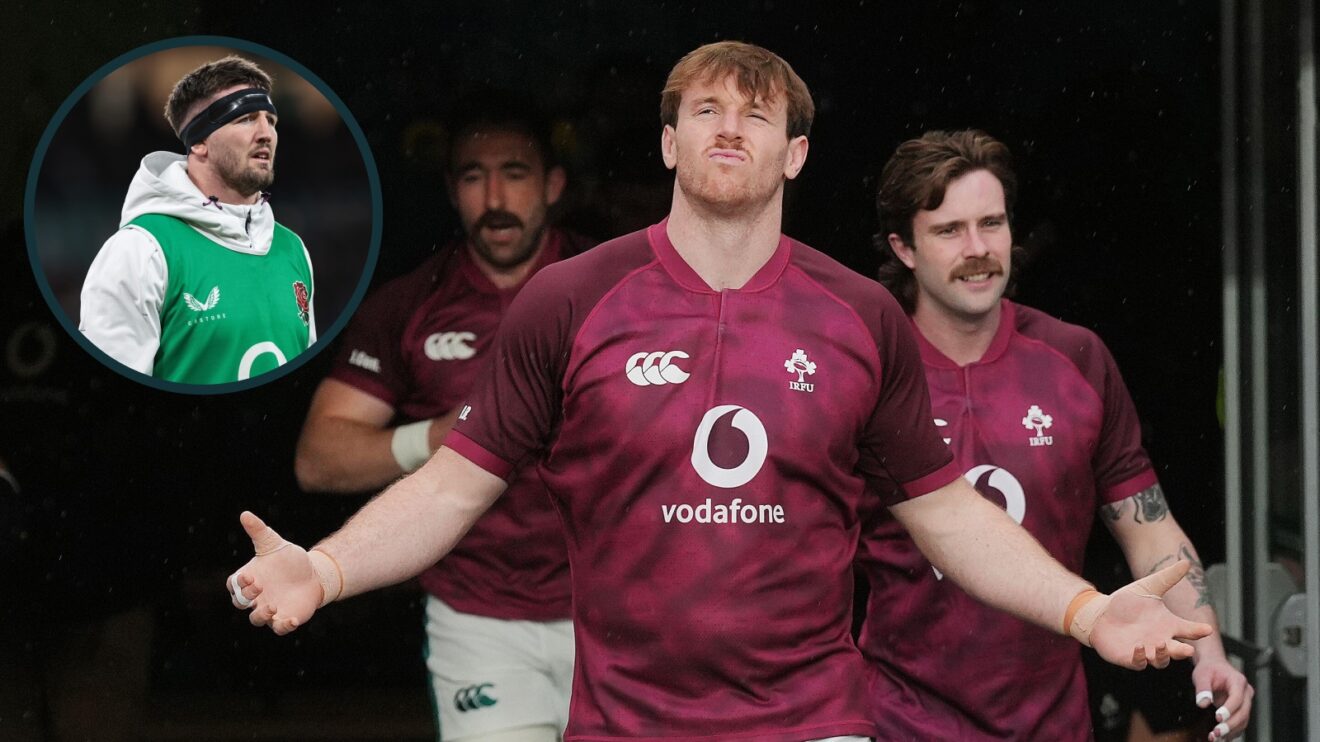
That reality sharpens focus on Sam Prendergast. The talent is obvious. The tempo is not. His decision-making remains slow, latency exposed by Test line-speed, and at times, he is so unhurried you could time him with a calendar while defences reorganise around him. In the fatigue window, that slowness becomes terminal. This is not a ceiling judgement. It is a present one. Ireland are rebuilding whether they admit it or not, and the clock knows it.
Scotland: The lunatic is on the grass
Scotland enter 2026 still reeling from the cumulative damage of New Zealand and Argentina, matches that exposed a familiar flaw rather than an isolated failure. Their bench lifts tempo, but control leaks away. Late phases become busy instead of precise, arrival angles widen, legality erodes, and referees intervene.
Gregor Townsend speaks of pack depth, and there has been progress, but the near-misses of 2025 followed the same script. Against elite sides, Scotland fracture rather than tighten, chasing momentum instead of dictating terms. Murrayfield can still generate chaos, noise and emotional surge, yet Scotland’s ceiling cannot remain the occasional Calcutta Cup win soundtracked by The Proclaimers on a tannoy loop. Serious contenders compress matches. Scotland still animate them.
Wales: Shorter of breath and one day closer to death
Wales arrive amid turbulence, their bench functioning more as a survival mechanism than a strategic lever. Impact players offer flashes of physical insistence, but repetition remains the problem. Defensive lines cracked under sustained pressure throughout 2025, replacements unable to preserve structure long enough to convert resistance into control.
There was a time when English players feared Wales and quietly envied them; the cohesion, the community, the sense of cultural authority that travelled beyond talent. That aura mattered, but brutally, it no longer exists.
Comment: The year the bench took control of rugby and what comes next in 2026
Instead, the game has been steered from behind the scenes by people displaying the least possible knowledge of elite rugby, reminiscent of being strangers who wandered in from a bus stop in Westgate Street. Strategy has been replaced by committee fog, clarity by jargon, conviction by damp Post-it notes. The rebuild is real and courage remains, but hanging on has become a skill, whilst governing contests have not.
Italy: We don’t need no education
Italy continue to evolve quietly. Depth still limits sustained contention, but key starters now provide genuine leverage. Manuel Zuliani’s breakdown work is relentless and referee-friendly, arriving early without rush. Nacho Brex remains the organiser-in-chief, absorbing defensive load inside, allowing edges to hold shape and prioritising security over spectacle.
They are no longer passengers. They can spoil campaigns. Sustaining pressure remains the next step.
The expected return of Sergio Parisse into the coaching team matters. Not as nostalgia, but as Don Vito Corleone stepping back into the room. No speeches, no slogans, just standards set quietly and personally as a rugby icon struts his stuff at the head of the table. Italian rugby has always responded better to authority that does not explain itself, and when Parisse is present, everyone knows what is owed; letting the family down is not an option.
The final cut
The arms race has ended, and now everyone understands where matches are decided. One finisher trusted at minute 60 outweighs two who merely raise tempo and hope for chaos. It’s clear to see that France are rightful favourites, but England have turned Le Crunch into a genuine title shootout.
The benches will not influence this Six Nations; rather, they will govern it. And those still treating replacements as emotional punctuation rather than instruments of control will spend February and March staring at referees in quiet disbelief, wondering why they keep getting overtaken.
Again.
READ MORE: Saracens star set to join Skelton as ‘giant’ holes appear in North London club