Rugby’s Greatest Rivalry prediction: All Blacks to edge Springboks on a fast track after a week in which the scrum swallowed the series whole



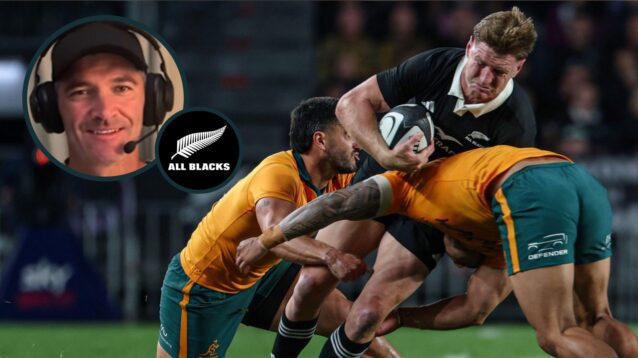
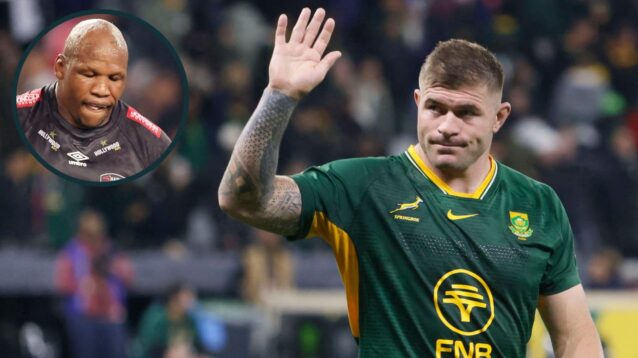
Malcolm Marx and Asafo Aumua will face off in the Springboks v All Blacks clash in Soweto.
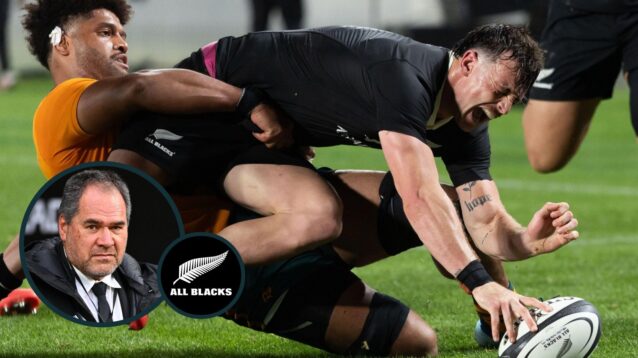
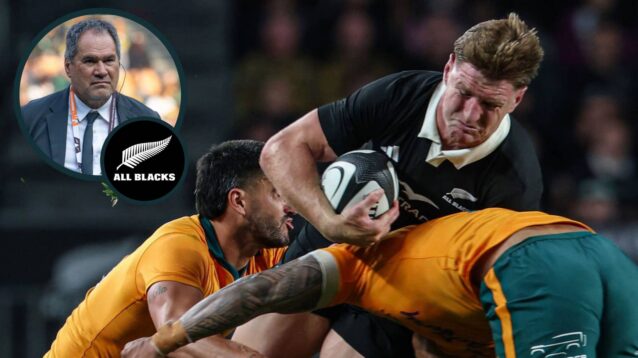
Rassie Erasmus has answered his Cape Town win with a single enforced change, Dave Rennie has answered his Cape Town defeat by dropping Codie Taylor out of the 23 altogether, and in between the two announcements the sport has spent seven days arguing about the angle of a front-row bind.
Whoever loses at FNB Stadium on Saturday cannot win this series.
The top line
The set-piece has kept every rugby page on Facebook, X and Instagram, and a fair slice of the media in this sport, in business this week, and it has been quite a fortnight of it, with slow-motion clips of Ox Nché’s hips, yellow arrows drawn onto Tyrel Lomax’s bind, frame-by-frame rulings on whether a scrum wheeled or was wheeled, and an audience on both sides of the equator, the overwhelming majority of whom have never packed down in their lives, quite certain that the other lot are cheating and that somebody ought to be banned for it.
Given the strength of the evidence being assembled in kitchens from Invercargill to Bloemfontein, it is frankly a wonder that no criminal investigation has yet been opened, and the rest of us are left waiting for Donald Trump to intervene, whilst Planet Rugby’s traffic department would like to thank both coaches and sets of supporters personally.
It came from the top, because Rennie won the first Test by 17 points and then explained that the Springbok scrum had been walking around, which is an unusual grievance to raise on an evening when you have just put five tries past the world champions, and Erasmus, having won the second by seven, spent his press conference swearing about the fact that anybody had listened to him; two coaches, two victories and two complaints lodged from the winner’s podium in consecutive weeks.
Nick Mallett had the fair reading of it, which is that every coach in the game picks at an opponent’s strength and wonders aloud whether it is legal, and that the pity would be if the argument became larger than a series that has deserved better.
Erasmus, for his part, has had one change enforced, since Damian Willemse took a knock in Cape Town, so Cheslin Kolbe moves to fullback with Kurt-Lee Arendse coming in on the right and Ethan Hooker keeping the left wing. The named front-row is Nché, Malcolm Marx and Wilco Louw, with Gerhard Steenekamp, Deon Fourie and Thomas du Toit on the bench, which is the exact reverse of the three who actually started last Saturday after Erasmus submitted a different front-row to the match officials 45 minutes before kick-off, and having named this side on the Monday again he has left himself precisely the same room.
Rennie has moved rather more, with Asafo Aumua starting at hooker, Samisoni Tauke’iaho on the bench and Taylor out of the squad entirely, Sam Darry coming in at lock as Fabian Holland drops to the replacements, Peter Lakai taking the six shirt and Wallace Sititi joining a bench he has demanded through form, whilst Rieko Ioane is not in the 23 at all, Quinn Tupaea keeps 13 and Anton Lienert-Brown covers the midfield. Tupou Vaa’i wins his 50th cap. The referee, after everything, is Nika Amashukeli, who was appointed to Cape Town, lost it to illness, a bad bout of ‘flu and swapped fixtures with Angus Gardner, who now runs the touchline alongside him.
Where the game will be won
South Africa have averaged five and a half points per entry into the opposition 22 across this season, and at Ellis Park they took 0.7 from 10 entries whilst holding 61 per cent of the territory and leading the penalty count 14-10, with New Zealand taking 3.6 from nine. The All Blacks scrummaged at 57 per cent on their own put-in for the first 54 minutes of that match and won it by 17 points.
Cape Town was the same sum worked from the other end, because South Africa’s first three visits into the New Zealand 22 produced 17 points through two converted tries and a penalty, Kolbe kicked seven from seven for 18 points, and the Springboks won 33-26 whilst being outscored four tries to three, with New Zealand holding 57 per cent of the ball, making 154 carries to 104, breaking the line eight times to five and coughing up eight turnovers in the first half alone. Two Tests, two different winners, and on both occasions the beaten side had more of the ball, more of the field and the better of the set-piece.
What separates these teams is the eight or nine seconds after they get inside the 22, and South Africa’s repair in Cape Town was structural rather than emotional, because they mauled from the opening minute, took the three every time it was offered and converted pressure before New Zealand could set a defensive line off their own goal-line, whereas at Ellis Park they arrived, recycled at four and a half seconds against three, and gave a scrambling defence exactly the time it needed to reset its numbers and get a hand on the ball.
The other half of it is the bench, and specifically the window between 55 and 70 minutes, because that is where both of the previous Tests were settled; Ellis Park was level at 16-16 before Luke Jacobson’s try and Will Jordan’s second five-pointer arrived inside a quarter of an hour, and Cape Town turned when Erasmus injected Marx and Nché for a scrum five metres out, won the penalty from it and watched Siya Kolisi go over off the back.
He has gone five-three again, and Steenekamp, Fourie, Thomas du Toit, Lood de Jager and Cameron Hanekom arriving together against tiring All Black forwards is the most reliable closing mechanism in Test rugby, whilst the fact that Fourie turns 40 this month and started the second Test tells you both how good he remains and how thin the middle of that squad has become.
Rennie’s reply is heavier than the one he sent to Ellis Park, with Tauke’iaho, Xavier Numia, Fletcher Newell, Holland and Sititi in front of Kyle Preston, Lienert-Brown and Josh Moorby, and Sititi in particular comes on fresh at around the hour mark against a pack that will have been scrummaging since five past five, on ground that suits him. FNB sits at roughly 1,750 metres above sea level, the September surface is dry and quick, and quick ground flatters width, tempo and a back three who can chase. New Zealand have played there twice and won twice, 29-22 in 2010 and 32-16 in 2012.
What they said
Rennie framed the Test in a single line when he named his side: “The team that doesn’t win this weekend can’t win the series.” He also marked Vaa’i’s 50th cap, calling it a special day for the player’s family and additional motivation for the group, and there is a second milestone on the same sheet, since Ardie Savea’s try in Cape Town took the Savea brothers past the Barretts to 79 Test tries between them, a world record for siblings.
Erasmus was less measured when the scrum came up again, and his answer was as blunt as anything he has offered on this tour: “we’re not walking around, we’re scrumming through.” His selection argument is continuity, that the men who did the job in Cape Town showed the composure he wanted against a side who play for 80 minutes, and that Johannesburg conditions are not Cape Town conditions, which is the same reasoning that produced last week’s late switch in the first place. He has also been careful this time to say that he does not want to put pressure on the officials, a line that has been received in New Zealand with a certain amount of comment.
Players to watch
Cheslin Kolbe is at fullback for the biggest Test of the year through nobody’s design, and given the surface and the way New Zealand kick to contest, he is the most exposed man on either team sheet; he is 32, he was the best player on the field in Cape Town, he takes the goal-kicks and he competes in the air far above his size, but he is now the last man back with Leroy Carter and Will Jordan arriving at full speed on a fast track, which is a considerably harder evening than the one he had on the wing.
Sacha Feinberg-Mngomezulu holds the 10 shirt for the rest of the series with Handré Pollard unavailable, and Ellis Park was not his afternoon, with the mark inside his own 22 followed by a cross-kick straight into touch standing as the emblem of a side that arrived everywhere and finished nowhere, whilst Cape Town was calmer and he had the sense to let Kolbe take the points on offer. The question is what he does on 70 minutes at altitude, three down and five metres out, because a fortnight ago that decision cost the Springboks a Test match.
Peter Lakai starts at six with Darry alongside Vaa’i, which is Rennie adding weight to his pack for a second consecutive week rather than trying to out-skill South Africa in the tight, and his workload before the hour matters a good deal, because Wallace Sititi is behind him and Rennie will want him arriving into a Test that is still alive.
Main head-to-head
New Zealand’s lineout has been the softest part of their tour, and leaving Taylor out of the 23 entirely is about as loud as a coach can be on the subject, knowing that across 2026 the All Blacks have thrown at 82.9 per cent against South Africa’s 93.1, and in a Test where the Springboks will kick to the corner from anywhere inside 40 metres, and where their first try in Cape Town came off a maul in the opening minute, that gap is worth points.
Asafo Aumua gives Rennie something Taylor does not, which is a carrying threat close to the ruck, and the second defender he draws in has to come from somewhere, which narrows the line behind him for Cam Roigard and Ruben Love to play at. What he has to prove is the throw, in front of 90,000, in a stadium built for noise, against the best defensive lineout operator in the world.
That is Malcolm Marx, World Rugby Player of the Year in 2025, who came off the bench in Cape Town and won two breakdown penalties in the passage of play that decided the match, and he starts this time, which puts the Springbok jackal on the floor from the first minute rather than the 40th and leaves Aumua throwing against a man who reads the caller’s hands rather than the jumper’s feet, with Fourie behind him on the bench so that there is no relief in the final quarter either.
Prediction
New Zealand by three, 27-24, and the ground is our thinking behind this. This is a side that scored five tries in the match they won and four in the match they lost, and the pace of the Soweto surface in September gives them the width at speed that Cape Town denied them, against a defence that has to fold at altitude; they have more firepower per entry than anybody in the world at the moment, and neither Test so far has been won by the pack that dominated.
The Springbok bench is the reason this is a three-point call rather than a 10-point one, because Steenekamp, Thomas du Toit, de Jager and Hanekom arriving at 55 minutes remains the most consistently effective 25 minutes in the sport and Erasmus has been closing Test matches this way for years, but it works from in front, and if New Zealand are still within a score at 70 minutes with Sititi and Lienert-Brown on the field and the ball moving through the hands, the Boks will be defending rather than closing.
The teams
South Africa: 15 Cheslin Kolbe, 14 Kurt-Lee Arendse, 13 Jesse Kriel, 12 Damian de Allende, 11 Ethan Hooker, 10 Sacha Feinberg-Mngomezulu, 9 Cobus Reinach, 8 Jasper Wiese, 7 Pieter-Steph du Toit, 6 Siya Kolisi, 5 Ruan Nortje, 4 Eben Etzebeth, 3 Wilco Louw, 2 Malcolm Marx, 1 Ox Nché
Replacements: 16 Deon Fourie, 17 Gerhard Steenekamp, 18 Thomas du Toit, 19 Lood de Jager, 20 Andre Esterhuizen, 21 Cameron Hanekom, 22 Morne van den Berg, 23 Manie Libbok
New Zealand: 15 Damian McKenzie, 14 Will Jordan, 13 Quinn Tupaea, 12 Jordie Barrett, 11 Leroy Carter, 10 Ruben Love, 9 Cam Roigard, 8 Ardie Savea (c), 7 Luke Jacobson, 6 Peter Lakai, 5 Sam Darry, 4 Tupou Vaa’i, 3 Tyrel Lomax, 2 Asafo Aumua, 1 George Bower
Replacements: 16 Samisoni Tauke’iaho, 17 Xavier Numia, 18 Fletcher Newell, 19 Fabian Holland, 20 Wallace Sititi, 21 Kyle Preston, 22 Anton Lienert-Brown, 23 Josh Moorby
Date: Saturday, 5 September 2026
Venue: FNB Stadium, Johannesburg
Kick-off: 17:10 (local SAST), 16:10 (UK), 17:10 (France), 17:10 (South Africa), 01:10 (6 September, AEST), 03:10 (6 September, New Zealand), 12:10 (Argentina), 00:10 (6 September, JST), 11:10 (EDT)
How to watch: Sky Sports (UK and Ireland), Sky Sport / Sky Sport Now (New Zealand), SuperSport (South Africa), Stan Sport / Nine Sport (Australia), RugbyPass TV (USA), Premier Sports (Canada), WOWOW (Japan), ESPN Sur (Central/South America and Caribbean)
Referee: Nika Amashukeli (Georgia)
Assistant Referees: Angus Gardner (Australia) and Christophe Ridley (RFU)
TMO: Eric Gauzins (France)
FPRO: Brett Cronan (Australia)
READ MORE: Sir Steve Hansen’s damning verdict on Rassie Erasmus’ selection antics: ‘Name it when you can’