Rating every Springboks forward in Rugby’s Greatest Rivalry: ‘Most valuable prop in Test rugby’ shows his worth but Rassie Erasmus ‘worryingly light’ in one area



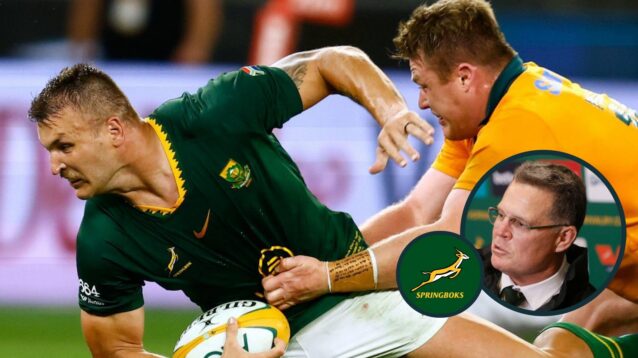
Springboks loosehead Ox Nche, left, 2025 world player of the year Malcolm Marx, centre, and No.8 Jasper Wiese
Rassie Erasmus’ Springboks confirmed a 3-1 triumph in Rugby’s Greatest Rivalry series with last Saturday’s fourth Test success in the United States of America, after finishing the South African leg of the tour leading 2-1.
Here is how we rate all 19 Springboks forwards who took to the field, from the opener at Ellis Park through to the games at DHL Stadium and FNB Stadium and then the finale at Baltimore’s M&T Bank Stadium.
Loose forwards
Pieter-Steph du Toit (4 starts 306 mins): The 2024 World Rugby Player of the Year did not enjoy the happiest of series beginnings, the Springboks losing the opening Test with him as skipper, but he rolled up his sleeves, making 40 tackles in the following three matches and generally being the brick wall that the All Blacks could not get through. 9
Jasper Wiese (4 starts 289 mins): Another ever-present starter, his appetite for relentlessly charging at the opposition to make a dent and sap energy was critical in turning the series around. He was credited with 199 metres from 55 carries, and his defence wasn’t shabby either with a total of 43 tackles, including his team-leading 16 last Saturday in the USA. 9
Siya Kolisi (3 starts, 141 mins): It was felt in July that the inspirational skipper’s best days could be behind him – he was injured and the future was glimpsed in the arrival of rookie Paul de Villiers. However, a fit Kolisi was the try-scoring tonic the Springboks needed in the series-levelling Cape Town win. While he was limited to just 43 minutes in the Baltimore finale, the 35-year-old’s influence on Erasmus’ squad is still worth its weight in gold. 7
Paul de Villiers (1 start, 61 mins): It was a shame the Greatest Rivalry didn’t work out for the youngster, as he had demonstrated during the July Nations Championship that he has an impressive engine and the durability to thrive at Test level. However, he was the lamb that Erasmus had to sacrifice to accommodate Kolisi at 0-1 down, and no one can quibble with the outcome of that decision. 5
Want more from Planet Rugby? Add us as a preferred source on Google to your favourites list for world-class coverage you can trust.
Andre Esterhuizen (4 runs as sub, 139 mins): Eddie Jones waffled on for aeons as England boss about the potential for hybrid players, but Erasmus has trademarked its implementation. Midfielder Esterhuizen’s ability to pack down in the back-row was a tactic that provided great rewards during the matches that South Africa won, but the repeated 6/2 bench split did hurt them in the lost opener as Kurt-Lee Arendse’s early concussion caused a back line positional reshuffle that didn’t suit their game. 7
Cameron Hanekom (3 runs as sub, 45 mins): Another rookie who can hold his head very high. Wasn’t touted for Test series involvement – and his 11 minutes in Cape Town was a sign that he wasn’t fully trusted to deliver – but his cameos were energetic in Soweto and Baltimore. He finished with a try after earlier being involved in the crucial penalty where Tupou Vaa’i foolishly clung onto him after a ruck had finished. 6
Marco van Staden (1 run as sub, 9 mins): This series damaged the reputation of the 30-something back-rower. Sent on to rescue the opening Test, he played only nine minutes because of a yellow card. That had severe consequences, with Erasmus preferring the inexperienced Hanekom as a bench choice for the remainder of the series. 3
Locks
Eben Etzebeth (4 starts, 289 mins): Started all four matches, but it certainly didn’t run fully smoothly. Was hauled off late in the first Test with the beaten Boks needing a rescue, and it was curious he was also called ashore (along with Kolisi) with his team having just fallen behind in Soweto. Was exemplary, though, in the other two Tests. His tackle count highlighted his series difference, making 18 and 14 in his two 80-minute appearances and just five tackles in each of the games where he was hooked. 7
Ruan Nortje (4 starts, 283 mins): The thought of this forward starting all four Greatest Rivalry Tests would have sounded far-fetched at the top of the year, but the 28-year-old enjoyed a terrific series where the only setback was his early second-half departure in Baltimore. He had racked up three 80-minute appearances before that and topped his team’s tackle chart in Soweto with 13 made. 7
Lood de Jager (3 runs as sub, 72 mins): The Boks’ famed bomb squad had its critics after the opening two rounds in the series, a shortfall in energy that included the lock’s sin bin-hampered contribution in Cape Town. However, what he brought to the party in Soweto and Baltimore was of far greater substance, with the 33-year-old providing a sharp reminder that he remains a valuable option for Erasmus. 6
Cobus Wiese (1 run as sub, 7 mins): Another of the bench that departed Ellis Park with its reputation tainted, his disappointing cameo in Johannesburg was all that we saw of him in the series. 4
Tightheads
Wilco Louw (3 starts + 1 run as sub, 174 mins): The All Blacks will be glad they don’t have to encounter this guy again until next year, as the scrum was a key component in the RGR series. The highlight, of course, was the first-half penalty try at FNB Stadium where the sight of referee Nika Amashukeli running to the posts to signal the score was joyous for all the South African front-rowers involved. 8
Thomas du Toit (1 start + 2 runs as sub, 126 mins): Was part of the front-row trio upgraded from sub to start at the 11th hour in Cape Town in a classic example of Erasmus trying out every ruse to gain an advantage. His scrummaging didn’t dominate with the No.3 on his back, but he tackled hard in that match and he was the right sub to have as back-up in the following two games. 6
Zachary Porthen (1 run as sub, 20 mins): Another player shouldering huge regrets after South Africa’s late collapse in Johannesburg. That outing was the last we saw of the youngster. 4
Hookers
Malcolm Marx (3 starts + 1 run as sub, 243 mins): The 2025 World Rugby Player of the Year must be in the running to go back-to-back with that title as his contribution over the course of the series was tremendous, capped by his finish of that enthralling third Test maul try that seemed to rumble across and forward for miles with no answer from the All Blacks. 9
Deon Fourie (1 start + 2 runs as sub (89 mins): It was incredible to see the veteran involved just weeks shy of his 40th birthday. Of course, his ability to cover both hooker and back-row helped his case for inclusion, but the execution of his role was a beautiful example that anything is possible in this sport no matter how old you are. 7
Jan-Hendrik Wessels (1 run as sub, 14 mins): As inspiring as it was to see Fourie shine, the veteran’s contribution highlighted how worryingly light South Africa are in this position. Wessels’ cameo at Ellis Park showed that he is labouring in a different postcode rather than genuinely providing competition to Marx at hooker. 3
Looseheads
Ox Nche (3 starts + 1 run as sub, 189 mins): The most valuable prop in all of Test rugby, he showed across the series that his hips and shoulders achieve magnificent things in the scrum. His display was a timely reminder of how this emblematic rugby set-piece must remain an integral part of the sport and not be diluted and depowered by the meddling trans-Tasman axis of clueless New Zealand and Australian administrators. 9
Gerhard Steenekamp (1 start + 3 runs as sub, 117 mins): Whereas Nche’s name is up in bright lights, Steenekamp’s series will be most remembered for the penalty infringement that allowed the All Blacks off the first Test hook and then being at the centre of the second Test scrum row ignited by Dave Rennie’s media comments. 6