Nigel Owens weighs in on debatable Wallabies and Lions tries as referee must apply ‘common sense’


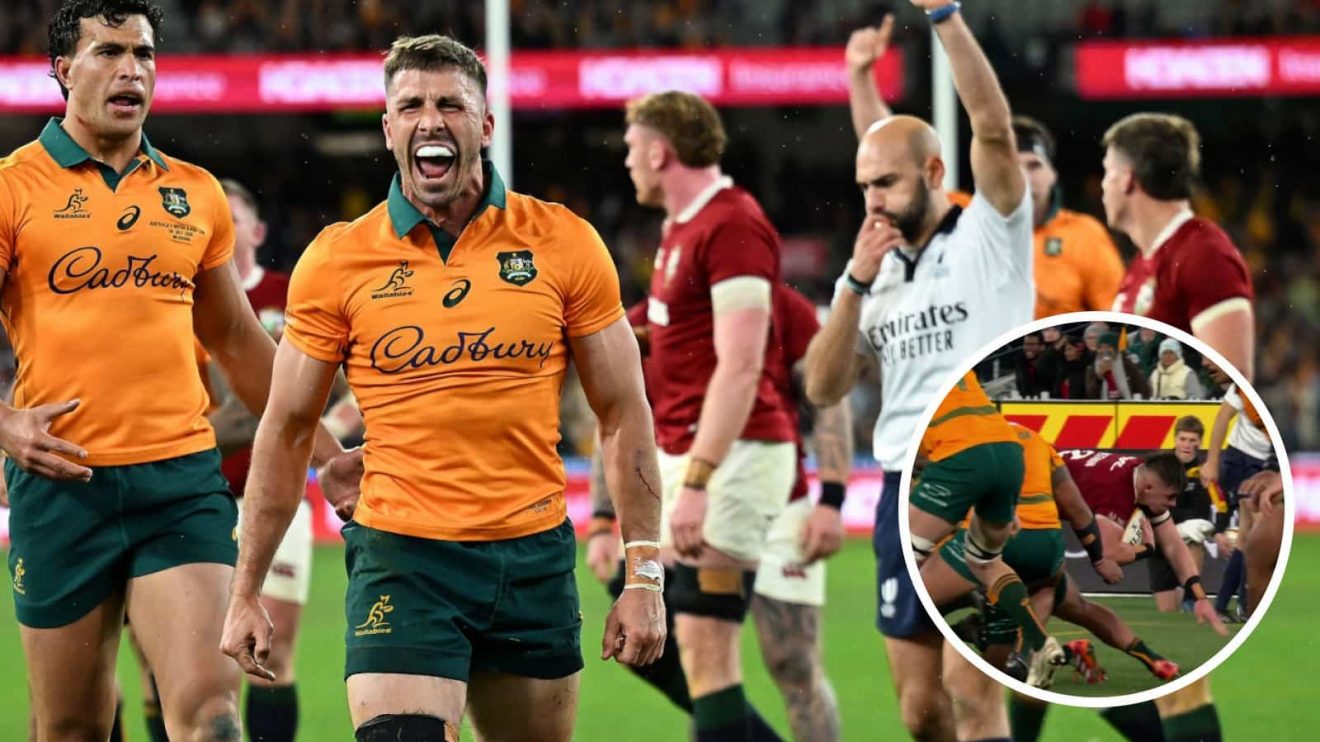
Jake Gordon celebrating Wallabies try and Dan Sheehan scoring for the British and Irish Lions.
Nigel Owens has admitted that Dan Sheehan’s try was an extremely tight call, while he also discussed the referee’s role in the Jake Gordon score.
During a controversial second Test between the Wallabies and the British and Irish Lions, there were several incidents which were hotly debated.
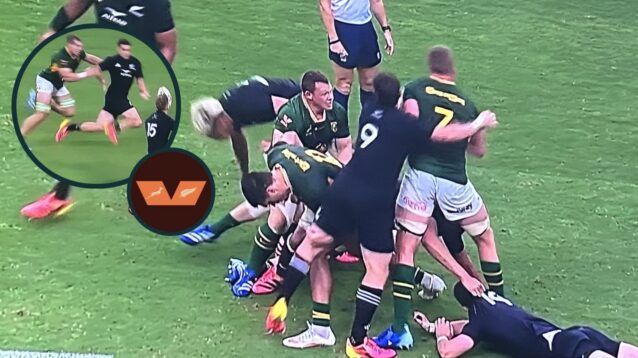
While much of the discussion has centred around the final try and Jac Morgan’s clear-out on Carlo Tizzano for Hugo Keenan’s match-winning effort, Owens has reviewed a couple more tries.
The Lions’ opening score of the match came under scrutiny as Sheehan dived over a couple of would-be Australian tacklers to touch down.
Really, really tricky
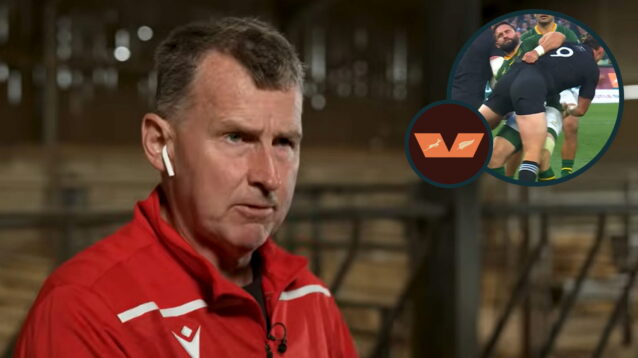
“This really, really is a tricky one,” Owens said on Whistle Watch. “It’s one of these where you’re sitting on the fence and whichever way you decide to get off it, you could be correct as long as your reason for it is explained properly.
“There was a change in the law back in 2022 which they brought in that you cannot jump to avoid a tackle because it would be dangerous play.
“Go back to Blair Murray [for Wales] against Scotland [in the Six Nations], the same referee I believe as well, he quite rightly blew up because Blair Murray jumped to avoid a tackle. That’s quite easy because it’s in the field of play.
“What we do allow to happen is diving to get into the corner. The fact you are diving to score a try will also mean that the player is able to defend, so as long as his actions are not deemed to be dangerous or illegal – like shoulder barging – he is allowed to tackle you, even though you are airborne. In the act of scoring we allow this.”
As Owens stated, Sheehan is able to jump in the act of scoring a try, but the question is whether that action is secondary to him trying to avoid the defenders.
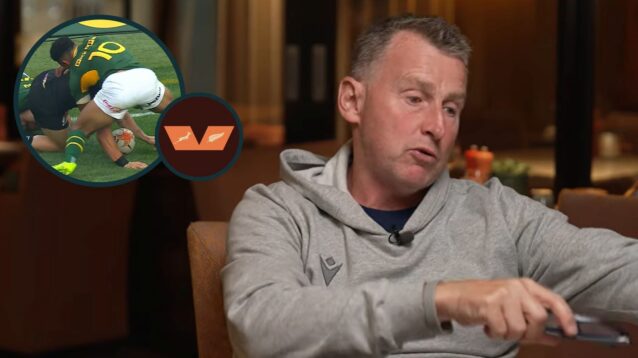
“Dan Sheehan is allowed to go airborne to score a try. The tricky bit here is it’s not in the corner like it usually is, it’s pretty much in the middle of the field,” the ex-Test referee said.
“His actions are quite legal. What you need to decide is this, and this is the tricky bit: does he jump to avoid a tackle first of all? And then landing the other side means that scoring a try becomes an afterthought.
“If you feel Dan Sheehan dives to avoid the tackle then it would be a penalty. If you think he’s going airborne because he is now going to reach and score the try then it would be okay.
“The officials deemed that he was diving to score the try, not diving to avoid the tackle.”
Law discussion: Was Dan Sheehan’s controversial Lions try the right call?
Jake Gordon try
Owens was also asked about the try from Gordon, which saw the scrum-half dart between two Lions players and cross the whitewash.
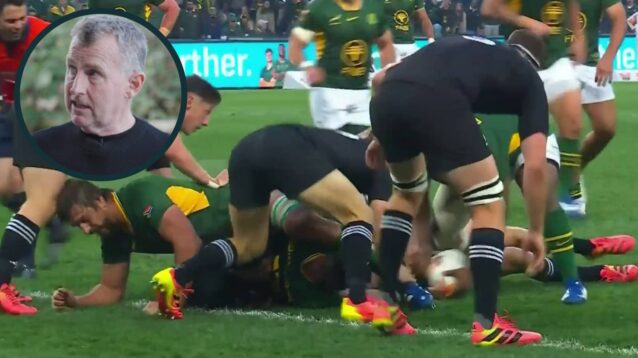
However, referee Andrea Piardi appeared to be in the way of Lions prop Andrew Porter, which stopped the loosehead from potentially making a tackle.
According to Owens, an incident like this is “play on” in the laws of the game but that “common sense” should prevail if the officials feel that he has had an impact on the play.
“First of all, if the referee gets in the way but the ball does not touch the referee then it will be play on, that’s what the law says,” he said.
“If the ball touched the referee then the referee will blow up and award a scrum to the team in possession, but the ball does not touch the referee. The law therefore does not take place or apply here.
“I don’t think that action made a difference to the outcome so that is key as well.
“But even though the law says it’s play on in this situation, you would like to think the referee would apply common sense.
“If the referee got in the way and certainly did affect what happened next then common sense should apply and he should blow up.
“The crucial bit is that is not what it says in law, so the referee will use his interpretation there.”