Nigel Owens’ verdict on two crucial fourth Test decisions against the All Blacks in Rugby’s Greatest Rivalry and the ‘downside of technology’


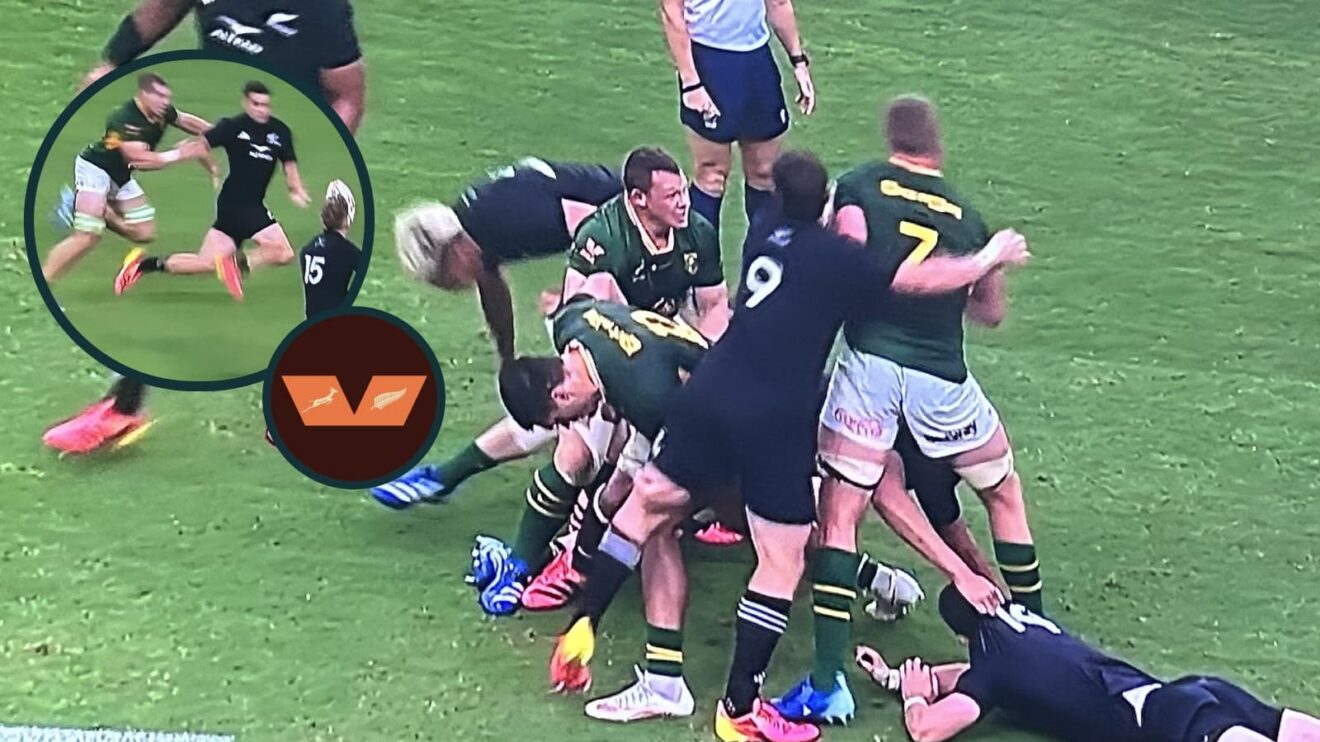
All Black Cam Roigard grapples with Pieter-Steph du Toit and, inset, Springbok Cameron Hanekom holds back Josh Moorby
Nigel Owens has given his verdict on the two major refereeing talking points that materialised in the second half of last Saturday’s final Test in Rugby’s Greatest Rivalry.
Rassie Erasmus’ Springboks won 43-28 in Baltimore to clinch their 3-1 series victory, but there was plenty of chat about incidents where referee Karl Dickson favoured South Africa.
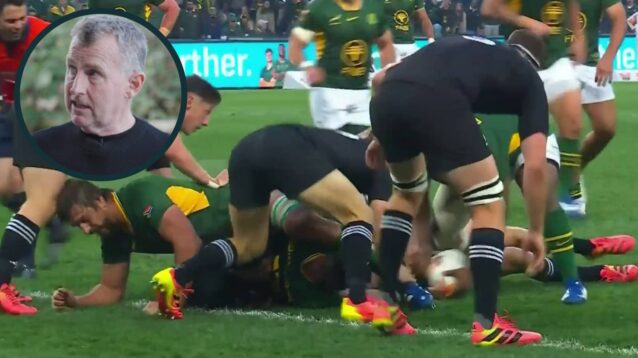
The first unfolded in the 55th minute of the match at M&T Bank Stadium when All Blacks scrum-half Cam Roigard was penalised for being in an offside position when stealing possession from Pieter-Steph du Toit.
The second took place 17 minutes later when Josh Moorby fumbled the ball following contact from Cameron Hanekom, and the spill resulted in Kurt-Lee Ardense picking up and racing from way out to score a try.
“What is relevant is that he is not behind the hindmost feet…”
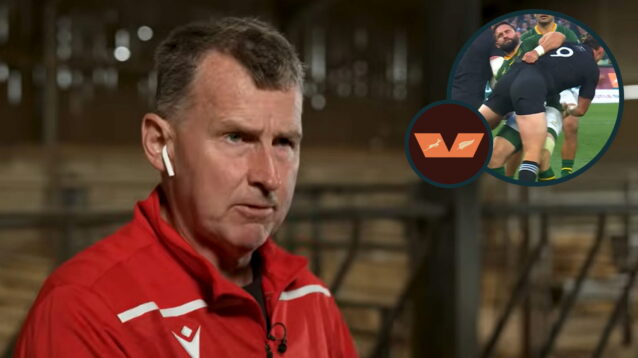
Retired centurion ref Owens has now reviewed both decisions made by referee Dickson and has given the English official a thumbs up. Appearing on the latest edition of Whistle Watch, he began with a look back on the situation 15 minutes into the second half when the Springboks were leading 29-14.
Roigard pilfered the ball off Du Toit, raced clear and then kicked ahead towards the try line. However, rather than have the chance to chase after the ball, he was tackled over the sideline by Morne van den Berg.
Asked by show host Jamie Roberts if Roigard was offside at the ruck or should it have been a penalty try or a penalty to New Zealand, Owens said: “Let’s look at the tackle off the ball first. If he had possession and he lets the ball go to kick it and the player was already in the process of committing to tackling him, it would be play on.
“But here he [Roigard] was never in possession of the ball, so you cannot take him out and you have a penalty here in this instance. Then what they would look at, they would move on to the next stage of if it wasn’t for that action, would he have probably scored? The South Africa 10 [Sacha Feinberg-Mngomezulu] is chasing inside, so there is cover there and it’s never a penalty try.
“Now we go back now to the beginning of this where the counter ruck happens. The New Zealand nine now is offside when he plays that ball… What is relevant is that he is not behind the hindmost feet. He is in an offside position, he plays the ball, so the first offence is him being offside. Everything else that matters after that now becomes irrelevant.
“If he wasn’t offside, you wouldn’t have had a penalty try, but New Zealand would have had a penalty 15 metres in because it was within 15 metres of the touch line and the South African player [Van den Berg] would have probably gone to the bin for that cynical action.
“Although it was foul play, it wasn’t dangerous play so then that doesn’t override this first offence here. So, correct here. Back for the offside and it wouldn’t have been a penalty try anyway. There may have been a sanction for the tackle off the ball, but it’s irrelevant; the first offence is him being offside.”
The follow-up moment of Greatest Rivalry contention unfolded eight minutes from the finish with the All Blacks trailing 29-21 and moving the ball. Damian McKenzie passed to the supporting Moorby, but the All Blacks winger lost the ball amid accusations that Springbok sub Hanekom potentially tackled him before the New Zealander took possession.
This spillage allowed Ardense to tidy up and race through the cover to score the try, settling the series outcome in favour of South Africa. Dickson decided the tackle on Moorby was good following a TMO review, and Owens agreed with this decision.
Quizzed by Roberts whether it was an early tackle from Hanekom or a legitimate knock-on by Moorby, Owens said: “You base it on the clear and obvious. There are a couple of things here. You have sort of a bit of a tangle of the legs really to start with.
Want more from Planet Rugby? Add us as a preferred source on Google to your favourites list for world-class coverage you can trust.
“Now if you felt that the South African player was putting his legs in there unnaturally to cause this, then you have a penalty, you have an offence. But it is just a tangling of the legs; there is nothing deliberate here.
“Now the next one is really, really tight. When I saw this, I thought, ‘Oh, no, he has just got the ball in his possession when he is actually tackled. It’s really, really tight’. So again, basing on the clear and obvious, if I was reffing that game, that would not have been clear and obvious for me and I would have probably played on.
“Now the downside of technology is when you put technology (to use) and everybody is slowing it down, then there becomes an argument, ‘Oh, do you know what, I think he is early’ and that is what you have here.
“You have some people thinking it’s slightly early. If you felt it was early, it’s a penalty. If you felt no, it was pretty much instantaneously as it was happening, not clear and obvious, not early for me, then you play on.
“They have got it right here. It is certainly not clear and obvious, so you can’t really argue with that decision. I would say, based on the clear and obvious, you play on.”