Loose Pass: No thanks to Six Nations in the USA and why Henry Pollock deal underlines salary cap benefits


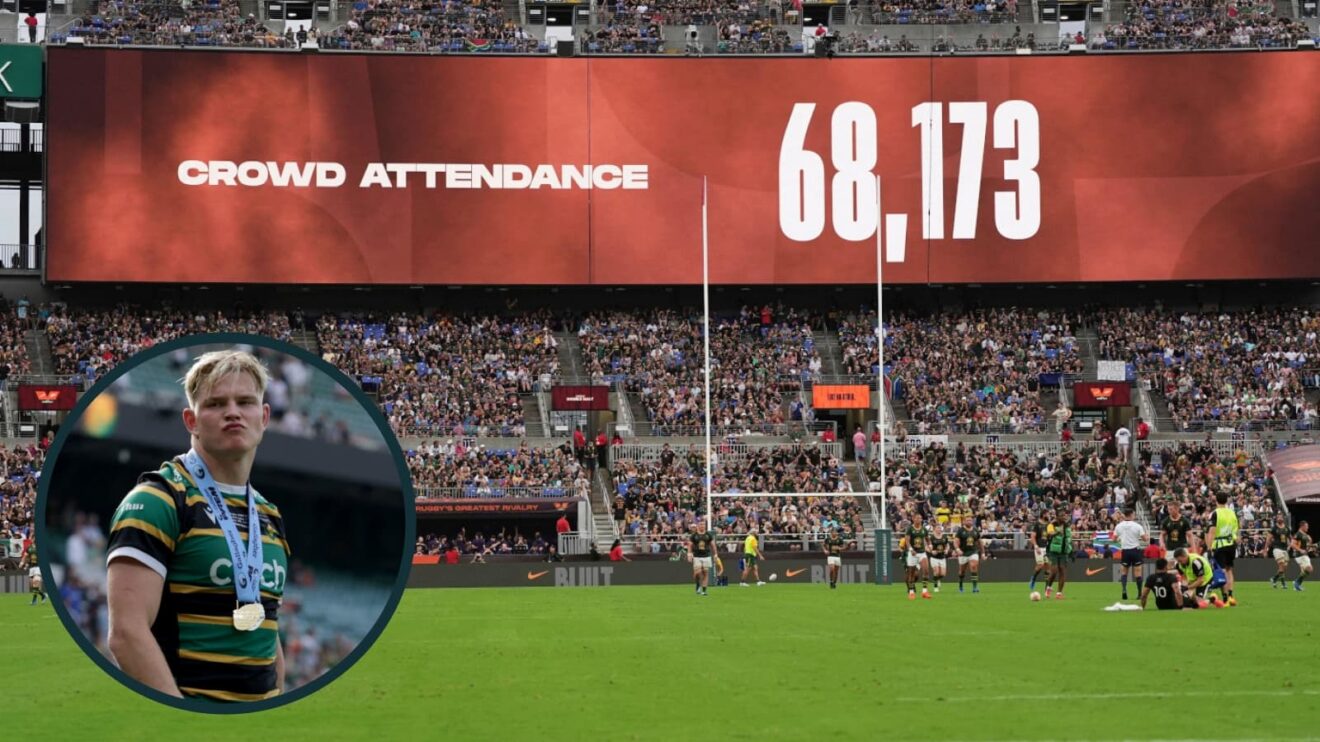
Should a Six Nations game be taken to the USA?
This week we will mostly be concerning ourselves with exporting the Six Nations and some good work from the salary cap…
Six Nations in the USA?
November Test matches in isolation, Premiership matches in isolation, perhaps a URC game sometime… well if you need to generate publicity for a World Cup in a country where the sport is riddled with challenges, then so be it. Bit rough on the home fans, but maybe there is a greater good.
Did the fourth Test of the Greatest Rivalry really need to be in the USA? Well, yes and no. There are arguments. It probably made money, sold-out stadium and all. It probably gave the diaspora of the two nations a chance to get a long-lost fix in. It slapped rugby in a handy shop window, given that the next day was the bulk of the opening weekend of the NFL and eyes were on sport anyway; it will forever be infinitely wiser to juxtapose the two as opposed to trying to get rugby to compete. Fortunately it was not a series decider with the respective teams potentially affected by the travel requirements, or with South Africa’s home advantage undermined. And it turned out to be an excellent advert for the sport, comms technology hiccups notwithstanding.
But a Six Nations game going the same way? No thanks. There are some things that just are not enriching if you export them, regardless of the price or premium, and the Six Nations is one of those things.
England has already indicated that it probably can’t do financially or contractually it even if it wanted to. Wales’ place in the Six Nations is simply not exportable (there’s a not insignificant number of Americans who still think Wales is part of England). Trying to imagine convincing France to abandon one of its games, home or away, can conjure up some quite comical images.
So we’re left with Scotland, Ireland and Italy. Scotland’s sporting fan reputation was enhanced in no small measure by the merriment and spirit of their fans during the soccer World Cup and they’d surely be welcome again. Ireland fans are always welcome and the diaspora there is significant. As is the Italian contingent, although how much of an appreciation for rugby there is among exiled Italians is questionable. Whether the appetite exists in Scotland for the sacrifice of a Murrayfield game is doubtful too. So the chances are that it is an Ireland v Italy or Ireland v Scotland clash.
But any of them. Really? These are not one-off Test matches, nor parts of a series, nor is this a competition in which there is any kind of over-supply of matches in the participating countries. These are matches which sell out home stadia regularly and almost without exception, where home matches against each team are biennial, not even annual. There are hundreds, or perhaps thousands, of fans, even families, who have made long-standing traditions of attending them.
“Any of those unions [could] go and look at a match that they would have had at home and say, ‘Right, can I at least match, if not better my own economics by partnering with World Rugby and taking that match to the US?'” said World Rugby CEO Alan Gilpin. Yes, any of them could and they could make the numbers stack up, but could any of them also look their counterparts and home fans in the eyes and suggest that farming out the Six Nations as a sort of exhibition would be a good idea? Could they genuinely sell such a move as enriching the tournament?
It feels wrong. November Tests, or even July Tests, or tour matches, all essentially one-offs with little riding upon them except for revenue and team development towards a World Cup are exportable. Blue-chip competition matches are not. Not at any price. It’s laudable that World Rugby wants to improve the global reach of the game, and the job they do of it is good. But there are some reaches of the game that simply don’t belong anywhere else except the homes of the protagonists. The Six Nations is one.
Pollock deal underlines salary cap benefits
Loose Pass refrained from commenting on the grotesque soundbites about what the value of Henry Pollock‘s next contract could be as the wait to see how it would pan out went on.
But his new deal, supposedly worth around GBP 400,000 a year illustrates both that playing for Northampton and England remains a draw and that the Prem salary cap is doing its job to resist disproportionate influences.
Pollock’s agent Eddie Hearn’s musings about Pollock being worth a seven-figure sum were remarkably out of touch, considering we are still in an era where all clubs are losing money and with the memories of the bankruptcies of close to one quarter of England’s top-flight clubs still fresh, never mind the current global financial climate for almost everyone.
Want more from Planet Rugby? Add us as a preferred source on Google to your favourites list for world-class coverage you can trust.
The current list of seven-figure salary players features Finn Russell, Antoine Dupont, Romain Ntamack, Maro Itoje and several of South Africa’s most grizzled and finest in Japan. The trailblazer for seven-figure salary earners was Dan Carter. That’s several centurions, double World Cup winners, a Lions captain, the half-back partnership of a club which has won five domestic titles in a row and quite a few of the best players the world has ever seen.
Pollock is good, but he’s a bit of time and service to go before he can credibly mix with that lot, whatever his potential. So it’s excellent for the game that he will earn his dues and remain on the path he is currently on, not to mention the Saints remaining on their own entertaining path and being able to operate well within the salary cap. Domestic rugby does not need its market mechanisms disrupted and distorted by players being oversold by loudmouth agents and their bargaining chips right now.