Loose Pass: Dave Rennie’s ‘fabric of the game’ plea, Brendan Venter and Saracens’ foolery ‘gets the blend wrong’
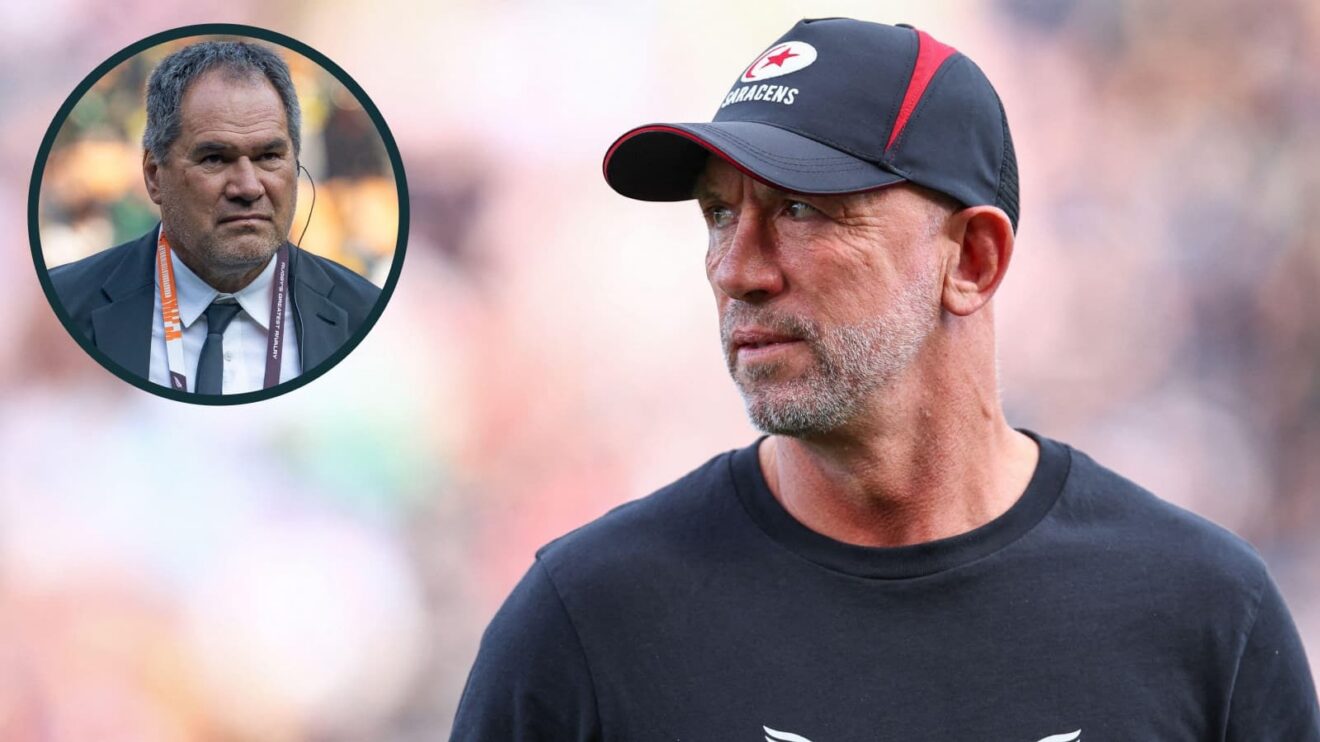
Loose Pass is here to delve into the major talking points in the sport.
This week we will mostly be concerning ourselves with Dave Rennie’s NPC plea, Nathan Charles’ MND diagnosis and Brendan Venter’s antics…
Rennie’s call on the NPC should be the winner
The All Blacks go on this weekend to a Bledisloe Cup match at Eden Park, still smarting from the series defeat to South Africa and still without their talismanic captain.
The same weekend sees the quarter-finals of the NPC, with two of the games acting, for TV Viewers at least, as curtain-raisers. Which will be fun, but it also means that New Zealand’s flagship domestic competition is without the country’s best players. That’s nothing new, but given the vibrancy of the competition over the past three months of action, weighed up against the somewhat vanilla offering that is currently Super Rugby, it is also difficult to argue that the better competition gets the better players as well.
That is the least of the NPC’s problems, however. New Zealand’s rugby options for closing up their financial shortfall (what did happen to all that private equity money by the way) do not make for easy reading, with one of the options featuring the main unions being merged with their Super Rugby entities, and another being the truncation of the NPC to a new 8-10 team competition, potentially a hammer blow to unions such as Northland and/or Taranaki, who have been so impressive this year. The third option, expanding Super Rugby by adding two additional teams, also points to a resource diversion to Trans-Tasman competition and away from provincial rugby.
We’ve seen this film before though. The traditional teams pushed out, new franchises supposedly possessed of enough history from their 30 (maximum) years to be able to exist in any new competition. The re-grading of old tournaments and development competitions. Teams over-reaching financially and going bust. Unions finding expectations not met and forced to make brutal cuts. Lots of gloss and lots of glamour in new competitions, lots of fans left with no idea who to shout for, assuming they can cope with the weird kick-off times. Even players wandering between entities and becoming mercenaries for hire as opposed to community heroes.
Alright, perhaps overstated. But while the Springboks dominate the world on the international stage, their existence in European competition still feels awkward, while the relegation of the Currie Cup to an afterthought is a terrible loss to rugby’s face. Many Welsh and Scottish fans are still lost in terms of who to get behind at sub-international level. Counting the casualties in English club rugby might take more than two hands, and while France has made a good fist of its club structures, there are still stories that serve as cautionary tales, such as last year’s collapse of Tarbes.
Loose Pass is not positioned close enough to New Zealand rugby to pretend to have a definitive answer which takes all the elements into the equation. Dave Rennie is, but even his answer was well-qualified: “It’s a part of our rugby fabric here,” he said. “NPC rugby is tribal, and you’ve got people who, in some of those smaller unions, may not be massive supporters of Super Rugby because a lot of their players don’t get to maybe represent one team and they’re scattered a bit, whereas they get a chance on the weekend to go down and watch players whose fathers and grandfathers have worn the jersey before. I reckon it’s the greatest provincial competition in the world. I just think that the retention of NPC and Super Rugby is massively important for the game here. I’ve no doubt, fans of provincial rugby love the NPC. I think all us sort of rugby-minded people do.”
And then the qualifier: “I guess my views are normally around what I think is best for the game; whether those things are all affordable, that’s for others to work out.”
Yes it is, and when they do, it’s rare that the ‘fabric of the game’ competitions get a lot of look-in when you could tailor those fabric resources into swanky new suits.
Those suits have to fit though, and as we have seen, as we are still seeing, in Wales, if they don’t fit so well, or if the shape of the wearer changes so much that the suit appears misshapen, the wearers begin to long for those comfy fabrics that wore well on any occasion, not least because they’re left with nothing to wear.
But the view from afar is the same as Rennie’s: if New Zealand can find a way of concentrating resources into the NPC and maintaining its shine, that, surely, would be the best way to ensure rugby in such a traditional country remained enshrined in all its far corners.
Sir Graham Henry issues NZ Rugby warning as bigwigs must avoid being ‘selfish’
The cost of protecting yourself
It was a vicious twist of irony that the story of Charles’ MND diagnosis should break almost on the same day as the players seeking to bring a class action for compensation for their head injuries should be landed with a nigh-on unpayable legal bill.
It takes time for research to be done thoroughly. And deep research into the causes of this. But even napkin mathematics gives you an idea of the statistical nudge we’re being given at the moment. The risk of a person from the general population getting motor neurone disease is 1 in 300, which is vanishingly small.
A study led by the University of Glasgow put the risk to elite and /or former elite rugby players at 15 times higher. Still small, but no longer vanishingly so. And while there is no causal link proven, the correlation between rugby and MND is hard to ignore. Can you think of another sport where so many of the brightest stars have fallen to it?
Want more from Planet Rugby? Add us as a preferred source on Google to your favourites list for world-class coverage you can trust.
And so while the huge legal bill that now needs to be paid to the RFU, World Rugby and the WRU before the case can continue is generally the result of poor management of the case by the former representatives for the claimants rather than any dirty tricks from the defendants, the fact that the potential for justice for those claimants now hinges on them finding an extraordinary amount of money feels particularly unjudicial.
How many more players need to be diagnosed, with MND, with CTE, with early dementia, and so on, before there becomes a need to look at this in the public interest?
Former Wallabies international vows to ‘create memories’ after being diagnosed with MND at just 37
Brendan Venter gets the blend wrong
Plenty of jokes have been made at the expense of Venter and Saracens in the wake of wine-gate, not least after a defeat for Saracens in which they played a large chunk of the game against 14 men. Plenty of witticisms about the product being not worth the corkage, the defence being left open for too long, and, my own personal favourite, the Sarries scrum being domaine-ated.
But it was all a little childish wasn’t it? There had to be a way to keep Mr. Venter away from the media maul which didn’t involve treating the Prem rules as though it was a bottle of Asda’s own-brand Liebfraumilch, not to mention then backing that all up with an entirely serious press conference to explain that actually, the much-maligned Mr. Venter was little more than Head of Culture and Technical Director, rather than any sort of coach who would have to do media work.
If sticking a corkscrew up at the rules and duties stipulated by a tournament is the right thing for a head of culture to do then great. But it is not, is it? Considering Saracens’ not too distant past, this was an ill-advised piece of foolery.