How do you stop Antoine Dupont? Nick Easter’s blueprint that gives England ‘a chance’ of upsetting France


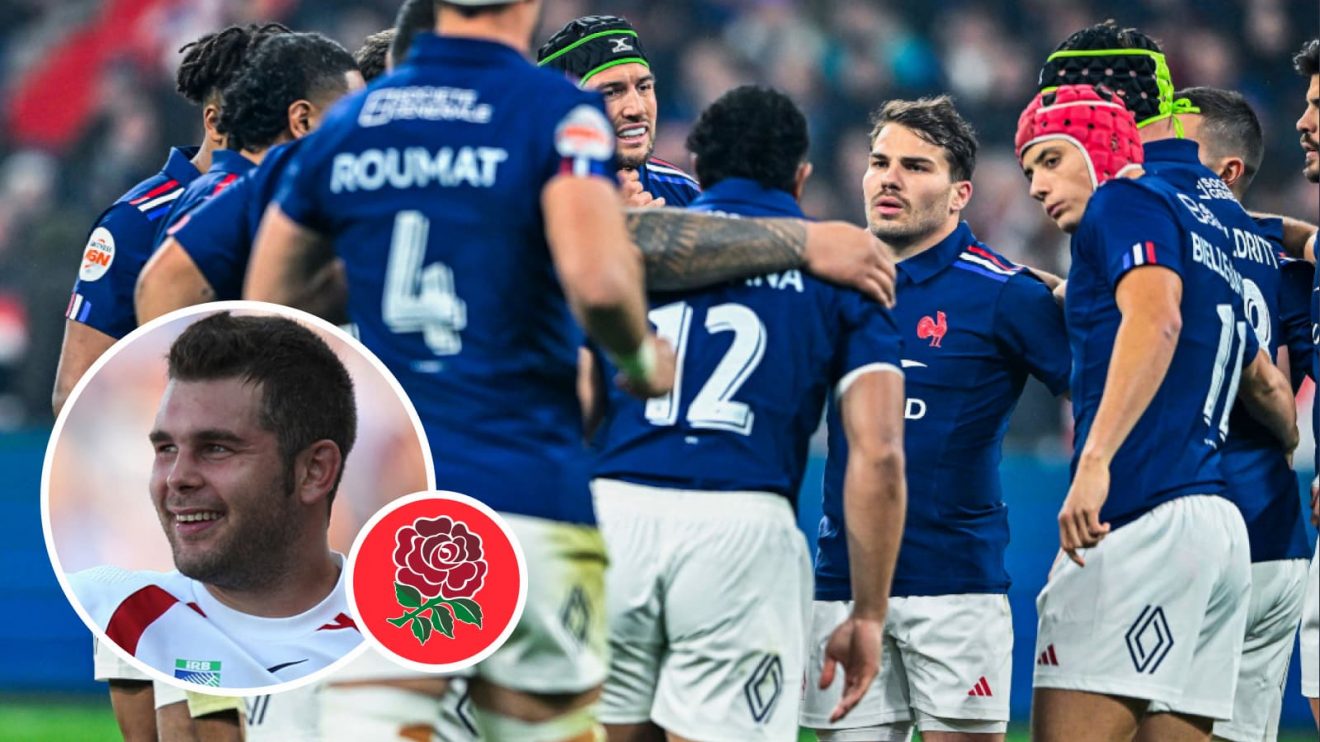
Ex-England back-row Nick Easter's blueprint to stopping Antoine Dupont and France.
With Le Crunch fast approaching, it’s do or die for England and Steve Borthwick, as their campaign credibility rests on a knife edge against one of the world’s finest teams.
James While caught up with USA Eagles defence and forwards coach, and Chinnor director of rugby Nick Easter, to unpack what England need to do to be victorious.
Easter‘s view
Now, many have tried to stop Antoine Dupont and to overturn France, but at their best this is rather easier said than done.
Last season, we saw them enter the tournament with a bit of a Rugby World Cup hangover and it wasn’t until the latter stages that they got their mojo back. This season, we’ve seen both the national team and the key clubs go from strength to strength, and they will be a formidable opponent on Saturday evening.
Can England do it? Yes, of course they can, but it’ll take an enormous effort both sides of the ball to pull off a win. These are the key tactics I believe England need to focus on to overturn the formbook.
Clear targets
The key behind any plan is to set clear targets.
We know France score heavily, so this is about understanding what England need to do to in terms of scorelines. Somehow, England need to score around 30-35 points or more based upon the evidence that France habitually baseline a minimum of four tries a Test. Then, holding France to their bare minimum, four tries or around 25 points is key.
I know that might sound obvious, but the key is that England know the scoreline pressure they’re likely to face and to mitigate the impact of France’s finishing.
Don’t expect to see France’s D leak as it did in Lyon; they’re well over their post World Cup blues and have really upped their defensive effort, as Wales found out last Friday night in the Six Nations opener. Factor in Dupont is back in the side, a man who leads close quarter defence like a fourth back-row, and you’ll glean that both of those factors mean that England will face a different animal on Saturday.
Intelligent defence
England are using a blitz around the first and second phases – hard press for carry one and two, with a softer drift in the wider channels.
To succeed, they have to deliver three or four key foci.
1. Close the half breaks down around the ruck; this means that defenders one to five each side must stay close with key mobility staying around one and two. That stops the big collisions and the Dupont breaks.
2. Teaming – tackles need to be dominant. That means double or triple teaming the hit to prevent post collision metres.
3. However, that also means that you lose two or three out of the game for every one man carry France make – so ‘self-recycle’ effort needs to be through the roof for England’s key defenders – making their hits and getting back into the line in sub three seconds – a huge test of fitness and desire. In short, ‘numbers on feet’ is crucial.
4. Wide D – this is more of a one on one situation, but clever use of the pendulum, getting the full-back across to make a numerical mismatch and to use 16th man (touchline) to squeeze is key. Mobility is crucial here – France possess the ability to throw 35 metre passes or kick passes from nine or ten at will if England narrow up around the corner (13/14 channel). It also relies upon defenders staying on the inside guard to prevent the Toulouse inside ball attack.
Above all, disruption around the ruck is essential to upset Dupont. Barge and bang from the big men is key to prevent the quick one and two man attacking rucks that the French back-rowers are masters of creating. Barge and disrupt and get Dupont backtracking, then pressurise with the press as the line moves up as the offside line disappears.
Innovation
We know France kick long and push up – and we know they don’t kick as many contestables as some. Their aim is to gain metres with the first or second kick duels, then to press up to pressure. Once the return kicks hit a man in space, then they counter.
Eddie Jones used Ellis Genge in the backfield in 2021 to act as a secondary kick returner alongside the back three. I would do the same, but with Tom Willis hanging back to either return himself – seeking his forwards to create a powerful ruck, or to work with the back three to support as an running option or as a clearer if one of those players is tackled. England lost that day, but the concept used was sound and it’s worth revisiting.
The tramline contest might be one place where England have an advantage. Damian Penaud and Louis Bielle-Biarrey are outstanding wings, but neither are aerial champions and England do have an advantage there, especially since Fin Smith will play with his club wingers, building on his relationship with them at Saints.
Set-piece
I don’t believe that France have a massive advantage at scrum time. And I would go as far as to say England potentially have a scrummaging advantage off the bench.
However, France use their hookers, Marchand and Mauvaka, in an unusual way to others. If the driving maul is held up, then the hooker will break as a running distributor down the flanks and 12 channel of the maul. This means that you can never fully commit your key defending flankers to the maul drive as you need the insurance of them to prevent the hooker play. Sure, Ireland use Josh van der Flier in a similar way to Marchand and Mauvaka, but this is a very well rehearsed play by France, one born out of the Toulouse connection.
Conclusion
It’s a big if, but if England stick to the blueprint I have described and can eek out the 30-35 points through intelligent attack, then they have a chance. But don’t denude the sheer workload of the defensive commitment I have described here, not underestimate the positional precision that’s needed to execute it. It’s a big ask, but it’s not impossible.