Ex-ref boss’ ‘you can’t have it both ways’ argument after British and Irish Lions controversy



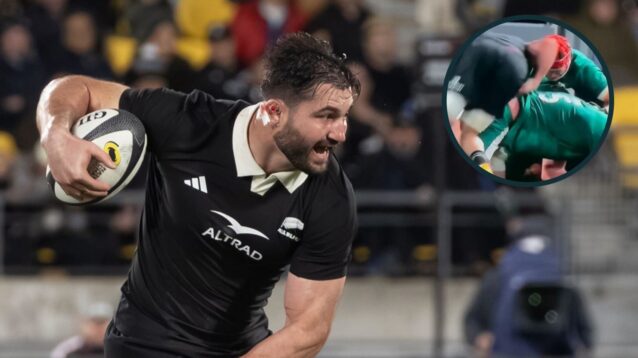
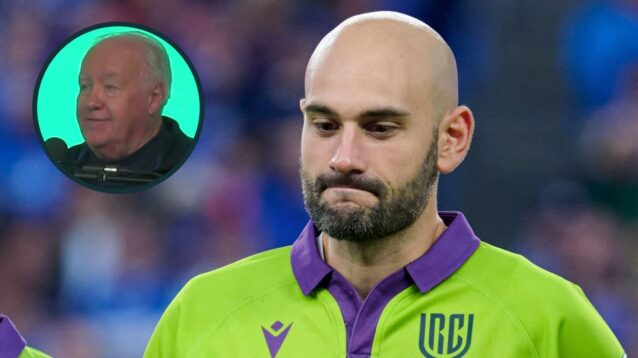
Jac Morgan's clear-out on Carlo Tizzano and an inset of ex-ref Owen Doyle.
Owen Doyle has waded into the debate over Jac Morgan’s clear-out in the build-up to Hugo Keenan’s match-winning try for the British and Irish Lions.
The former director of referees at the Irish Rugby Football Union believes that the ‘distinct disparity’ in the way the breakdown is officiated by referees contributed to the controversial nature of the call.
Morgan’s clear-out on Carlo Tizzano has been the hot topic of the second Test, with the polarising views not only among the fans and pundits but also with Lions boss Andy Farrell deeming it a fantastic clear-out, while Wallabies boss Joe Schmidt is adamant that it was illegal.
“You can’t have it both ways”
In his latest Irish Times column, Doyle took a broader overall view of how the game is officiated, particularly at the breakdown, across the two hemispheres, with the south generally taking a more lenient outlook.
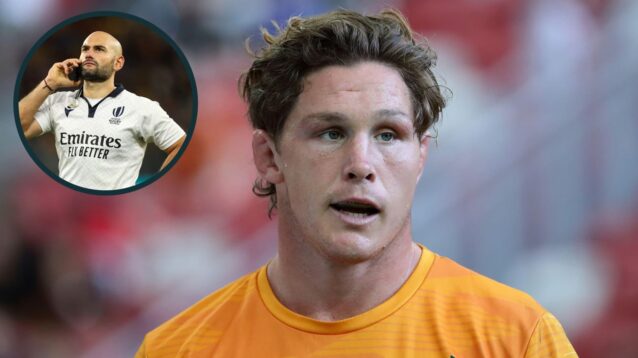
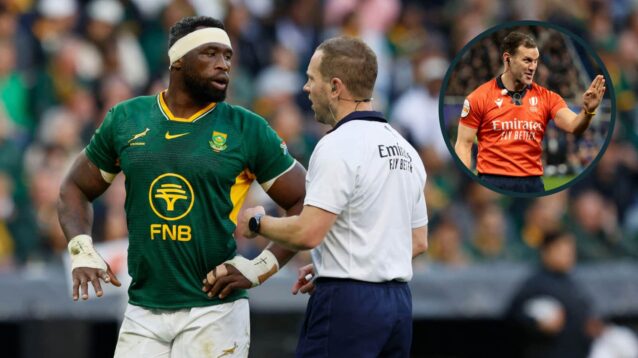
“I know well how detailed Schmidt is in his analysis of referees, often seeming to know more about them than they know about themselves. So he will have been aware that Andrea Piardi makes a good effort to referee the breakdown, unlike quite a few of his peers,” Doyle wrote.
“Nevertheless, Schmidt is livid that the referee allowed Keenan’s try to stand. Pundits in the north agree with the decision, down south unsurprisingly it’s the polar opposite. I’d remind the latter, and some coaches too, of their shock and horror when red cards were correctly issued for foul play which the same pundits considered to be just part of the game. You can’t have it both ways.
“Under immense pressure from the Wallabies to do so, Piardi checked it on screen, and his conclusion was that there was no foul play. To say that this is hotly disputed would be the understatement of the year.”
The former referee believes that it was a lose-lose situation for Piardi regardless of which way he went with the decision, as the referee “would have had the guns of half the world trained on him.”
A far bigger problem
Additionally, a precedent has been set, according to Doyle, that players no longer have to remain on their feet at the breakdown, which ends the argument that Morgan should have been penalised for that.
Zoning in on the incident, he wrote: “The core of the matter, for me, is that Morgan did not target Tizzano’s neck. They did arrive at more or less the same time, both travelling at speed. The collision was inevitable, but not clear and obvious foul play. Arguments that Morgan was off his feet don’t hold water either, it has unwisely become par for the course to allow players to arrive like human torpedoes to remove opponents.”
This is the real crux of the issue for Doyle.
“It all points to a far bigger problem than this one single decision,” he added.
“The problem is the distinct disparity in the way the breakdown is refereed. Some officials do attempt to sort out side-entry and sealing off, while others are happy to let most everything go. That disparity is where the issue lies. At the start of the tour this column pleaded that matches would be refereed consistently and correctly in this area. It’s a pity that hasn’t happened.
“The relevant laws need to be reinforced, not overridden by a series of protocols which are given precedence. It’s not too late to pull it back to what was intended, even though at this stage it would require a decree from World Rugby to achieve it. It would also need the agreement of all competition owners which would not be automatic. The loose, laissez-faire officiating approach finds favour in some quarters.”