Ex-England star claims Steve Borthwick not ‘inspirational leader’ as he slams coaches for ‘lack of appetite’ following Six Nations disaster
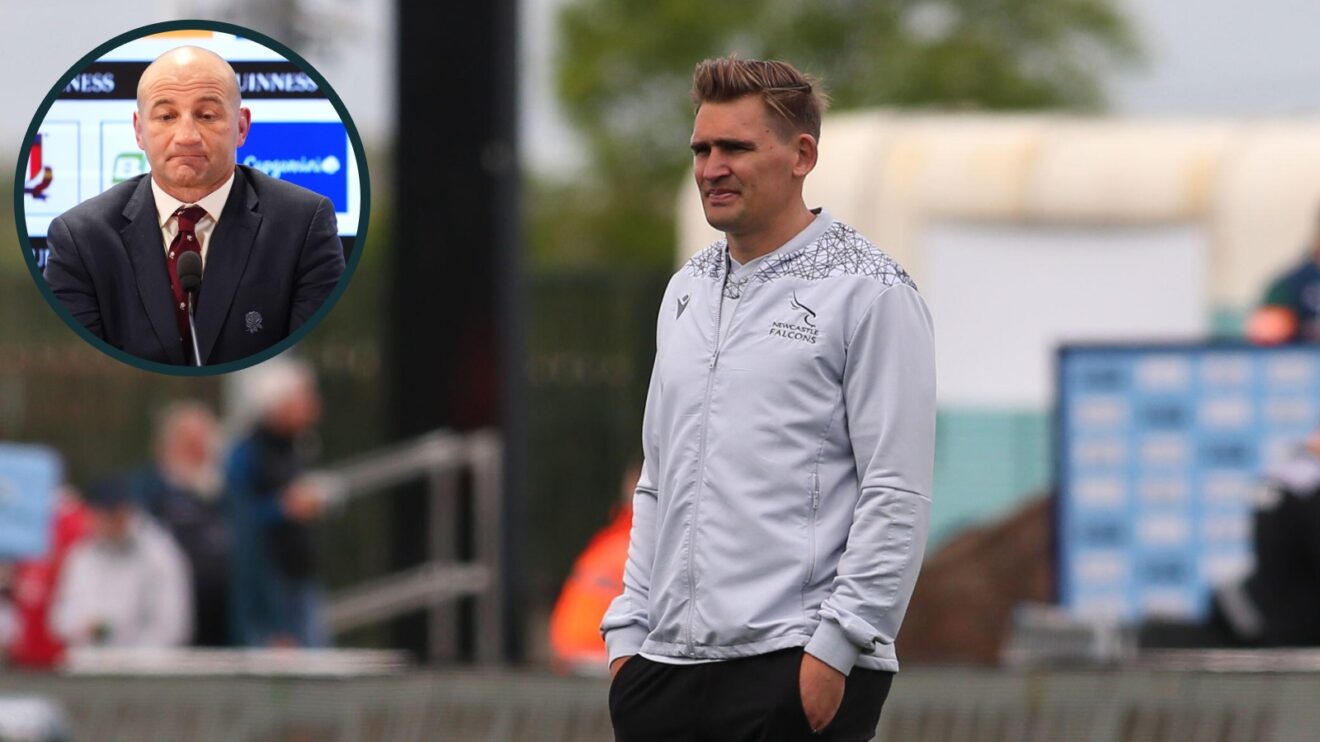
Toby Flood: Steve Borthwick is not an inspirational leader - he finds it hard to connect with people
Former Newcastle and Leicester fly-half Toby Flood has slammed the England coaches for their “lack of appetite” in this year’s Six Nations.
The 40-year-old has accused his former colleagues of showing a “lack of emotion” after losing their third match of the championship, against a fired-up Italy on Saturday.
In an interview with BettingLounge, Flood said: “There seems to be a lack of confidence around the side and a lack of willingness to take risks, which has been really interesting. There’s a noticeable lack of appetite – likely not from the players, but from the coaching staff – to move the ball around and put teams under pressure with ball in hand.
“We all know Steve Borthwick is very statistically driven: do X, get Y. Rugby can work like that at the international level where the game is more controlled. However, the boys who play week in, week out in the Premiership achieve far more and push the envelope, exposing themselves to risk for their clubs. In the past three England games, there has been a real lack of that.
“Also, England’s previous 12-game winning run was based predominantly at Twickenham, apart from the two-match series in Argentina. That “Fortress Twickenham” mentality surely played a part in that success.”
The tide has well and truly turned following England’s 12-game unbeaten run, but the questions are: why and where does the blame lie?
“It’s a fine art balancing how much power you give to the players versus the coaches, and that is fundamentally difficult,” continued Flood.
“I stood not too far from the coaches’ box at Murrayfield, and there seemed to be very little emotion coming out of it.
“They appeared to be letting the players make the majority of decisions. That is generally what you want, as the players have the feel, knowledge, and cadence of the game on the pitch. As a coach, you have to trust your players to make the right calls. It is only once or twice in a game where you can come over the top and override a decision. It is an art form, not a science.”
“Steve Borthwick is not an inspirational leader – he finds it hard to connect with people”
“Steve is not the most charismatic of souls. He’s not an inspirational leader in terms of what he says; he’s a leader in terms of the architecture he puts around the team. Is he going to give a Churchillian speech before a game? No.
“Take Scotland after their loss to Italy, for example. The players’ reaction seemed to be based around protecting Gregor Townsend when England came up for the Calcutta Cup, and Scotland have done some remarkable things since.
“I’m not sure you get that from the players toward Steve because of his personality. He doesn’t scratch the itch of connecting with people on a personal level; he finds that very hard to do. Maybe that plays a role in the dressing room dynamic.
“You can see why, when relationships are strained and you haven’t created a tight bond with the team, those cracks become larger due to a lack of social connection.”
The environment may well be affecting the players’ performances, but the style of play isn’t helping their case.
“Every English player will put their hand up and say they are not playing well. That happens during challenging times, but living on reputation isn’t something the squad will allow.
“The main problem is that the team is struggling to solve an issue it physically cannot solve because of how it has been set up. You can’t find a solution when you aren’t defending well, you’re kicking the ball away, and you’re handing possession straight back to the opposition.”
Want more from Planet Rugby? Add us as a preferred source on Google to your favourites list for world-class coverage you can trust.
Do England cut Borthwick free now or wait?
Fans are screaming out for Borthwick to vacate his position. With the World Cup just over a year away, and England’s hopes diminishing by the day, there’s very little to be positive about. But if he were to step down, who would replace him?
“The RFU didn’t give them a convincing vote of confidence, but with the Bill Sweeneys of this world, you’ve got to hedge your bets. I think they will stay. It would be hard to change now, and the counter-argument is: who replaces them?
“Would it be a Scott Robertson or a Michael Cheika coming off the cab rank? I’m not sure there are that many suitable candidates banging down the door. Andy Farrell would be the obvious choice, but rumours are strong that he has signed for Saracens after the World Cup.
“If you do change, it always takes a huge amount of time to turn the ship around. The real question is whether Borthwick and Wigglesworth can fix this. To do so, they need to start pushing and pressurising the opposition with the ball in hand, and I don’t think they are doing that.
“They are so driven by statistics and outcomes. England were kicking the ball away with two minutes to go. Why?! Steve and Wigglesworth have grown up on that Saracens mantra of kicking the ball, making the opposition work from deep, and putting them under so much pressure that they have to chase the game. The problem is that when England are asked to chase a game, they don’t have those components in their arsenal because they’ve never had to learn them.
“They also don’t have a defence that is going to absolutely destroy you, like Saracens did. Teams are finding ways to score against England, which means they are always in a battle at the 40-to-60-minute mark, creating an environment where they can’t effectively chase the game.”
“Right now, nobody is really playing well”
“There have been questions around the leadership group and what they are doing. If you’re playing well, you have control, power, and the ability to share information among your peers from a position of ascendancy.
“Right now, nobody is really playing well. The Ellis Genges and Maro Itojes – the guys who have been there and done that – are probably questioning their own form, which puts them back in their shells. That’s when a “split” can happen. The younger boys feel they need to stand up and create their own environment. You want that in one sense, but it isn’t being secured by the senior players.
“When things start creaking, you need strong leadership. People were questioning Andy Farrell not long ago, but he found a response by utilising the emotive connections he has with his players. When things fall apart, and you lack that connection – either peer-to-peer or peer-to-coach – it really starts to show.”
READ MORE: Rugby transfers: Ex-Lion decides future while Cokanasiga heads to Gloucester