Loose Pass: Unnecessary fallout and homegrown issues
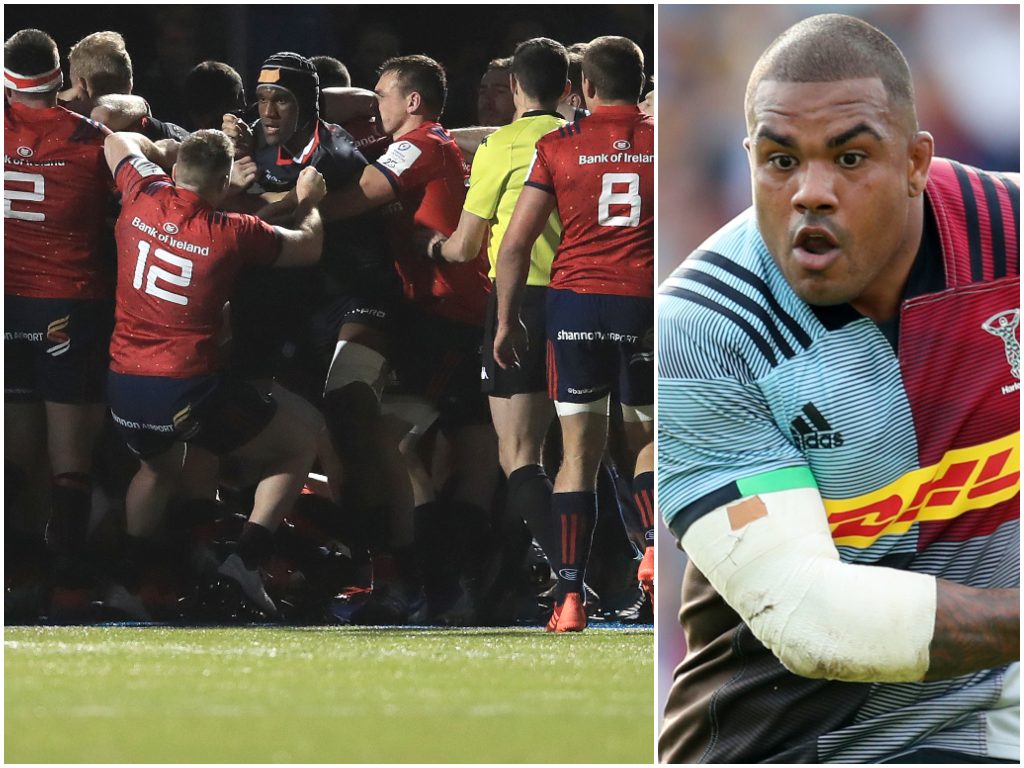
This week we will mostly be concerning ourselves with cheap chat and homegrown player problems…
Settle down, children
It was, is, and will continue to be, depressingly childish.
German Rail’s twitter spat with Greta Thunberg? Donald Trump’s latest self-promoting stampede? That new Netflix show where, for some unfathomable reason, Jesus is gay?
No, we’re talking about the Jamie George incident. Not one person emerges from this with any credit, from George, to the medic, to the 29 other players who felt compelled to join in, to the high horse commentators trying to protect the moral fabric of the game, or whatever other higher calling they think their deified presence in the debate might achieve. Even those officials who have promised a ‘full and thorough investigation’ need to have their priorities examined.
On the same day as even more half-baked plans to revamp the European Cup were revealed in the press, the full pomp and circumstance announcement of an investigation into a punchless scuffle which resulted from a front-rower being labelled overweight almost smacks of a smokescreen.
Here’s the link, by the way. The relevant action starts at 2.45.
George was clearly not in a good mood and was clearly on edge. We know this because shortly before the scuffle, he was engaged in words with Munster hooker Niall Scannell, words which culminated in George kicking a stray ball at Scannell’s shins, displaying a depth of petulance which five-year-olds the world over would struggle to imitate. Not once has George’s action been acknowledged. Scannell appeared to laugh – in fact, if there is any credit due to anyone, Scannell’s reaction there is worthy of it. But it’s definitely George’s act which sparks the tension.
George stomps off after the ball in a huff, and it is as he retrieves it that the medic evidently says something to George, who now starts to get weally cwoss, all postures, puffs, ball-throws; all the actions of someone on the edge and looking for an excuse to jump over it while claiming he was pushed. Eventually, a lot of other players – also most likely on edge and bored to tears after 60 minutes of pretty dire rugby – decide to jump off the edge with George and the brawl ensues.
Except it’s not really a brawl, is it? It’s a lot of pushing, a lot of shoving, a lot of jersey-grabbing and a lot of hot air. Eventually someone tumbles over the sideline pads, taking a few others with him and making it look far worse than it really is. The whole business should end there.
But it doesn’t. “Something pretty bad was said at Jamie,” whinge the Sarries. “A derogatory mark about Jamie’s weight.” “Something horrible was said.” No! A front-rower accused of excess corpulence! Whatever next? A fly-half being told he’s a wimp? A lock scorned for running like a giraffe? A scrum-half being labelled ‘short stuff’? Can we not take being called names any more?
Jamie George turned back to have a go at the Munster medic and Jack O'Donoghue stepped in. Chaos ensued! pic.twitter.com/5y9OiXZ3En
— Pat McCarry (@patmccarry) December 14, 2019
The medic shouldn’t have said anything, and he probably deserves a slapped wrist for getting involved from the sideline. George definitely deserves one too for reacting as he did. But a full and thorough investigation, costing thousands of pounds and hours… because someone dared to suggest that a front-rower had been at the pies too much?
We’ve come a long way from Scott Gibbs’ memorable ‘Get up you fat ox’ jibe to a woozy Os du Randt. And when you listen to how prissy so many are being about such a pointless incident, when so much bluster surrounds that incident rather than the enjoyment of, for example, Connacht’s comeback, Leinster’s domination or Exeter’s excellence, you rather wish we hadn’t.
So unless we’re actually going to hear, word-for-word, what was said, it’s really not worth talking about. If we are going to hear it, it had better be worth fighting for, otherwise nothing good will come of something from which there should have come nothing at all.
Club v country is not going away
An interesting column from Ugo Monye at the weekend once again pointed to the problems of raising good players within your own stable.
Harlequins, for whom the retention of Kyle Sinckler and Alex Dombrandt is likely to prove financially problematic under the salary cap rules, and Leicester, who have several England internationals soon out of contract, are facing some difficult decisions.
Primarily, these decisions rest upon whether it’s worth paying a player top dollar when he’s going to miss at least a third of the Premiership season on international duty or whether that money would be better spent bringing in cheaper, better value players from somewhere else who’ll be there the whole time.
While it’s hard to feel sorry for Saracens when it comes to finances, this is also a team which has gone on record as saying that clubs are not rewarded enough for breeding sustainably. Given that their track record of developing so many good young players contributed directly to the salary cap breaches, they definitely have a point.
Kyle Sinckler highlights the need for transfer fees for homegrown players https://t.co/BNbReMEP3W By @ugomonye
— Guardian sport (@guardian_sport) December 15, 2019
These conflicts are everywhere. Developing countries are also struggling, partly with their inability to recall players from abroad, partly also because of the continual overlap between club and country seasons, partly also because greedy unions pay their elite players to come to their elite programmes but pay nothing to the clubs which produced them. Production is a process which one calculation reckoned used up 3,200 hours alone between the ages of eight and 18. And that’s just man-hours.
Creaky stop-gap systems abound, but there remains a problem that good clubs with good development structures are often exploited – which is where England’s clubs were two decades ago – or suppressed by playing-field levelling mechanisms, which is where they are starting to be now.
Monye’s suggestion was to introduce transfer fees for homegrown players, but that would still mean that the clubs who developed those players would no longer be able to call upon them, just that they’d at least get some money in return. But that does not address the likely disappointment from both sides that the ways would be parting.
It might be better, in times of equity investors and spiraling club wealth, to start making salary cap exemptions for home-grown players rather than, or as well as, marquee players.
As Monye says: “If you’re a homegrown player and the club have developed you to the point that they can no longer afford you, it doesn’t feel right. There needs to be more support and more compensation for the efforts the club has put into the player.”
We’re good at rewarding players these days, but the clubs working hard at bringing on good young players need to start getting rewarded more too.
Loose Pass compiled by Lawrence Nolan