Loose Pass: Scott Barrett fallout and law amendments


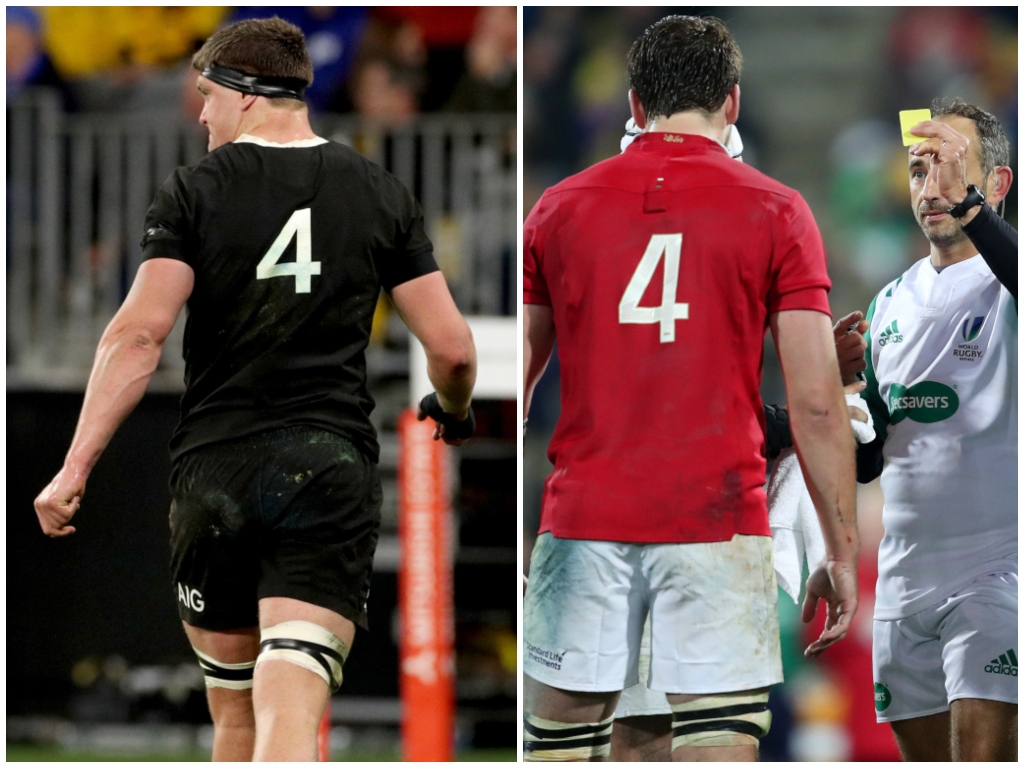
This week we will mostly be concerning ourselves with red card debates, following Scott Barrett’s sending off, and law change trials…
What was the card actually for?
Let’s be pretty clear on this: Scott Barrett deserved his red card. It’s idiotic, due to the way the game is currently refereed, to think otherwise, as at least two pundits did during Saturday’s epic.
He wasn’t red carded because Michael Hooper’s ‘head hit his shoulder’ as one put it, nor was he red-carded simply because he was tackling Hooper who ‘was already low and what is Barrett supposed to do?’ He was red-carded because he tucked his arm into his side and turned his shoulder into contact in a body-check position.
Had he opened his body up – or at the very least, the arm with which he eventually made contact with Hooper – the outcome would have been very different. The intent to hit Hooper’s head was not there, but the intent to body-check instead of tackle was. If you can say he was unlucky to have hit Hooper’s head, you also have to say he shouldn’t have been in that position in the first place. It was negligent on his part to have been so, and the consequence was a hit to the head, and therefore a red card.
But the controversy over the new head contact rules is not going to go away soon, as change is tough to introduce. Eddie Jones launched a pretty impromptu criticism on Sunday, claiming a couple of Welsh tackles were red-card worthy if Barrett’s was. He didn’t name them, making our analysis tricky, and there’s no video of them doing the rounds (that we know of), making it tougher still.

But let’s not make a mistake of looking at intent or unavoidability of collision: if Barrett is a precedent, people are being penalised and red-carded for deliberately poor technique and its consequences. Which is actually as it should be.
While on the subject of change…
There are three rule experiments going on in Australia at the moment as World Rugby once again looks to shape up the game and make it more positive. All have intended consequences, all have possible side-effects. Here’s a brief overview, followed by a couple of experiments we’d like to see.
Current experiments:
1) Goal-line dropout. This tweak means that a defending team holding an attacking team up over the line gets a dropout from the goal-line – a la rugby league – instead of a scrum going to the attacking team. It’s supposed to be an antidote to the relentless pick-and-go tactic used by teams as they get closer to the tryline and also a reward for good defence. But pick-and-go is also a weapon to suck in defenders and create spaces wide. Making that more risky might only serve to ensure defences can be more capable of covering the wide spaces as the pick-and-go becomes somewhat more challenging under this experiment.
Verdict: We quite like the idea, but we reckon a five-metre scrum to the defending team might work better, as a drop-out is simply a gift of possession to the opposition.
2) 50/22 kicks. This is also an introduction from rugby league. A team kicking a ball from its own half and bouncing it into touch in the opposition 22 gets itself an attacking line-out. It rewards intelligent kicking and opens up wider spaces as defences would drop players deeper to cover such kicks. But there is a concern that there would be an increase in kicking rather than a decrease.
Verdict: No. A hundred times no. We don’t need more kicking, and teams would be more prepared to use deeper kicks as there would be more reward and less risk. It wouldn’t take long for defences to wisen up either.
3) Card Upgrades. Apparently, this one means that referees who give a yellow card can have that card upgraded to red by the TMO during the time the player is in the bin. It’s meant to do away with the long breaks while TMO and referee align their stances during reviews. But the potential for confusion reigns when players don’t come back as they are supposed to.
Verdict: Also no. We understand what it’s about, but there’s already too much power taken away from the referee and ultimately, he’ll be the one communicating a decision he didn’t take to an exasperated player and his team-mates. Too many links in the chain.
Things we reckon could be useful to change/enforce:
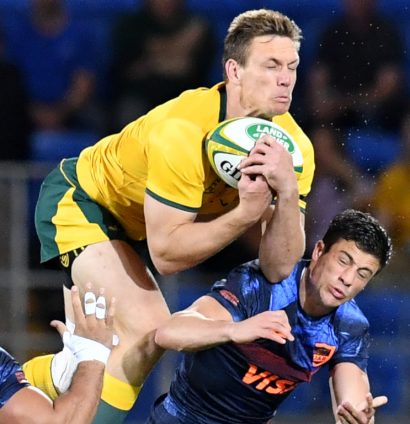
1) The safe catch rule. This was mentioned a few weeks ago, and it’s still important. A player from a defending team is allowed to call a safe catch, i.e. a mark, without fear of being blind-sided as he does so or, more importantly, taken out in the air. Chasing players may not, when a safe catch has been called, be nearer than arm’s length from the catcher. A completed catch would result in a free-kick to the catching team, a dropped ball is then simply live again. The mid-air collisions under high balls have become too dangerous to continue, while the risk of high kicks would be increased enough to reduce their value as an option under this rule.
2) Use it. The ball is taking too long in rucks these days – again. The ‘use it’ rule was introduced a few years ago to stop this, but it’s been forgotten, and we’re back to the days of ruck conga and scrum-halves faffing around for upwards of 20 seconds. ‘Use it’ needs calling as soon as the ball is presented, with a strict five-second rule from then.
3) The maul. Players are still joining mauls in front of the ball carrier, or at least to the side of him while he half-unbinds and lets them in. Once a maul is set, the only player that could be bound onto is the ball-carrier at the back, meaning that the ball would have to be transferred to the hindmost player subsequently, rather than as it is now when he simply sneakily rebinds onto the new pusher. It would make the maul a much more technical thing to get right but, as a good maul is so tough to stop, it’s only right it should be something so tough to achieve.
Loose Pass compiled by Lawrence Nolan