Analysis: Slow start, wing work and personal praise


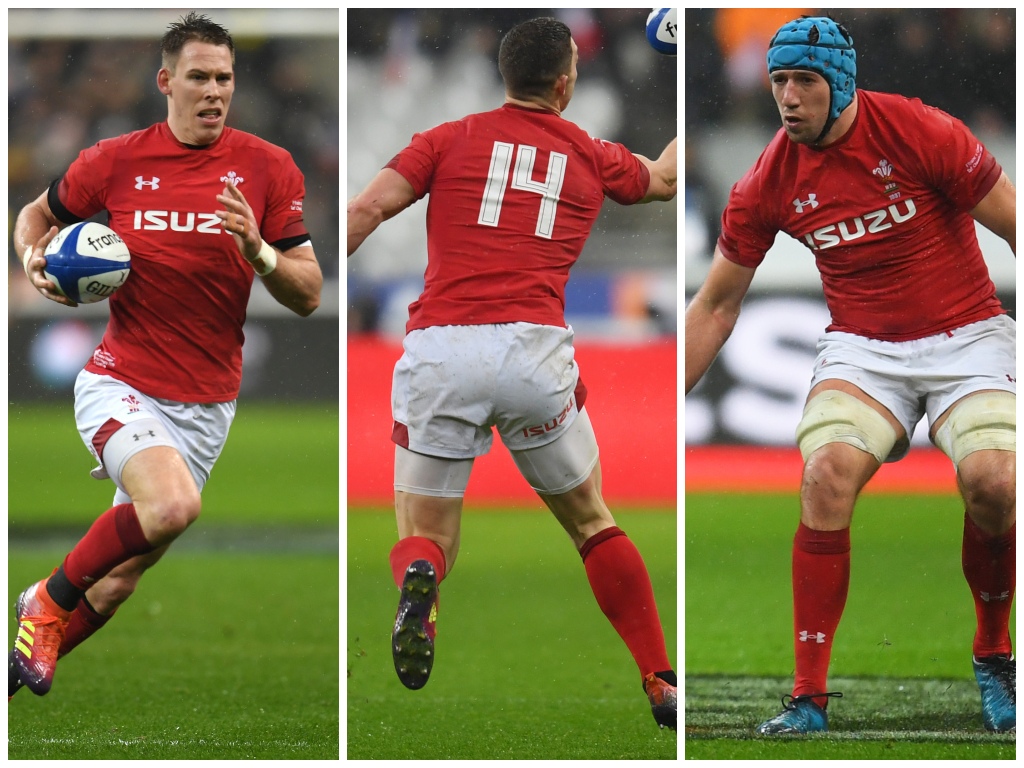
Our analyst Sam Larner returns to Planet Rugby to review the game of two halves between France and Wales in the Six Nations opener in Paris.
I was lucky enough to be over in Paris for the fantastic curtain raiser of the 2019 Six Nations. Plenty has been written about England‘s dismantling of Ireland in Dublin so I decided to focus on the France versus Wales game this week. There was a lot of interesting tactical discussion points from Friday and so instead of picking just one I have decided to look at three different things including from the 40 minutes when Wales were bad, very very bad.
Welsh careless in possession
Wales were given set-piece possession first up from a line-out in French territory. The initial move they decided to go for was a crash ball right on the gainline, the same move France had just used and lost the ball from.
http://www.giphy.com/gifs/5brPr4atkELFf0ZOcF
This was a good opportunity for Wales to build some possession but instead they handed it straight back to France. That initial mistake wouldn’t have been so bad had it not followed hot on the heels of yet another turnover of possession.
http://www.giphy.com/gifs/8cd9ZXTen43ql6aLod
Wales turned over the ball at halfway and had a great counter attacking opportunity. Instead Tomos Williams was turned over when he was caught dawdling on the ball by his opposite number.
http://www.giphy.com/gifs/2YpXwD19oDVXa95k3v
Again another one of Wales’ early possessions was ended prematurely. One of the crucial elements of rugby is that you can’t stack up mistakes. George North makes one mistake when he fails to take the catch cleanly but he then adds to that by attempting an offload to Ross Moriarty. Each of these examples by itself is acceptable, you will make handling errors during a game when the weather is like it was, but Wales were 15 minutes into the game and had failed to do anything else in attack other than box kick or lose the ball in contact.
http://www.giphy.com/gifs/5Wjd5isPBQ5SUd4ngS
This example is perhaps the most egregious. This was the first time Wales had generated any front foot ball and the way they were able to slice through the French side was a sign of things to come later in the game. Josh Navidi finds the soft spot in the fringe defence and when French lock Paul Willemse blitzes on the second phase Wales easily find a way through the hole. However, Liam Williams botches the finish and then the Welsh pack concede a penalty at the ensuing scrum to end their foray into the French red zone.
Teams can choose to deliberately play without possession and instead counter attack. This wasn’t the Welsh game plan however, they were simply suffering from a complete lack of accuracy. At this level teams need to apply constant and significant pressure in their attack, or hope for mistakes. You could certainly argue that even in their rampant second-half, Wales never really built a succession of attacking phases, they largely lived of the plentiful mistakes the French were throwing them.
But for some weak French goal-kicking, Wales could have seen themselves emerging for the second-half with nothing to play for but pride, their ability to hold onto the ball was so poor in the first-half.
Welsh wing play
If you are involved in coaching or playing local club rugby you are probably unaware of dedicated wingers. The winger is usually the skinny and possibly quick person who turns up or just whoever says they are available last. You therefore have wingers who don’t touch the ball much or get involved unless the ball heads their way. At the top level of the game coaches expect wingers to force their way into the game and so you are as likely to see a winger on their wing as you are to see them pop up at any point across the pitch.
http://www.giphy.com/gifs/5zotDtyDHG6pRbWji2
In this example you have the entire Welsh back three within 10 metres of one another. The French defence reacts and tries to shut down their space but Josh Adams identifies this and cuts back across the pitch to find the dog leg. When you move your wingers around the pitch the defence either need to match up or they have to accept that their forwards will occasionally be asked to cover a much faster player. The French don’t keep their line intact and Adams uses his pace to exploit a gap.
http://www.giphy.com/gifs/ujU9JEg6j6BgUhGdjt
This try involved a hefty helping of luck but there’s also some clever Welsh play. North has left his wing to join in the midfield attack. France can’t leave the blindside unoccupied because if Wales slightly wheel the scrum away from that side and pick up at eight there will be nobody at home. Yoann Huget stays blind but that means you have to match up the attackers in midfield and therefore France leave the entire deep middle part of the field empty. A player of Huget’s talent shouldn’t have any difficulties covering this but if North doesn’t leave his wing France just stick their full-back in the middle of the pitch and this kick doesn’t happen.
http://www.giphy.com/gifs/1mgl0GEa5Vy8MBjnEc
There’s not a lot that happens in this clip but it’s another indicator of what Wales were trying to do. All of the back three were gathering in the same area to try and exploit any gaps the French were leaving. They wanted to get the ball in the hands of their key try-scorers and let them find a way to break the gainline. Of course, if you are grouping all your quick players in one place you need to make sure someone is covering and in Justin Tipuric Wales have the perfect option. The flanker moved to the far wing to make sure that if the ball was turned over then there would still be cover – more on his contribution later.
http://www.giphy.com/gifs/2zotX2c2dkM0BD4PPe
This is North stood where you would expect him to be but this is the value of having a finisher in your side. All three of the Welsh tries were directly or indirectly caused by wingers, so how would Warren Gatland’s side have fared if they didn’t have such good finishers? Also, what are the chances that Leigh Halfpenny gets back into the side if these three continue playing like they are?
Tipuric’s defence
Even when Wales were leading the game with just a few seconds left they weren’t able to finish off the game without giving the French one last chance to attack. Because the Welsh line-out was lost they didn’t have all their defenders in the best possible position. That meant that Tipuric ended up defending in a key position in the outside backs.
http://www.giphy.com/gifs/mWS90ybXhWR2R4rtRk
In this first example Tipuric blitzes up to try and prevent the ball from moving beyond him and onto the wing. The flanker will now know that unless Wales are able to slow down the ball significantly he will be defending with Alun Wyn Jones on his inside. This completely changes how he will defend and he knows he won’t be able to drift very quickly if France try to get on the outside.
http://www.giphy.com/gifs/1naz4o41qh194gHzLE
That leads to this second example where France are trying to get on the outside of Tipuric and exploit the fact that he has to watch his inside. That puts huge pressure on Tipuric and he overcomes this by blitzing out to force France to go to the outside, rather than carry and lose ground, and then drifts back to allow Romain Ntamack to come to him before making a textbook tackle with the help of Dan Biggar.
http://www.giphy.com/gifs/piTQCp6yv3qTvalHpK
Tipuric has been pulled out of position here. The chance to bring the French down behind their gainline has led to the Welsh flanker becoming disconnected from his defensive line. Instead of continuing his blitz and putting the rest of his outside defenders at risk Tipuric simply drifts and drops back into the defensive line forcing the French to wilt pointlessly towards touch. That’s the last defensive action Tipuric has to do as France then lose the ball when they spread it towards the near side.
Although the back-row were ignored when it came to handing out the man of the match awards they played a huge role in turning the Welsh performance around. Tipuric especially is quickly establishing himself as an invaluable Welsh contributor.